The operation is over. Your wounds are healing, the device is switched on, and your flight home is booked. Then a quiet worry appears: who looks after this device now?
It is the right question to ask. DBS programming after surgery abroad decides how well the treatment works for years. The surgery places the hardware. Programming turns that hardware into real, day-to-day improvement.
I plan follow-up for every international patient before surgery, not after. Below is what happens when you return home, who does what, and how to avoid the gaps that can undo a good operation.
Key Takeaways
- Programming takes months, not days. Stimulation is usually switched on a few weeks after surgery, followed by several adjustment visits over roughly the first three months. After that, visits often drop to once or twice a year.
- Remote programming is real and growing. A secure remote platform for DBS launched in 2021 and is now approved in more than 19 countries. Canadian DBS clinicians have used it since July 2022.
- Remote care can work as well as clinic visits. A German multicentre randomised trial found remote programming non-inferior to on-site programming for Parkinson’s motor symptoms at 90 days.
- Non-rechargeable batteries usually last 3 to 5 years. Replacement is typically a short procedure of about 20 minutes, often under local anaesthetic.
- A failing battery affects symptoms. In a Cleveland Clinic review, only 25.5% of patients stayed well controlled as their battery neared depletion.
- DBS controls symptoms but does not cure Parkinson’s, so lifelong follow-up matters.
Why Programming Matters as Much as Surgery
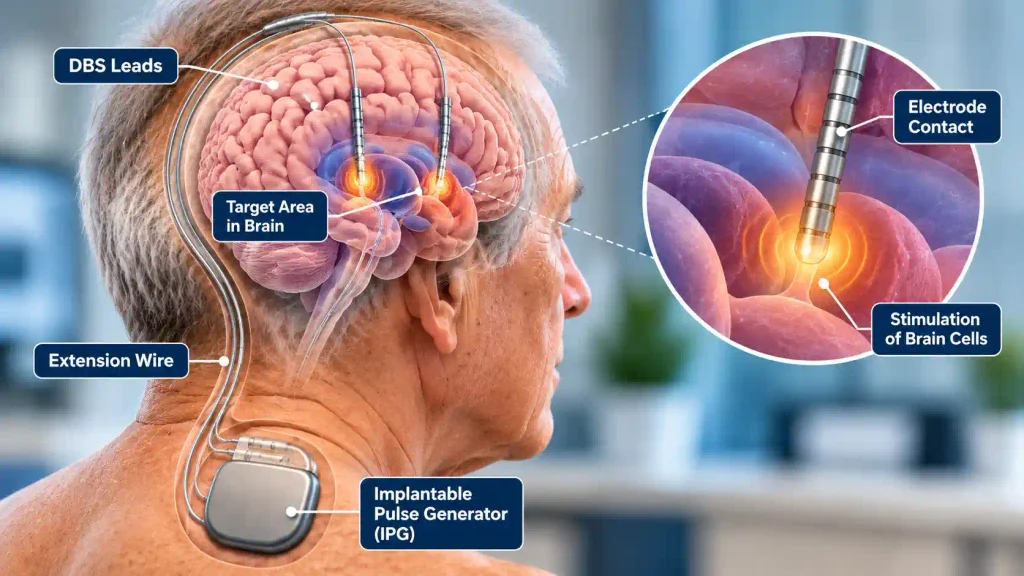
A DBS lead has several small contacts. Each can deliver stimulation at different strengths, pulse widths and frequencies. Programming means finding the combination that eases your symptoms without causing side effects.
That takes time because:
- Brain swelling from surgery settles over the first few weeks
- Medicines are reduced step by step as stimulation takes over
- Some benefits, especially in dystonia, appear slowly over months
- Your disease keeps changing, so settings need updating over the years
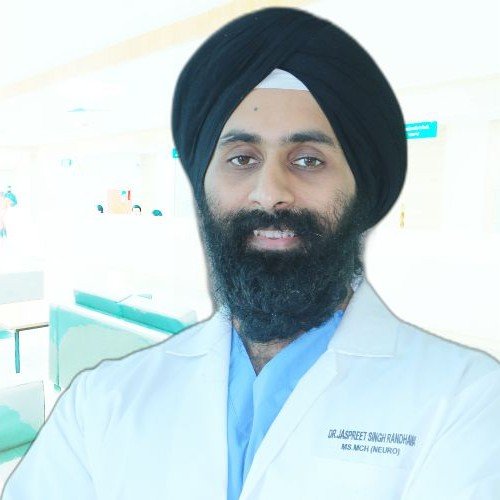
“I tell every family that I place the leads, but programming delivers the result. Two patients with equally good surgery can end up in very different places depending on their follow-up. That is why we agree on a home programming plan before anyone books a flight.” Dr Jaspreet Singh Randhawa
Who Does What: India vs Home
Good DBS programming after surgery abroad depends on a clear handover. The table shows how responsibilities are usually shared.
| Task | In India (before you fly) | At home |
|---|---|---|
| Device activation | First switch-on and basic settings | Not needed |
| Early fine-tuning | First session or two | Most adjustments over 3 months |
| Medicine changes | First reductions, if safe | Ongoing changes by your neurologist |
| Wound care | Stitch removal and wound check | GP or nurse if any concern |
| IPG check and battery monitoring | Pulse generator (IPG) and battery check | Checked at every visit |
| Battery replacement | Possible on a later trip | Usually done locally |
| Long-term follow-up | Advice by video or email | Your follow-up neurologist |
The home team does most of the work over the years. Our role is to set you up well and stay available for advice.
Before You Leave: Your Handover Pack
Never fly home without these. Keep paper copies and digital copies on your phone.
- Device ID card showing the maker, model and serial numbers
- Lead and target details: which brain target was used (for example STN or GPi) and which side
- Current stimulation settings for each side, printed from the programmer
- Post-operative imaging report confirming lead position
- Surgical and discharge summary
- Updated medicine list, with any changes made after activation
- Patient programmer or charger, if your system uses one, with instructions
- Our contact details for your home doctors
This pack lets any trained DBS clinic understand your system in minutes, rather than starting from scratch.
Finding a Follow-Up Neurologist at Home
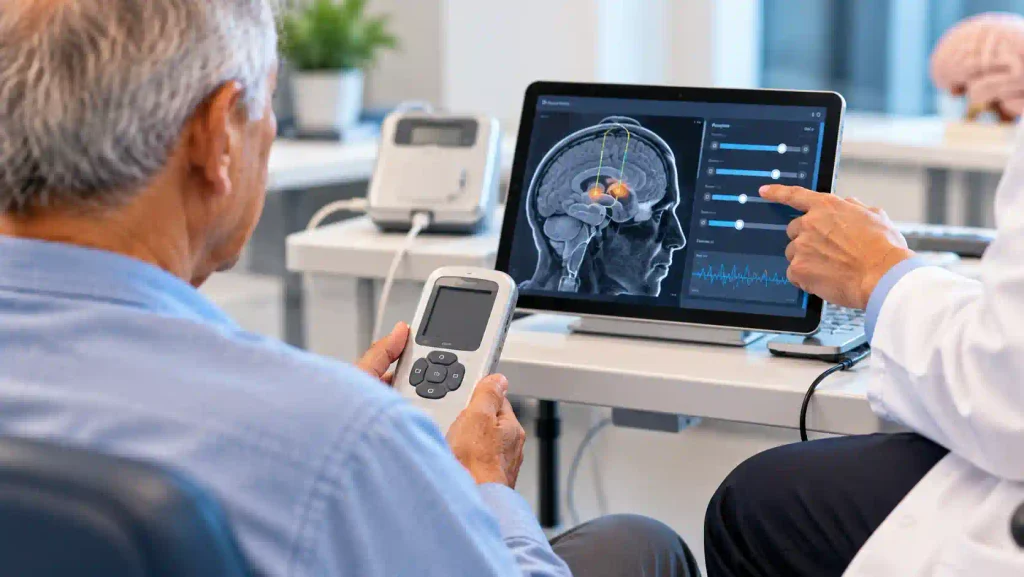
The best time to arrange this is before surgery. We help you with it during planning.
1. Where to look:
- Movement disorder clinics at major university hospitals
- DBS programmes listed by national Parkinson’s charities
- The device maker’s patient line, which can usually name local clinics that support your system
2. What to confirm:
- They accept patients who had surgery elsewhere
- They have the programmer for your device brand
- They can see you within a few weeks of your return
Brand matters. A clinic with only one manufacturer’s equipment may not be able to adjust another’s device, so we agree on the brand with you before surgery.
Your Programming Timeline After Returning Home
Weeks 1 to 4 at Home: Settings from India are usually kept stable while the brain finishes healing. Your home neurologist should see you within a few weeks for your first local review.
Months 1 to 3: This is the busiest period for DBS device adjustment. Expect several visits, often every few weeks, while stimulation is gently increased and medicines are reduced.
Months 3 to 12: Most patients reach stable settings during this window, and clinic visits become much less frequent.
Year 1 Onwards: Routine reviews happen once or twice a year, with extra visits if your symptoms shift. Each review includes an IPG check and battery reading.
The number of sessions varies. Many Parkinson’s patients need four to six sessions in the first year, while people with DBS for dystonia often need more, because benefits build slowly. Patients with DBS for epilepsy follow their own schedule, guided by seizure diaries.
Can Programming Be Done Remotely?
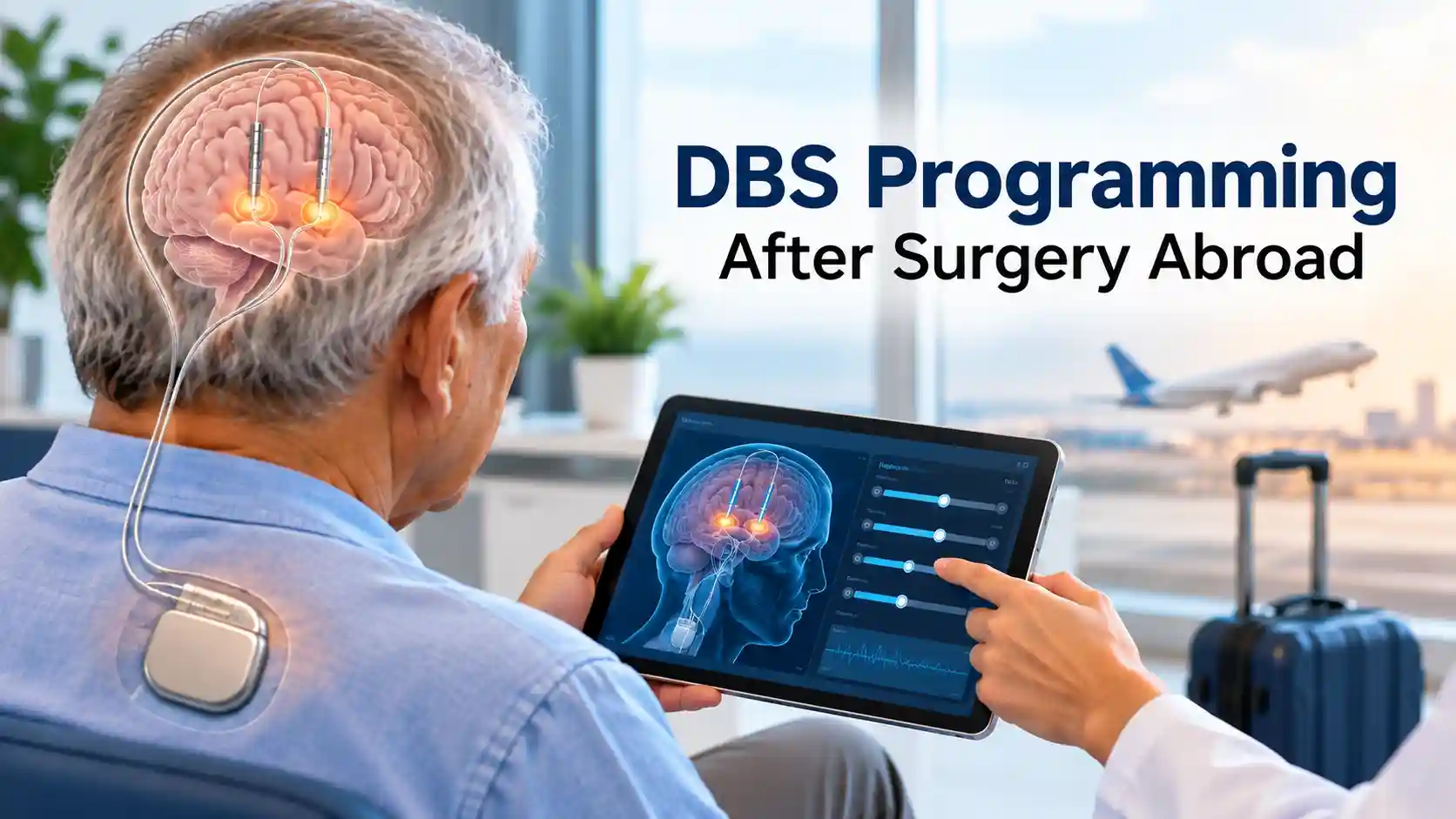
Sometimes, yes. Some newer systems allow secure video sessions in which the clinician changes stimulation settings from a distance.
Remote programming works best when:
- Your device supports a remote platform
- Your home clinic is enrolled and trained to use it
- The adjustment is routine, not a new or complex problem
There are limits. Rules usually require the programming clinician to be licensed where the patient is, so your home team will normally lead remote sessions. Some problems, such as unusual side effects or suspected hardware faults, still need an in-person visit.
When Symptoms Change After You Return
Symptoms can shift for many reasons: settings that need fine-tuning, disease progression, medicine timing, illness or a battery running low.
Problems that settings can often help:
- Slurred or softer speech
- Balance or walking changes
- Unwanted movements (dyskinesias)
- Tingling, muscle pulling or eye-closing
- Mood changes after adjustments
Tell your follow-up neurologist early. Many of these improve with small changes to contact choice, voltage or pulse width.
“Speech and balance changes after DBS are common reasons for a programming visit, and they are often fixable. Please do not quietly accept a side effect or change the dose of your medicine on your own. A short visit to the right clinician usually sorts it out.” Dr Jaspreet Singh Randhawa
Medicines After Programming
You will continue taking your Parkinson’s medicines after surgery. As stimulation improves your symptoms, your neurologist will usually reduce the dose gradually.
Never stop levodopa suddenly. Large, fast changes can be dangerous. If your medicines stop working as expected after DBS, ask for a programming review rather than adjusting doses yourself.
Battery Care and Replacement
Your battery, also called the IPG, powers the system. How you care for it depends on the type.
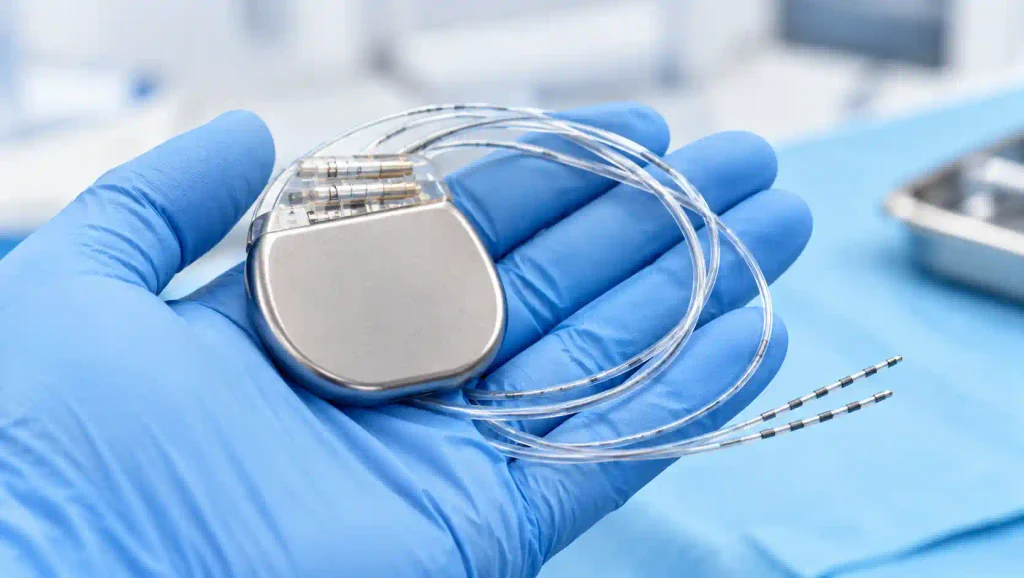
Non-rechargeable battery:
- Usually lasts about 3 to 5 years, depending on settings
- Your clinic checks remaining life at each visit
- Some systems warn you months before the battery runs out
- Replacement is a short procedure that can usually be done in your home country
Rechargeable battery:
- Needs regular charging at home, often weekly
- Lasts many years before replacement
- Letting it run flat can switch stimulation off, so set reminders
If symptoms return slowly over weeks, a low battery is one possible cause. Ask for an IPG check.
Urgent Warning Signs
Seek urgent medical care, and bring your device card, if you notice:
- Fever, or redness, swelling or discharge at any wound
- Severe or sudden headache
- New weakness, numbness or difficulty speaking
- Confusion, drowsiness or a seizure
- Sudden, severe return of tremor or stiffness, which may mean the device has switched off
- Low mood, hopelessness or thoughts of self-harm
Safety rules to share with every doctor:
- Never have diathermy (deep heat therapy)
- Always mention your DBS system before any MRI, so the correct safety rules are followed
- Carry your device ID card when you travel
Cleveland Clinic offers a clear overview of living with DBS, and our page on DBS success rates explains realistic outcomes.
Do You Need to Return to India?
Usually not. Most patients complete long-term follow-up at home. Some return by choice, for example to combine a family visit with a review or battery replacement.
Our international patient desk stays in touch with you and your home doctors, and shares records and settings whenever needed.
Final Thoughts
Long-term success with DBS comes from careful tuning in the months after you leave the operating theatre. If you plan follow-up before you travel, carry the right records and find a clinic that supports your device, DBS programming after surgery abroad can be just as smooth as at home.
If you are considering DBS in India, ask us about follow-up planning during your first consultation. We will help you build a clear plan with your home team before you commit.
Frequently Asked Questions
1. What happens to DBS programming after surgery abroad when I return home?
Your first settings are made before you fly, and your home neurologist takes over fine-tuning after that. We send a full handover with your device details, lead targets and current settings so they can continue without starting again.
2. Can a local neurologist adjust my DBS settings after surgery in another country?
Yes, as long as they are trained in DBS and have the programmer for your device brand. That is why we agree on the brand with you before surgery, based on what your home clinic supports.
3. How do I find a qualified neurologist for DBS follow-up care in my home country?
Look for movement disorder clinics at university hospitals, ask national Parkinson’s organisations, or call your device maker’s patient line for local clinics. Confirm they accept patients operated on elsewhere and can see you soon after you return.
4. How soon after DBS surgery should the first programming appointment take place?
Stimulation is usually switched on a few weeks after surgery, once early swelling settles. For international patients, we do this in India before you fly, and your home review should follow within a few weeks.
5. How many DBS programming sessions are usually needed to get the best results?
Most Parkinson’s patients need several sessions over the first three to six months, often four to six in the first year. Dystonia may need more because improvement builds slowly, and later reviews usually happen once or twice a year.
6. Can DBS programming be done remotely through telemedicine after returning home?
Some newer systems support secure remote programming, and studies show it can work as well as clinic visits for routine adjustments. It depends on your device and whether your home clinic is set up for it, and some problems still need an in-person visit.
7. What should I do if my DBS symptoms worsen or return after I travel home?
Contact your follow-up neurologist promptly for a programming review and IPG check. If symptoms return suddenly and severely, seek urgent care, as the device may have switched off.
8. Can DBS stimulation settings be adjusted if I experience speech problems, balance issues, or unwanted movements?
Yes. These are common reasons for adjustment, and changing the contact, voltage or pulse width often helps. Do not change your medicines on your own; book a review instead.
9. What medical records and device information should I bring home after DBS surgery abroad?
Bring your device ID card, lead targets, printed stimulation settings, imaging report, surgical summary and updated medicine list. Also bring any patient programmer or charger, with instructions.
10. Can I continue taking my Parkinson’s medication after DBS programming, or will the dosage change?
You continue your medicines after surgery, and your neurologist usually reduces them gradually as stimulation takes effect. Never stop levodopa suddenly or change doses without medical advice.
11. How often should my DBS device and IPG be checked after surgery abroad?
Expect frequent checks in the first three months, then once or twice a year when settings are stable. Each visit should include a battery reading and a system check.
12. How will I know when my DBS battery needs replacement, and can it be replaced in my home country?
Your clinic tracks battery life at each visit, and some systems alert you months in advance. Replacement is a short procedure that can usually be done by a neurosurgeon in your home country.
13. What should I do if my DBS device stops working or the battery runs low while I am abroad or at home?
If symptoms return suddenly, contact your DBS clinic or go to the nearest hospital with your device card. For rechargeable systems, check and charge the battery first, and keep your charger with you when travelling.
14. Will I need to return to the original hospital for future DBS adjustments or follow-up appointments?
Usually not, as most long-term care happens at home. We stay in contact, share records and settings with your doctors, and you can return by choice if you prefer.
15. What symptoms or device problems after DBS surgery require urgent medical attention?
Seek urgent care for fever, wound redness or discharge, severe headache, new weakness, confusion, seizures, a sudden severe return of symptoms or any thoughts of self-harm. Always carry your device card and tell doctors about your DBS system before any MRI.
Coordinated DBS Surgery & Lifetime Handover Documentation: Every international patient operated under Dr. Jaspreet Singh Randhawa receives a complete implant and initial programming dossier before flying home. Explore our Deep Brain Stimulation surgery programme at Medisyn Mohali, plus our companion guides on DBS surgery in India for Canadians, DBS surgery in India from Australia, DBS cost in India vs Canada and Australia, and India medical visa preparation for DBS patients.