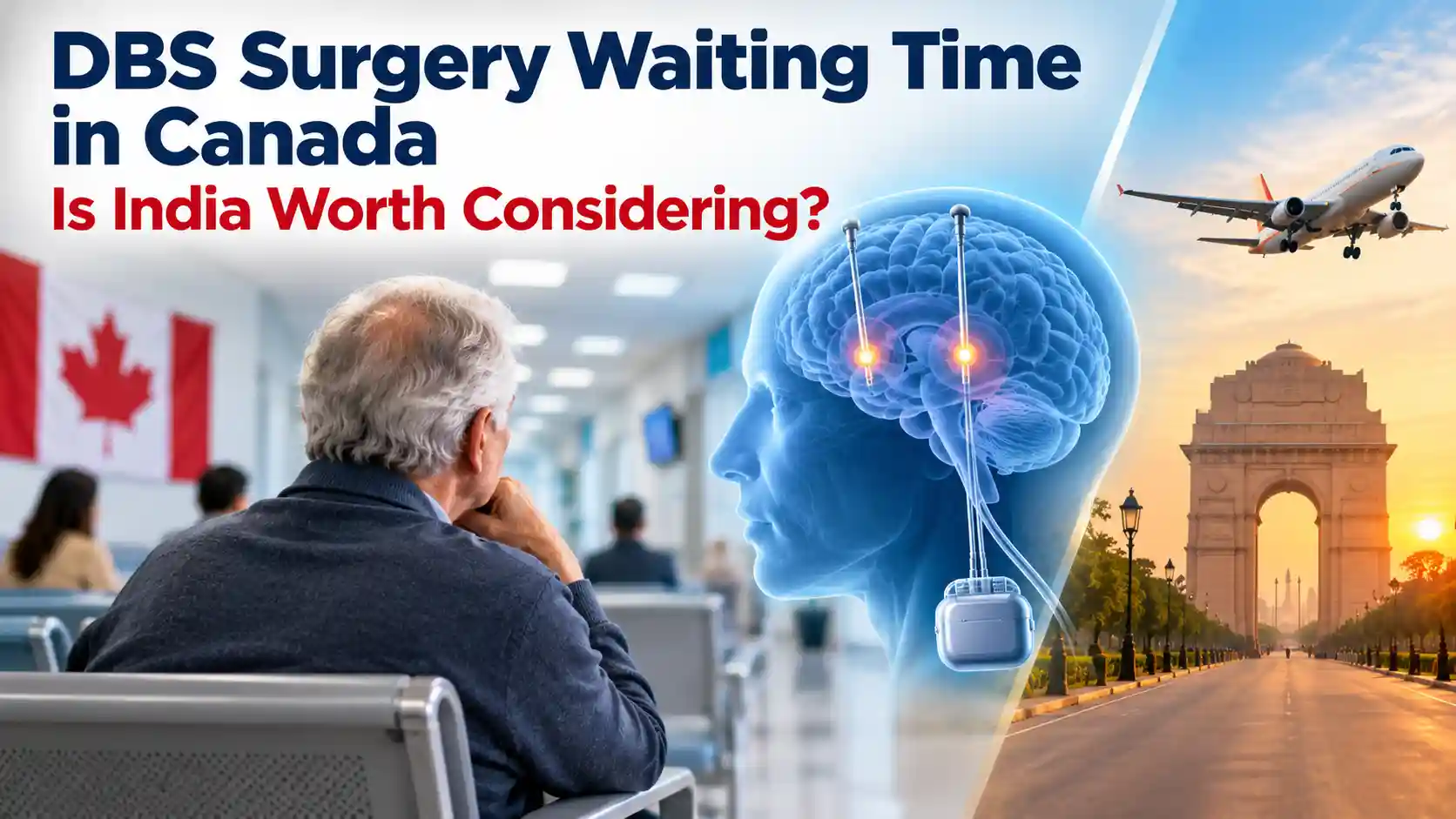
Being told you are a good candidate for deep brain stimulation should feel like good news. For many Canadian families, it is followed by a long silence. Months pass. Medicines wear off sooner. Walking gets harder.
The DBS surgery waiting time in Canada that patients and families face is real, and in some provinces it has stretched into years. That matters, because DBS works best within a certain window of the disease.
I am not here to tell you to leave the Canadian system. Many people get excellent DBS care at home. My aim is to show you where the delays happen, what they can cost you medically, and when looking abroad is a sensible option.
Key Takeaways
- Neurosurgery has Canada’s longest wait. In 2025, the median wait from GP referral to neurosurgery treatment was 49.9 weeks, the longest of any specialty.
- DBS workups take much longer than the surgery. A 2024 University of Alberta study found that the time from starting the DBS workup to surgery averaged about 388 days before COVID-19 and about 840 days after it.
- Operating time is the biggest bottleneck. The same study found the longest delay was between consent and surgery, mainly due to a lack of operating room time.
- Waits vary widely by province. Parkinson Society BC has reported waits of years in British Columbia, compared with months in Alberta and Ontario.
- Specialist access is also slow. Canadians waited a median 15.3 weeks just to see a specialist after GP referral in 2025, plus 18.1 weeks for an MRI (Fraser Institute, 2025).
- DBS works best before late-stage problems set in. Tremor showed the strongest long-term benefit, about 72.5% improvement, in patients followed for up to 13 years.
- In India, confirmed candidates can often have surgery within 4 to 8 weeks of evaluation.
DBS Surgery Waiting Time in Canada: Why Is the Wait So Long?
The Canadian public healthcare waitlist for DBS is not one queue. It is several queues in a row, and each adds time.
The usual path looks like this:
- GP to neurologist: a specialist referral delay of weeks to months
- Neurologist to movement disorder clinic: often a further wait
- DBS team workup: neurosurgeon, neuropsychology, psychiatry and imaging appointments, each with its own list
- Consent to surgery: waiting for operating room time, often the longest step
Only a handful of hospitals in Canada perform DBS, and each has limited operating time. When one surgeon or one theatre slot is lost, the whole list slows down.
Why Waiting Matters Medically

Waiting is not just frustrating. In Parkinson’s disease, long delays affect more than your daily comfort; they can change whether DBS will still help you.
DBS works best in people whose symptoms still respond to levodopa. Over time, some people develop problems that DBS does not fix well:
- Freezing and falls that do not improve with medicine
- Memory and thinking changes
- Speech and swallowing difficulty
If your medicines stop working as well as they did, the clock matters more. You can also read which Parkinson’s symptoms respond to DBS.
“The patients I worry about most are not the ones waiting a few months. They are the ones waiting two or three years while balance and memory slowly change. DBS is very good at treating tremor, stiffness and wearing-off, but it cannot give back what the disease takes in the meantime.” Dr Jaspreet Singh Randhawa
Canada vs India: Timeline Comparison
The table compares each stage, using published Canadian data and our own typical timelines.
| Stage | Canada (public system) | India (Medisyn, Mohali) |
|---|---|---|
| Referral to specialist | Median 15.3 weeks (all specialties, 2025) | Remote record review within 1 to 2 weeks |
| MRI | Median 18.1 weeks (2025) | Done during the evaluation week |
| DBS workup to surgery | About 388 days pre-COVID; about 840 days after (U of Alberta) | 4 to 8 weeks once candidacy is confirmed |
| Cost to patient | Covered by provincial plan | Rs.13 to 27 lakh, plus travel |
| Follow-up programming | Local DBS clinic | First sessions in India, then a clinic at home |
The trade-off is clear. Canada offers covered care but often a long wait. India offers speed but you pay, travel, and must arrange follow-up at home.
How Australia Compares
Australian patients sometimes face similar issues. The Medicare waiting list Australia publishes only starts once you are booked for surgery. The time to see a neurologist and a DBS team first is not counted, and it can be long, especially outside capital cities.
Is Faster Treatment Abroad Right for You?
Travelling for DBS is not right for everyone. Use the lists below as an honest starting point.
1. India may be worth considering if:
- You are already confirmed as a DBS candidate, or clearly fit the criteria
- Your expected wait is more than a year
- Your symptoms are getting worse while you wait
- You can afford the cost and travel for 3 to 4 weeks
- You have a neurologist at home willing to manage your device after surgery
2. Staying in Canada may be better if:
- Your surgery date is only a few months away
- You have serious heart, lung or other health problems that make long flights risky
- You have no one to travel with you
- You cannot secure follow-up programming at home
“I sometimes advise families to stay on their Canadian list. If surgery at home is three months away, the stress and cost of travel rarely make sense. When the wait is two years and the patient is slipping, that conversation changes.” Dr Jaspreet Singh Randhawa
Can You Keep Your Place on the Canadian Waitlist?
Often, yes. Many families keep their place on the Canadian list while exploring options abroad. Ask your DBS clinic directly how your province handles this.
This gives you a safety net. If you decide not to travel, or if DBS is not suitable for you, you have not lost your spot at home.
Cost and Coverage
In Canada, DBS is covered by your provincial health plan. In India, you pay yourself.
- At Medisyn: bilateral DBS costs Rs.13 to 27 lakh, depending mainly on the device. Our DBS cost breakdown explains what is included.
- Provincial plans: generally do not reimburse elective surgery abroad when it is available in Canada. Some provinces have prior-approval programs, so ask in writing.
- Follow-up at home: visits with your Canadian neurologist after surgery are covered in the usual way.
What Happens Before You Travel
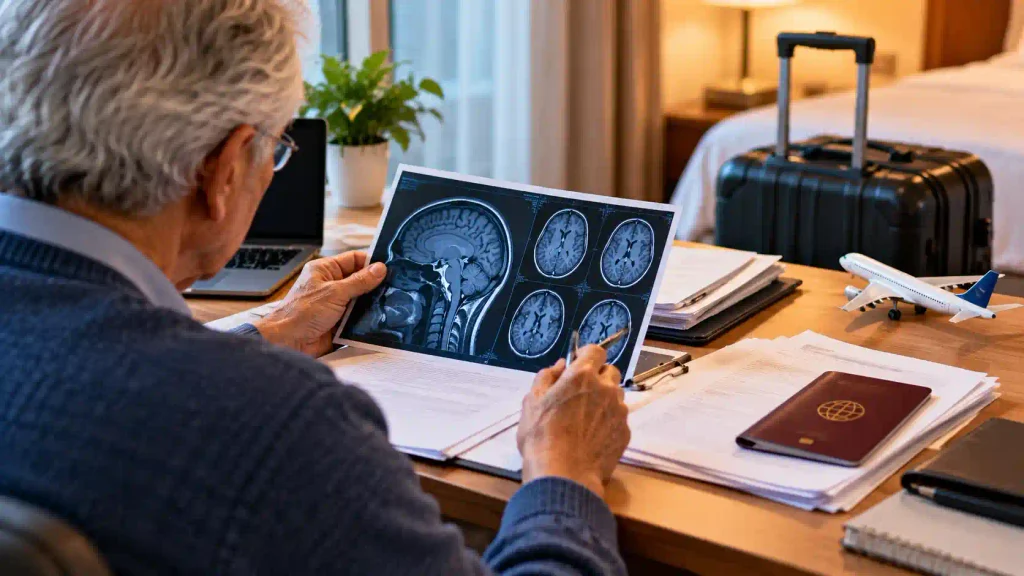
You do not need a formal referral letter to contact us. But a letter from your neurologist makes the process faster and safer.
Please send:
- Neurologist letters confirming your diagnosis and how long you have had it
- Your medicine list with doses and timings
- Any recent brain MRI, with images and report
- A short video of your “on” and “off” states
- Recent blood tests and ECG
We review these remotely, discuss them with you on a video call, and only then suggest dates. Our international patient desk helps with the invitation letter, visa and travel planning.
Safety, Results and Follow-Up
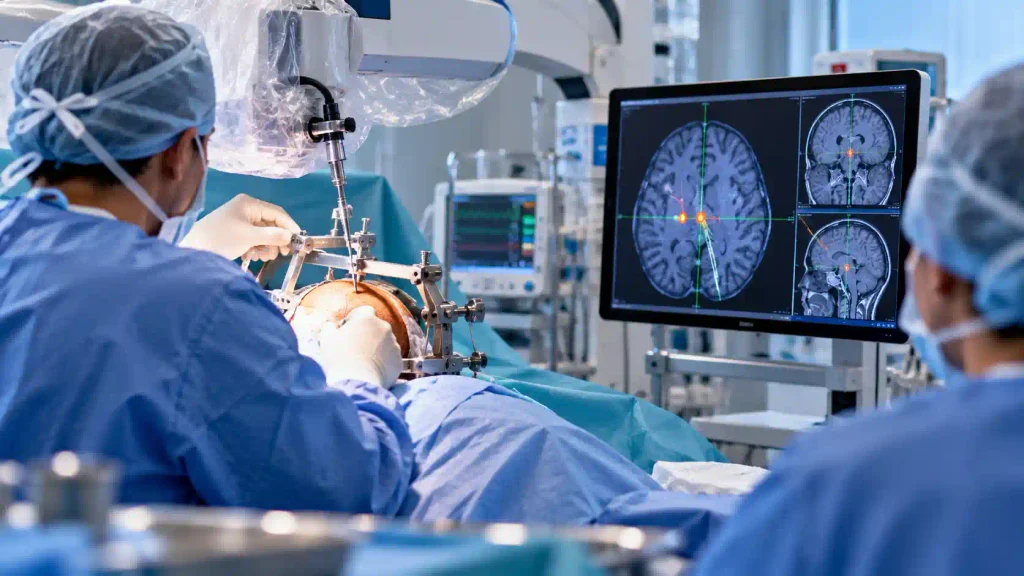
DBS is an established treatment that controls symptoms but does not cure Parkinson’s. Serious complications such as bleeding or infection are uncommon but possible anywhere.
For realistic expectations, see our page on DBS success rates.
Before choosing any hospital, check:
- The surgeon’s DBS-specific experience
- A full team, including neurology and a programming specialist
- A written, all-inclusive estimate
- A clear plan for follow-up with your Canadian doctors
“Speed only helps if the surgery is done well and followed up properly. Before any Canadian patient books a flight, we agree who will program the device at home. Getting that right protects the result for years.” Dr Jaspreet Singh Randhawa
Final Thoughts
The DBS surgery waiting time Canada families face is a genuine medical concern, not just an inconvenience. For some, waiting at home is still the best path. For others, a wait of years means losing the very window in which DBS helps most.
If you are unsure which applies to you, send your reports for a no-obligation review. We will tell you honestly whether DBS suits you and whether travelling makes sense compared with staying on your Canadian list.
Frequently Asked Questions
1. How long is the waiting time for DBS surgery in Canada?
It varies widely by province and hospital. One University of Alberta study found an average of about 388 days from starting the workup to surgery before COVID-19, rising to about 840 days afterwards, and some provinces have reported waits of several years.
2. Why do patients face long waiting lists for deep brain stimulation surgery in Canada?
DBS requires several specialist assessments, each with its own waitlist, followed by surgery at a small number of centres. Limited operating room time is the biggest single bottleneck.
3. Can Canadian patients travel to India for DBS surgery instead of waiting in Canada?
Yes. Many do so on an Indian e-Medical Visa, after a remote review confirms they are suitable candidates. It is wise to keep your Canadian waitlist place while you decide.
4. Is DBS surgery available sooner in India than in Canada?
Usually, yes. At Medisyn, confirmed candidates can often have surgery within 4 to 8 weeks of their evaluation, compared with many months or years in parts of Canada.
5. How much does DBS surgery cost in India compared with Canada?
In Canada, DBS is covered by your provincial plan, so there is usually no surgery bill. At Medisyn, bilateral DBS costs Rs.13 to 27 lakh depending on the device, plus flights and a 3 to 4 week stay.
6. Does Canadian public healthcare cover DBS surgery performed in India?
Generally no, because DBS is available in Canada. Some provinces have out-of-country prior-approval programmes, so ask your province in writing before you plan anything.
7. Who is eligible for DBS surgery, and can patients with advanced Parkinson’s disease qualify?
The best candidates still respond to levodopa but have wear-off, dyskinesias or tremor that medicine does not control. People with advanced disease can still qualify if levodopa helps and memory is good, but DBS does little for falls, freezing or dementia.
8. Do I need a neurologist’s referral before travelling to India for DBS surgery?
A formal referral is not required to contact us, but a neurologist’s letter is strongly recommended. It confirms your diagnosis and history, and helps us judge suitability before you travel.
9. What medical records and tests are required before undergoing DBS surgery in India?
Send neurologist letters, your medicine list, recent MRI, blood tests, ECG and a video of your “on” and “off” states. In India, we complete a levodopa challenge test, a DBS-planning MRI and memory testing before surgery.
10. How can Canadian patients verify a hospital’s experience and safety standards for DBS surgery in India?
Ask about the surgeon’s DBS-specific case experience, the team’s programming support and infection control. A good centre will speak to you directly, give a written estimate and tell you honestly if surgery is not right for you.
11. How long should Canadian patients stay in India after DBS surgery?
Plan for 3 to 4 weeks in total. This covers evaluation, two surgical stages, device activation, wound checks and early programming.
12. Who will adjust and program my DBS device after I return to Canada?
A Canadian neurologist or DBS clinic that supports your device brand should take over programming. We agree on this before surgery and send a full report with your settings.
13. What happens if I develop complications after returning to Canada following DBS surgery in India?
Go to your local emergency department first, with your device card and surgical report. Our team stays in contact and can share imaging, notes and settings with your doctors.
14. Can DBS surgery be delayed even after a patient has been approved for treatment?
Yes. In Canada, the longest delay is often between consent and surgery because of limited operating room time. Changes in your health can also delay surgery wherever it happens.
15. Is travelling to India for DBS surgery a better option than remaining on a Canadian public healthcare waitlist?
It depends on how long your wait is, how quickly your symptoms are changing and whether you can arrange follow-up at home. For a short wait, staying is often best; for a wait of years with worsening symptoms, travelling can be a reasonable choice.
Next Steps for Canadian Families Weighing Treatment Options: Learn how Dr. Jaspreet Singh Randhawa evaluates surgical candidates on our Deep Brain Stimulation surgery page, read our complete walkthrough on DBS surgery in India for Canadians, compare DBS surgery cost in India vs Canada and Australia, check how Canadians obtain an India medical visa for DBS surgery, and review post-surgical DBS programming once you return to Canada.