For the first few years, the medication felt like a miracle. One Levodopa tablet and the tremor quieted, the stiffness loosened, and walking felt almost normal again. The “on” periods lasted hours. Life continued.
Then, slowly, something shifted. The dose that used to last four hours now wears off in two. The gap between pills becomes a window of rigid, trembling helplessness. Some mornings, the first dose takes 45 minutes to kick in instead of 20. And when it does work, it sometimes overshoots, causing involuntary jerking movements (dyskinesia) that are almost as disabling as the disease itself.
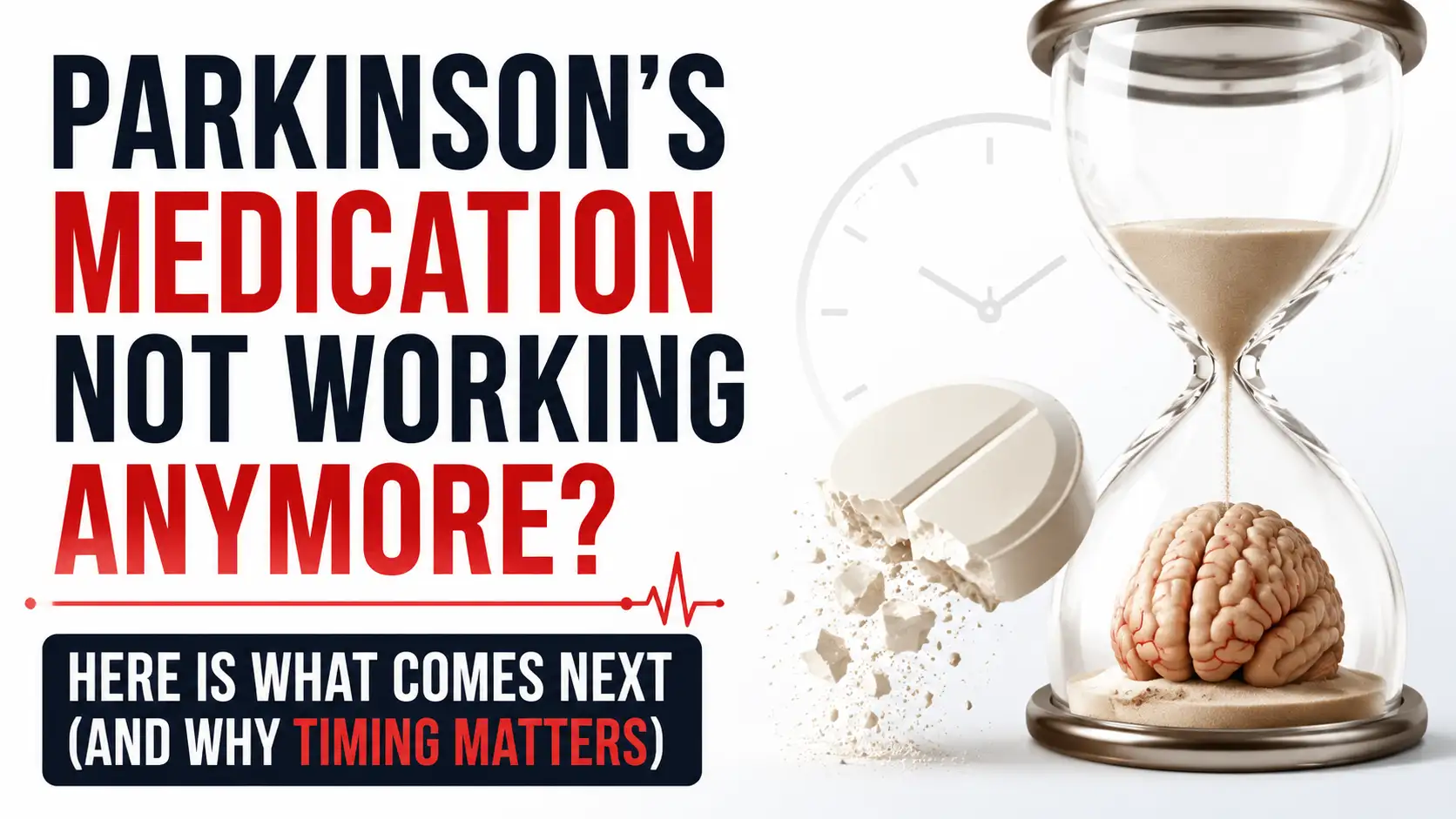
If this sounds like what is happening to you or someone in your family, you are experiencing what neurologists call the “wearing off” phenomenon, and it is one of the most important turning points in Parkinson’s disease. Because this is precisely the stage where Parkinson’s medication not working properly becomes not just a frustration, but a signal that the treatment window for deep brain stimulation is open. And that window does not stay open forever.
Key Takeaways
- DBS is not a last resort. The best outcomes happen when medication still works but is no longer providing stable, predictable relief
- If you wait until medication stops working completely, DBS will no longer be effective either, because DBS requires a baseline Levodopa response to work
- The five warning signs that your medication is failing include increasing “off” time, dose wearing off before the next pill, dyskinesia, freezing of gait, and sleep disruption
- DBS provides 60 to 80% improvement in motor symptoms and can reduce medication dosage by 30 to 50% in properly selected patients
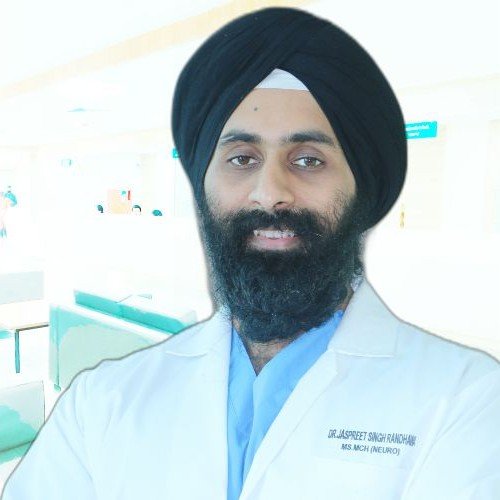
- Dr. Jaspreet Singh Randhawa at Medisyn Neuro Centre, Mohali, is the Tricity’s only dedicated functional neurosurgeon performing DBS as a high volume, regular procedure
Why Parkinson’s Medication Stops Working: The Science Behind the Wearing Off
Understanding why your Parkinson’s medication not working as it once did is the first step toward knowing what to do next. It is not that the drug has become “weak” or that your body is “immune” to it. The explanation is neurological.
Parkinson’s disease progressively destroys the dopamine producing neurons in the substantia nigra, a small structure deep inside the brain. In the early stages, enough neurons survive to store and release the dopamine converted from Levodopa. These surviving neurons act as a buffer, absorbing the medication, storing the dopamine, and releasing it gradually over hours. That is why in the first years of treatment, a single dose lasts a long time and symptom control feels smooth.
As the disease advances and more neurons die, this buffer shrinks. The brain can no longer store dopamine effectively. Instead, dopamine levels in the brain begin to mirror the drug levels in the blood: they spike shortly after taking the pill, then drop rapidly as the drug clears the system. This creates the characteristic “on off” pattern that families recognize immediately. One hour the patient is mobile and functional, the next hour they are frozen, trembling, and unable to move.
This is not a failure of the patient. It is not a failure of the medication. It is the natural progression of the disease. And it is the signal that the brain needs a different kind of support, one that does not depend on a shrinking population of neurons to do its work.
5 Warning Signs That Your Parkinson’s Medication Is Failing
Not every “bad day” means your medication has stopped working. But when certain patterns become consistent, week after week, it is time to re-evaluate your treatment approach. Here are the five warning signs that indicate your Parkinson’s medication not working as it should:
1. Increasing “Off” Time Every Day
“Off” time is when the medication’s effect has worn off and Parkinson’s symptoms return in full force. In the early years, off time might be 30 minutes before the next dose. When off time grows to one, two, or three hours daily, it means the brain can no longer maintain dopamine levels between doses. Some patients describe it as “falling off a cliff” between pills, going from functional to frozen in minutes.
2. Each Dose Wears Off Before the Next Pill Is Due
If your Levodopa is scheduled every four hours but the effect disappears after two or two and a half hours, you are experiencing “end of dose” wearing off. Your neurologist may respond by increasing the dose or shortening the interval between doses. When even frequent dosing (every two to three hours) cannot maintain consistent symptom control, medication alone has reached its practical limit.
3. Dyskinesia: Involuntary Movements When Medication Is Active
Dyskinesia refers to involuntary, writhing, or jerky movements that happen during the “on” phase, when the medication is working. It is a side effect of long term Levodopa use, not of the disease itself. The irony is painful: the very drug keeping you mobile is now causing a different kind of uncontrolled movement. Reducing the dose to control dyskinesia often worsens the underlying Parkinson’s symptoms, trapping the patient between two problems with no medication solution.
4. Freezing of Gait
Freezing is one of the most frightening Parkinson’s symptoms. The patient’s feet feel glued to the floor, usually when initiating a step, turning, or passing through a doorway. Freezing episodes increase fall risk dramatically and often do not respond well to medication adjustments. When freezing becomes a regular occurrence despite optimized drug therapy, it signals that the motor circuits in the brain need modulation that medication alone cannot provide.
5. Sleep Disrupted by Overnight Medication Gaps
As the disease progresses, the long overnight gap without medication becomes a problem. Patients wake up severely rigid, with tremor, unable to turn in bed or get to the bathroom safely. Some patients set alarms at 3 AM to take a dose so they can function by morning. When the disease starts disrupting sleep this consistently, it is eroding quality of life in a way that additional pills cannot fix.
The DBS Timing Window: Why “Not Too Early, Not Too Late” Is the Most Important Rule
Here is the single most critical fact that families dealing with Parkinson’s medication not working need to understand: DBS is not a last resort. According to the Parkinson’s Foundation, when medications stop working completely, DBS will not work either. The best DBS outcomes happen in a specific window when medication still provides benefit but can no longer deliver stable, predictable relief.
Think of it as a golden zone:
| Stage | Medication Status | DBS Outcome |
|---|---|---|
| Too Early | Medication working well; stable symptom control | DBS not indicated; medication is sufficient |
| Golden Window | Medication still helps but wearing off, off time increasing, dyskinesia present | Best DBS outcomes: 60 to 80% motor improvement |
| Too Late | Medication has completely stopped working; no Levodopa response | DBS unlikely to help; the Levodopa response DBS relies on is gone |
The reason DBS requires a Levodopa response is fundamental to how it works. DBS does not replace dopamine. It modulates the electrical circuits in the brain that have become dysfunctional. But those circuits need to still be capable of responding to dopamine for DBS to strengthen and stabilize that response. When the circuits are too degraded (no Levodopa response at all), there is nothing left for DBS to work with.
This is why the biggest mistake is not surgery itself. The biggest mistake is waiting too long.
“Families often come to me after years of struggling, hoping that one more medication change will fix everything. By that time, some patients have developed cognitive decline that disqualifies them from surgery. The conversation about DBS should happen the moment medication stops providing stable, predictable relief, not after years of deteriorating quality of life.”
Dr. Jaspreet Singh Randhawa, MCh Neurosurgery (Gold Medalist), Medisyn Neuro Centre, Mohali
What DBS Can and Cannot Do: Setting Realistic Expectations
Families considering DBS need honest information about what the surgery delivers and what it does not. Research published on PubMed confirms that experienced surgical teams and proper patient selection are the strongest predictors of successful long term DBS outcomes. Here is what the evidence shows:
What DBS Does Well
- Reduces tremor: 60 to 90% tremor reduction in properly selected patients
- Smooths motor fluctuations: dramatically reduces the on/off swings, providing more consistent motor function throughout the day
- Reduces dyskinesia: by allowing medication reduction of 30 to 50%, DBS directly reduces the Levodopa induced involuntary movements
- Improves rigidity and bradykinesia: muscle stiffness and slowness of movement improve significantly
- Increases functional independence: patients can dress, eat, walk, and perform daily activities that the disease had taken away
What DBS Does Not Do
- Does not cure Parkinson’s: the disease continues to progress; DBS manages symptoms, it does not stop or reverse the underlying neurodegeneration
- Does not improve speech in most cases: speech and swallowing difficulties often do not respond to DBS and may occasionally worsen
- Does not improve cognitive symptoms: memory problems, confusion, and dementia are not helped by DBS and can disqualify a patient from surgery
- Does not help balance and postural instability significantly: falls related to balance dysfunction may not improve
- Does not eliminate medication entirely: most patients continue on reduced medication after DBS
The best way to predict whether DBS will help a specific patient is the Levodopa challenge test. Symptoms that improve when Levodopa is working (the “on” state) are the same symptoms DBS will improve. Symptoms that persist even during the best “on” state will likely persist after DBS as well. For detailed outcome data, read about DBS success rates across different conditions.
The DBS Evaluation Process: What Happens When You Walk Into a Specialist’s Office
Deciding to explore DBS when your Parkinson’s medication not working adequately is not the same as deciding to have surgery. The evaluation is thorough, and not every patient who walks in will walk out as a surgical candidate. Here is what the process looks like with a DBS specialist:
- Comprehensive neurological examination: The neurosurgeon reviews the complete Parkinson’s history including when symptoms started, how they have progressed, all medications tried and their effects, and any cognitive or psychiatric symptoms
- Levodopa challenge test: The patient takes their regular Parkinson’s medication after a period of withholding (overnight). The specialist measures symptoms in the “off” state (medication withheld) and the “on” state (medication active). The difference between these two states predicts how much DBS can help
- Neuropsychological testing: Detailed cognitive testing assesses memory, attention, executive function, and mood. Significant cognitive decline or active psychiatric illness can disqualify a patient because DBS may worsen these conditions
- MRI brain scan: High resolution brain imaging ensures there are no structural abnormalities that would complicate electrode placement and maps the surgical target
- Family discussion: A realistic conversation about expected outcomes, risks, the programming phase, and long term commitments. DBS is not a “one and done” surgery; it requires ongoing programming and follow up
The entire evaluation typically requires two to three visits over a few weeks. If the patient is a good candidate, surgery is scheduled. If they are not, the specialist explains why and discusses alternative management strategies.
What Does DBS Surgery Cost and How Do Families Afford It?
Cost is one of the first questions families ask, and it deserves a direct answer. At Medisyn Neuro Centre, Mohali, bilateral DBS surgery costs between Rs.13 lakh and Rs.27 lakh. The range depends primarily on the type of neurostimulator device (rechargeable versus non rechargeable) and the manufacturer (Medtronic or Abbott). Both are FDA approved and identical in quality to devices used in the USA and UK, where the same surgery costs $60,000 to $1,00,000.
Health insurance coverage for DBS is available. Individual policies cover the surgery after a waiting period (typically four years from inception). Company provided group health insurance often covers it from day one. Families should review their policy’s room rent cap, copayment clauses, and pre authorization requirements before surgery. A detailed breakdown is available on the DBS surgery cost page.
Who Performs DBS Surgery in Mohali and Chandigarh?
Dr. Jaspreet Singh Randhawa is the Tricity’s only dedicated functional neurosurgeon performing DBS as a regular, high volume procedure. His credentials:
- MCh Neurosurgery (Gold Medal), Armed Forces Medical College, Pune
- Training at AIIMS New Delhi, Maulana Azad Medical College, Fortis Hospital Delhi
- 14+ years of experience with 5,600+ surgeries completed
- International patients from Canada, UK, USA, Africa, and the Middle East travel specifically for DBS
- In April 2026, he led the launch of Adaptive DBS at Healing Hospital, Chandigarh, a first for North India (reported by ANI News)
He operates at two locations: Medisyn Neuro Centre (Sector 79, Airport Road, Mohali) and Healing Hospital (Chandigarh). Patients from Mohali, Chandigarh, Panchkula, Kharar, Zirakpur, and across Punjab and Haryana can reach either location within 30 minutes. Appointment: +91 9779977155 or +91 9779977016.
“The conversation families need to have is not ‘should we do DBS?’ It is ‘are we in the right window for DBS?’ That is the question that changes outcomes. I have operated on patients who came at the right time and walked out of the hospital on their own feet within days. I have also had to turn away patients who waited too long and developed cognitive problems that surgery cannot fix. The difference between these two outcomes is timing.”
Dr. Jaspreet Singh Randhawa
Frequently Asked Questions
1. My Parkinson’s medication is not working as well as before. Does that mean I need surgery immediately?
Not immediately, but it does mean you should get evaluated by a DBS specialist. The wearing off of medication is a signal that the DBS timing window may be open. An evaluation will determine whether you are a candidate now, or whether medication adjustments can buy more time. The critical thing is to start the conversation before it is too late.
2. How do I know if my Levodopa is “wearing off” or if the disease has just gotten worse?
Both are happening simultaneously. The disease is progressing (fewer dopamine neurons survive), and because of that progression, the medication cannot provide stable relief anymore. The wearing off phenomenon IS the disease getting worse. That is precisely why DBS should be considered at this stage, not years later.
3. My neurologist has not mentioned DBS. Should I bring it up myself?
Yes. Many general neurologists manage Parkinson’s with medication and may not routinely discuss surgical options. DBS requires evaluation by a neurosurgeon with specific functional neurosurgery training. If your medication is losing its effect, ask your neurologist about a DBS evaluation or consult a DBS specialist directly.
4. Is DBS safe for patients over 70?
Age alone is not a disqualification. Patients in their 70s have undergone successful DBS. The decision depends on overall physical health, cognitive function, and the quality of the Levodopa response. A thorough evaluation determines whether surgery is safe and likely to help, regardless of age.
5. Will DBS completely eliminate my Parkinson’s tremor?
In many patients, yes. Tremor is the symptom that responds best to DBS. In Essential Tremor, DBS reduces shaking by more than 90% in most patients. In Parkinson’s, tremor reduction of 60 to 90% is typical. However, DBS may not eliminate all symptoms; rigidity and bradykinesia improve significantly, but speech and balance may not.
6. What happens if I wait too long for DBS?
Two things can disqualify you: cognitive decline (dementia) and complete loss of Levodopa response. Once either of these develops, DBS is no longer an option. This is why DBS specialists emphasize that the surgery should be considered when medication still works but is no longer adequate, not when it has failed completely.
7. How long does DBS last? Is it a permanent solution?
The electrode in the brain is permanent and can function for decades. The neurostimulator (battery) needs replacement: non rechargeable batteries every 3 to 5 years, rechargeable batteries last 15 to 25 years. DBS provides long term symptom control, but because Parkinson’s continues to progress, programming adjustments are needed over time.
8. Can DBS help with Parkinson’s related depression and anxiety?
Some patients report improvement in mood after DBS, likely because reduced motor disability improves quality of life and reduces frustration. However, DBS is not a treatment for depression or anxiety directly. Pre existing psychiatric conditions are carefully evaluated before surgery to ensure they will not worsen post operatively.
9. I live in a different state. Can I get DBS done in Mohali and go home for follow up?
Initial programming requires several visits to the operating centre over the first three to six months. After stable settings are achieved, annual or biannual follow ups are typically sufficient. Many international patients from Canada, UK, and the USA travel to Mohali for surgery and return for periodic programming visits. Remote programming options are also expanding with newer devices.
10. Where can I read about DBS in Punjabi?
A complete guide to DBS in Gurmukhi Punjabi is available: ਪੰਜਾਬੀ ਵਿੱਚ ਪੜ੍ਹੋ। ਇਸ ਵਿੱਚ ਪੂਰੀ surgery process, ਖ਼ਰਚਾ, ਅਤੇ eligibility ਬਾਰੇ ਜਾਣਕਾਰੀ ਹੈ।
Your Medication Is Sending a Signal. Do Not Ignore It.
When Parkinson’s medication not working properly becomes a daily reality, when off time grows, when dyskinesia emerges, when freezing episodes begin, your body is telling you that the current treatment has reached its ceiling. This is not a reason to lose hope. This is a reason to explore the next level of treatment before the window closes.
Deep brain stimulation has helped thousands of patients worldwide reclaim independence, reduce medication burden, and live with a stability that pills alone could no longer provide. But its effectiveness depends entirely on timing. The right time is now, when medication still works but is not enough. Not a year from now, when cognitive decline may have closed the door.
If you recognize the warning signs described in this article, the single most important step you can take today is to schedule a DBS evaluation. Not to commit to surgery. Just to know where you stand, whether the window is open, and what your options are. That conversation could change everything.
Contact Medisyn Neuro Centre: +91 9779977155 / +91 9779977016. Bring your latest MRI, medication list, and neurologist’s notes to the first consultation.
This article is for informational purposes only. All medical decisions, especially regarding surgery, should be made in consultation with a qualified neurosurgeon and movement disorder specialist.