
Most families who ask me about DBS surgery cost in India vs Canada start with one number. A quote they saw online, or a figure a friend mentioned. But a single price tells you very little.
The real cost of deep brain stimulation depends on the device, the battery type, one side or both, the hospital stay and years of follow-up. Change any one of these and the bill moves by lakhs of rupees or thousands of dollars.
I walk international families through these numbers every week. Below, I break down what actually changes between India, Canada and Australia, and what stays the same.
Key Takeaways
- India: Bilateral DBS at Medisyn costs Rs.13 to 27 lakh all-inclusive, about CAD 21,000 to 44,000 or AUD 23,000 to 47,000 at recent exchange rates. Pre-surgical tests add Rs.40,000 to 80,000.
- Canada: DBS is covered by provincial health plans, so the main “cost” is time. Neurosurgery had the longest median wait of any specialty in 2025, at 49.9 weeks from GP referral to treatment.
- Australia: A federal health review estimated the cost per DBS patient at about AUD 91,250 for essential tremor. Private patients may face large out-of-pocket gaps.
- The device drives the bill. The stimulator makes up roughly 55 to 60% of the total DBS cost in India.
- Battery type changes long-term cost. Non-rechargeable batteries usually need replacing every 3 to 5 years, and each replacement is a small operation.
- Results are well documented. In a study following Parkinson’s patients for up to 13 years, tremor improved by about 72.5%.
- Insurance rarely travels. Provincial plans and Medicare generally do not pay for elective surgery done in India.
DBS Surgery Cost in India vs Canada and Australia at a Glance
The table compares the full picture, not just the surgery fee.
| Factor | India (Medisyn, Mohali) | Canada | Australia |
|---|---|---|---|
| Surgery and device cost to patient | Rs.13 to 27 lakh (about CAD 21,000 to 44,000 / AUD 23,000 to 47,000) | Usually covered by provincial plan | Public: usually covered. Private: gap varies |
| Typical wait | 4 to 8 weeks after records are reviewed | Neurosurgery median 49.9 weeks (2025) | Specialist and list waits vary by state |
| Devices used | Medtronic, Abbott | Medtronic, Abbott, Boston Scientific | Medtronic, Abbott, Boston Scientific |
| Insurance for treatment in India | Not applicable | Rarely reimbursed | Not covered by Medicare |
| Extra trip costs | Flights, 3 to 4 weeks of stay, a companion | Not applicable | Not applicable |
| Follow-up programming | First sessions in India, then at home | Local clinic | Local clinic |
The honest takeaway: for a Canadian or Australian public patient, India is not “cheaper than free.” It makes sense when time, access or a private gap is the real barrier.
What Is Included in the DBS Total Treatment Package?
A clear package matters more than a low headline price. At Medisyn, the quoted range covers:
- The DBS device (stimulator, leads and extension wires)
- Both surgical stages, theatre charges and anaesthesia
- Hospital stay cost for both admissions
- Surgeon and team fees
- The first programming session after activation
Billed separately:
- Pre-surgical evaluation: DBS-protocol MRI, levodopa challenge, memory testing and heart clearance (Rs.40,000 to 80,000)
- Medicines after discharge
- Later programming visits, if done in India
Our detailed DBS cost breakdown explains each line item.
“I always give families a written estimate before they book anything. If a centre cannot tell you what is included and what is not, that is a warning sign. A surprise bill is the last thing anyone needs while recovering from brain surgery.”
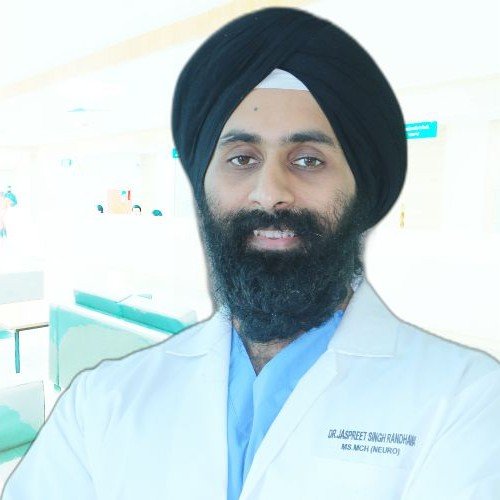
Dr Jaspreet Singh Randhawa
DBS Device Cost: Medtronic, Abbott and Boston Scientific
The device is the biggest single cost. All three major makers produce reliable, approved systems. The right choice depends on your symptoms, age and where you will get follow-up.
| Device type (India) | Approx. device cost | Battery life | Best suited for |
|---|---|---|---|
| Non-rechargeable | Rs.7 to 10 lakh | About 3 to 5 years | Older patients, lower upfront budget |
| Rechargeable | Rs.10 to 13 lakh | Up to about 9 years or more, by model | Younger patients, long-term savings |
| Rechargeable with directional leads | Rs.14 to 17 lakh | Up to about 9 years or more, by model | Complex cases needing precise steering |
One point most price pages skip: choose a brand your home clinic supports. A Canadian or Australian neurologist needs that maker’s programmer to adjust your settings after you return.
Rechargeable vs Non-Rechargeable Battery: Which Saves More?
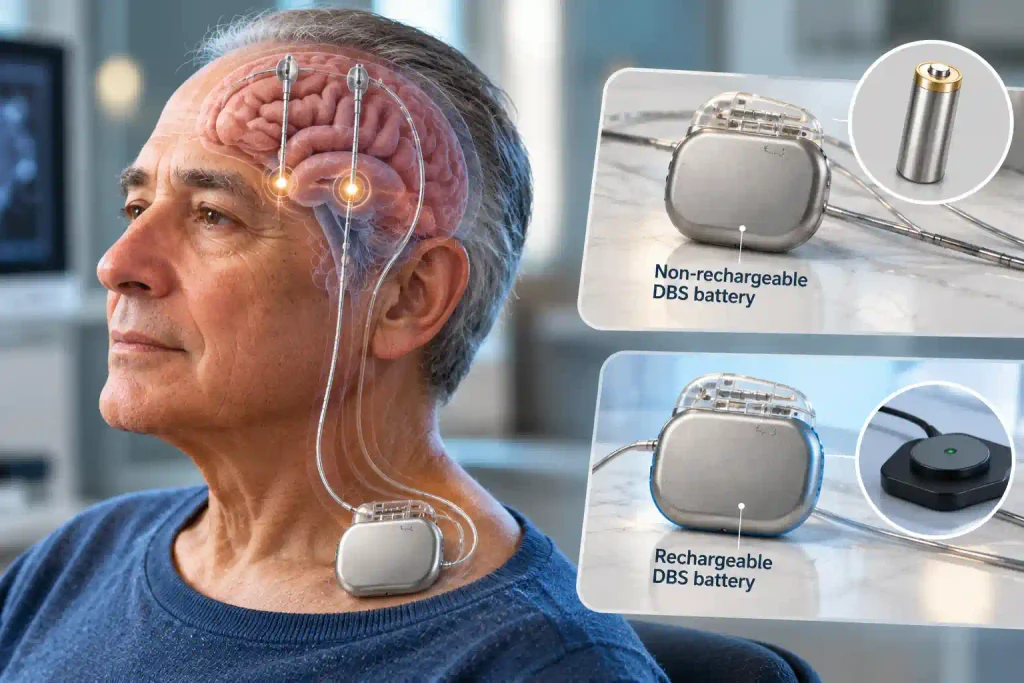
The battery choice shapes your costs for the next 15 years. A non-rechargeable battery is cheaper today, but each replacement means another operation.
Non-rechargeable may suit you if:
- You are older and prefer fewer daily tasks
- You may find weekly charging difficult because of tremor or memory
- Your upfront budget is tight
Rechargeable may suit you if:
- You are under about 65 and expect many years of use
- You or a carer can charge the device at home, usually once a week
- You want to avoid repeat surgery, travel and its risks
A battery replacement in India typically costs Rs.2 to 5 lakh. For a 55-year-old, that can mean two or three replacements over the years. For international patients, each one may also mean another trip.
“For younger patients living abroad, I often lean towards a rechargeable system. It costs more on day one, but it can save them two or three extra operations and long flights. For an older patient who finds charging stressful, a standard battery is a perfectly sensible choice.” Dr Jaspreet Singh Randhawa
What Else Changes the Deep Brain Stimulation Price?
One Side or Both Sides
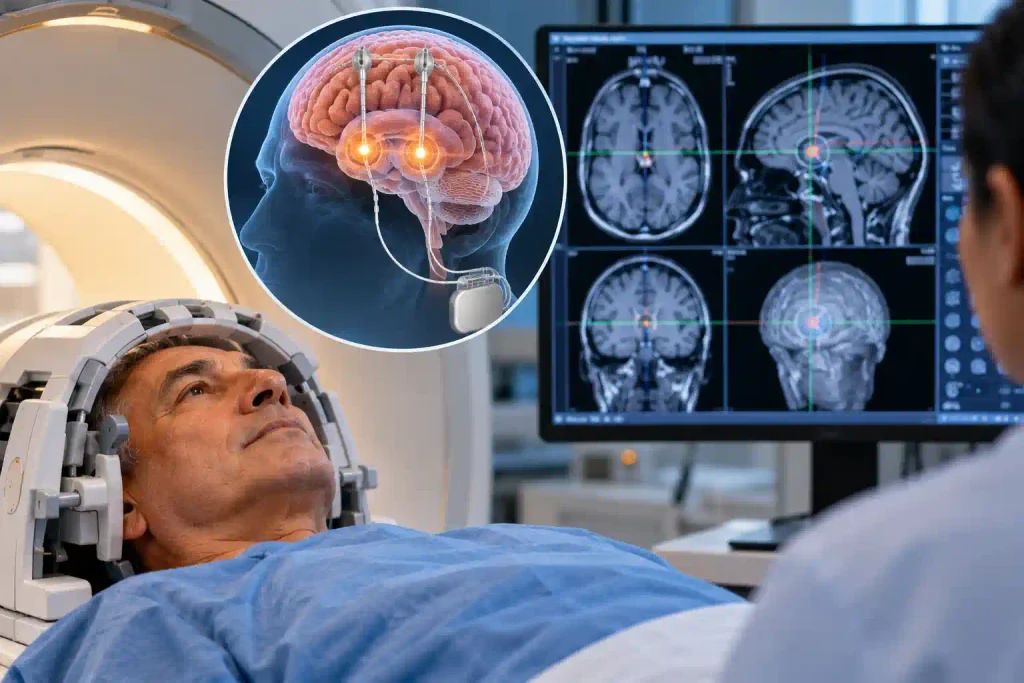
Most people with Parkinson’s need bilateral DBS, with electrodes on both sides of the brain. This roughly doubles the lead cost and adds theatre time. Essential tremor in one hand may only need one side, which costs noticeably less.
The Condition Being Treated
- Parkinson’s disease: usually bilateral, with several months of programming
- Essential tremor: sometimes one side only, often the quickest to programme
- Dystonia: usually bilateral, with slower improvement over 3 to 12 months and more follow-up visits
Read more about how Parkinson’s symptoms respond and about DBS for dystonia.
Hidden Costs International Patients Should Budget For
The surgery bill is only part of the trip. Plan for these too:
- Return flights for the patient and one companion
- Accommodation for 3 to 4 weeks near the hospital
- Food, local transport and phone data
- Travel insurance that clearly covers a planned procedure (many policies exclude it)
- Pre-surgical tests and any repeat scans
- Programming visits at home, and any device-specific charges there
- Time off work for the family member who travels with you
Our international patient desk can help estimate stay costs and arrange accommodation close to the centre.
Worked Example: A Full Trip Budget
Numbers are easier to judge in one place. This illustrative example is for a bilateral, mid-range device, with two people travelling. Prices are approximate and change with exchange rates and season.
| Item | Approximate cost |
|---|---|
| DBS surgery package (mid-range device) | Rs.18 lakh (about CAD 29,000 / AUD 31,500) |
| Pre-surgical evaluation | Rs.60,000 (about CAD 1,000 / AUD 1,050) |
| Return flights for two | About CAD 3,000 to 5,000 / AUD 3,000 to 5,000 |
| Accommodation, 4 weeks | About CAD 1,500 to 3,000 / AUD 1,500 to 3,000 |
| Food and local transport | About CAD 800 to 1,200 / AUD 800 to 1,200 |
| Estimated total | About CAD 35,000 to 39,000 / AUD 38,000 to 42,000 |
For someone uninsured, or facing a large private gap, this can be a meaningful saving. For a public patient at home, the decision is mainly about time.
Insurance: What Canadian and Australian Plans Cover
Check this before you plan anything.
- Canada: Provincial plans rarely reimburse elective surgery abroad when it is available at home. Some provinces have prior-approval programmes, so ask yours in writing.
- Australia: Medicare benefits are only paid for services provided in Australia. Private hospital cover generally does not apply overseas either.
- After you return: Follow-up visits with your own neurologist are usually covered at home in the normal way.
Is DBS in India Cost-Effective Over the Long Term?
Cost-effectiveness depends on more than the first bill. It depends on how well DBS works for you and how smoothly follow-up runs.
DBS controls symptoms but does not cure Parkinson’s. In good candidates, it often lowers medication doses and reduces “off” time. You can read realistic numbers on our DBS success rates page.
The main risks, such as bleeding or infection, are uncommon but real. Cleveland Clinic outlines them clearly, and a complication can add cost wherever surgery happens.
“The cheapest DBS is the one that works and does not need to be redone. That comes from choosing the right patient, placing the leads accurately and programming carefully over months. Saving money on any of those three is a false economy.” Dr Jaspreet Singh Randhawa
Final Thoughts
Comparing DBS surgery cost India vs Canada is not about finding the lowest number. It is about the full picture: device, battery, stay, travel, insurance and who will look after your device at home.
If you would like a written, itemised estimate for your situation, send your reports for a no-obligation review. You will get a clear answer on suitability, device options and the total cost before you commit to anything.
Frequently Asked Questions
1. How much does DBS surgery cost in India compared with Canada and Australia in 2026?
At Medisyn, bilateral DBS costs Rs.13 to 27 lakh, about CAD 21,000 to 44,000 or AUD 23,000 to 47,000. In Canada and Australia, public patients usually pay little or nothing for the surgery itself, while Australian private patients may face large gaps, so the real comparison is your own out-of-pocket cost and waiting time.
2. What is included in the total cost of deep brain stimulation surgery in India?
Our package covers the device, both surgical stages, theatre and anaesthesia charges, the hospital stay and the first programming session. Pre-surgical tests, take-home medicines and later programming visits are billed separately, and we list everything in writing before you book.
3. Why is DBS surgery less expensive in India than in Canada and Australia?
The devices are the same, but hospital running costs, staff salaries and room charges are much lower in India. Specialist centres also avoid many of the overheads of very large hospitals, which keeps the total package lower without changing the hardware.
4. What hidden costs should international patients consider before travelling to India for DBS surgery?
Budget for flights for two, 3 to 4 weeks of accommodation, food, local transport and travel insurance that covers a planned procedure. Also plan for pre-surgical tests, any repeat scans and the cost of programming visits once you are home.
5. How much does the DBS implant cost separately from the brain surgery and hospital stay?
In India, the device alone usually costs Rs.7 to 10 lakh for a non-rechargeable system and Rs.10 to 17 lakh for rechargeable or directional systems. The device makes up roughly 55 to 60% of the total bill.
6. Which DBS system is better for the cost: Medtronic, Abbott, or Boston Scientific?
All three make reliable, approved systems, and no single brand is best for everyone. The right choice depends on your symptoms, battery preference and, importantly, which brand your home clinic can programme after you return.
7. Is a rechargeable DBS battery worth the extra cost compared with a non-rechargeable battery?
For younger patients who expect many years of use, a rechargeable battery often costs less over time because it avoids repeat replacement surgery. For older patients, or those who would find weekly charging hard, a non-rechargeable battery is a sensible option.
8. How much does DBS battery replacement cost, and how often is it needed?
A non-rechargeable battery usually lasts about 3 to 5 years, and replacement in India typically costs Rs.2 to 5 lakh. It is a shorter operation than the original surgery, but international patients may need to plan another trip.
9. Does the cost of DBS surgery change if electrodes are implanted on both sides of the brain?
Yes. Bilateral DBS needs two leads and more theatre time, so it costs more than one-sided surgery. Most Parkinson’s patients need both sides, while some essential tremor patients only need one.
10. Can Canadian and Australian patients save money by getting DBS surgery in India after including flights, accommodation, and follow-up care?
Uninsured patients, or those facing a large private gap, can often save a meaningful amount even after travel costs. Public patients at home usually pay little for surgery, so for them the main benefit is time, not money.
11. How long should international patients stay in India after DBS surgery, and what does recovery add to the total cost?
Plan for 3 to 4 weeks in total, covering evaluation, two surgical stages, activation and wound checks. Accommodation, food and transport for this period usually add a few thousand dollars for two people.
12. Are DBS programming sessions and follow-up appointments included in the surgery package?
The first programming session after activation is included. Later sessions, which continue for 3 to 12 months, are usually done by your neurologist at home or can be arranged with us separately.
13. Does DBS surgery cost vary for Parkinson’s disease, essential tremor, and dystonia?
Yes. Essential tremor sometimes needs only one side and fewer programming visits, so it can cost less. Parkinson’s and dystonia are usually bilateral, and dystonia often needs more follow-up visits over the first year.
14. Will Canadian or Australian health insurance cover DBS surgery performed in India?
Usually not. Australian Medicare only pays for services in Australia, and Canadian provincial plans rarely reimburse elective surgery abroad, so check with your plan in writing before you travel.
15. Is DBS surgery in India a cost-effective option when long-term treatment, device maintenance, and follow-up care are considered?
It can be, when you are a strong candidate, the battery choice fits your age and a home clinic supports your device. Lower medication needs and fewer repeat operations add to the value over the years, but poor follow-up can erase the savings.
Related Overseas DBS Guides & Direct Cost Estimates: For a personalised surgical package quote from Dr. Jaspreet Singh Randhawa, explore our Deep Brain Stimulation surgery programme in Mohali and Chandigarh, read our dedicated travel guides on DBS surgery in India for Canadian patients and DBS surgery in India from Australia, compare provincial DBS surgery waiting times in Canada, and see how long-term DBS programming and battery care work after you return home. WhatsApp MRI reports for a written estimate on +91 98765 40305.