

Your father used to walk to the gurdwara every morning. Now, an hour before his next tablet, his feet feel stuck to the floor. His hands shake again. Then the dose kicks in, and he is almost himself.
If you are looking for Parkinson’s treatment near Kurali because medicines no longer work like they once did, you are not alone. And you are not out of options.
In most cases, the medicine has not failed. The disease has moved forward, and the treatment plan needs to move with it.
Key Takeaways
- Parkinson’s disease is rising fast. The WHO fact sheet reports that global cases have doubled in 25 years, with over 8.5 million people affected in 2019.
- About 40% of people develop medication wearing off within 4 to 6 years of starting levodopa. The risk of dyskinesia is just under 40% over the same period.
- In a population study, about 30% of levodopa users developed dyskinesia. The median time to onset was 4 years.
- Wearing off rarely means levodopa has stopped working. It usually means each dose lasts a shorter time.
- Dose timing, add-on medicines, diet changes and treating constipation often bring back steady control.
- A sudden drop over days is not typical Parkinson’s. Infection, dehydration or a new medicine is often the cause.
- Deep brain stimulation can help when medicines still work but fluctuations or dyskinesia limit daily life.
Why Do Parkinson’s Medicines Seem to Stop Working?
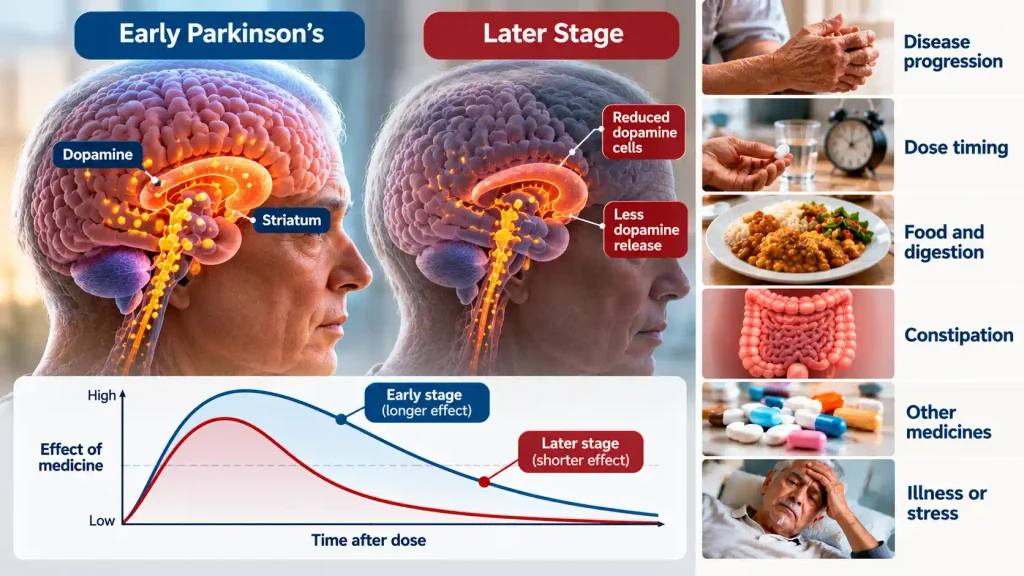
Levodopa turns into dopamine in the brain. Early on, the brain stores this dopamine and releases it slowly. One tablet can keep you steady for many hours.
As Parkinson’s progresses, the brain loses more of the cells that store dopamine. So the effect of each dose rises and falls faster. Doctors call this the “short battery” effect.
Common reasons medicines feel weaker include:
- Disease progression: fewer dopamine-storing cells means shorter dose effects.
- Dose timing: long gaps between doses leave “empty” periods.
- Food and digestion: protein-heavy meals and slow stomach emptying can delay absorption.
- Constipation: very common in Parkinson’s, and it slows how medicines are taken up.
- Other medicines: some anti-sickness and psychiatric drugs block dopamine.
- Illness or stress: fever, infection, dehydration or poor sleep can make symptoms worse for a while.
“When patients tell me their medicine has stopped working, I usually find it is still working, just for a shorter time. That is good news, because a shorter effect is something we can plan around. The answer is rarely to give up on levodopa. It is to use it more smartly.” Dr Jaspreet Singh Randhawa
For a deeper look at this problem, read our guide on Parkinson’s medicine not working.
Spotting the Warning Signs Early
Changes often start quietly. Families notice them before patients do. Knowing the names of these patterns helps you explain them clearly to your doctor.
1. Medication Wearing Off
Symptoms return before the next dose is due. Stiffness, slowness or tremor come back in a predictable way, often 30 to 60 minutes early. Some people also feel anxiety, sweating, low mood or pain during these periods.
2. On-Off Fluctuations
“On” means the medicine is working well. “Off” means symptoms are back. With on-off fluctuations, the switch can feel sudden, like a light turning off. In some people it happens without a clear link to dose timing.
3. Dyskinesia vs Tremor
These two are easy to mix up, but they are different:
- Tremor is a rhythmic shake, often at rest. It usually shows up when medicine is low.
- Dyskinesia is a wriggling, twisting or swaying movement. It usually shows up when medicine is at its peak.
- Off-period dystonia is a painful cramp, such as toes curling in the early morning. It happens when medicine is low.
A short phone video of the movement is one of the most useful things you can bring to your appointment.
Levodopa Side Effects: When Should You Call Your Doctor?
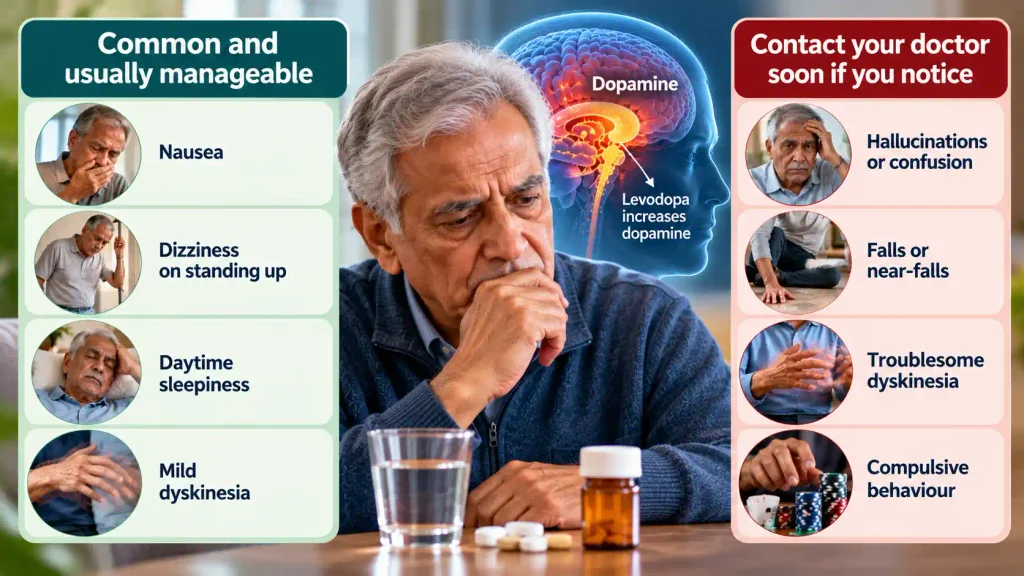
Most levodopa side effects are mild and settle with small changes. Some need prompt attention.
1. Common and usually manageable:
- Nausea, especially when starting or raising a dose
- Dizziness on standing up
- Daytime sleepiness
- Mild dyskinesia that does not bother you
2. Contact your doctor soon if you notice:
- Hallucinations, confusion or new suspicion of others
- Falls or near-falls
- Dyskinesia that makes eating, walking or sleep hard
- Compulsive behaviour such as gambling or shopping (more common with dopamine agonists)
Safety warning: never stop levodopa suddenly. A sudden stop can cause severe stiffness, high fever and confusion. This is a medical emergency. Always change doses only with your doctor’s advice.
Practical Ways to Reduce Medication Wearing Off
Small changes often make a big difference. Discuss each one with your doctor before you try it.
- Keep a symptom diary for 3 to 5 days. Note each dose time and mark every hour as “on”, “off” or “on with dyskinesia”.
- Time doses around meals. Many patients do better taking levodopa about 30 minutes before a meal.
- Move protein to the evening. Dal, paneer, eggs and meat can compete with levodopa. Spreading or shifting protein may help some people, but do not cut it out.
- Treat constipation. Water, fibre, movement and, if needed, a doctor-advised laxative can improve absorption.
- Ask about add-on medicines. Options include drugs that make levodopa last longer, dopamine agonists, and amantadine for dyskinesia.
- Review all other medicines. Some common drugs for nausea or acidity can worsen Parkinson’s.
“A simple diary is often more useful than any scan. When I can see exactly when the off periods happen, I can adjust timing or add the right medicine. Most families can fill it in on a phone within two minutes a day.” Dr Jaspreet Singh Randhawa
When to See a Parkinson’s Neurologist or Specialist
You do not need to wait for your next routine visit if daily life is getting harder. Many specialists use a simple guide called the 5-2-1 rule to flag advanced Parkinson’s.
| Sign | What it means |
|---|---|
| 5 or more levodopa doses a day | Doses are lasting a shorter time |
| 2 or more hours of “off” time daily | Symptoms are not well covered |
| 1 or more hours of troublesome dyskinesia | Peak-dose effects are limiting life |
If even one applies, it is time for a detailed review with a Parkinson’s neurologist or a movement disorder team. The NHS treatment also notes that treatment plans need regular review as symptoms change.
Treatment Options for Advanced Parkinson’s
Advanced Parkinson’s does not mean nothing can be done. It means the toolkit gets bigger.
| Option | How it works | Best suited for | Things to know |
|---|---|---|---|
| Dose and timing changes | Smaller, more frequent levodopa doses | Early wearing off | First step for most patients |
| Add-on tablets | Make levodopa last longer or add dopamine support | Mild to moderate off periods | May increase dyskinesia or sleepiness |
| Amantadine | Reduces dyskinesia | Troublesome peak-dose movements | Can cause swelling or confusion in some |
| Continuous infusion therapies | Steady drug delivery through a pump | Severe fluctuations, not fit for surgery | Needs daily device care |
| DBS for Parkinson’s | Electrodes calm faulty brain signals | Good levodopa response but disabling fluctuations | Surgical; needs careful selection |
Is DBS for Parkinson’s Right for You?
Deep brain stimulation places thin electrodes in a specific part of the brain. A small battery under the skin of the chest sends gentle pulses. It works like a pacemaker for movement.
DBS tends to work best for people who:
- Still respond well to levodopa during “on” periods
- Have troublesome on-off fluctuations or dyskinesia
- Have tremor that tablets do not control
- Do not have major memory problems or uncontrolled depression
DBS is less helpful for balance, speech or memory problems that do not improve with levodopa. Learn more about DBS success rates and DBS surgery costs.
“The best predictor of DBS success is how well you respond to levodopa on a good day. If your ‘on’ time is still good, DBS can often stretch that good time across the whole day. We test this carefully before recommending surgery.” Dr Jaspreet Singh Randhawa
A Caregiver’s Checklist for Worsening Symptoms
Caregivers are often the first to see changes. Watch for:
- More falls, freezing at doorways or shuffling steps
- Longer “off” periods, especially in the early morning
- Coughing or choking while eating
- New confusion, vivid dreams or hallucinations
- Low mood, withdrawal or poor sleep
- Missed or delayed doses
Ways to help at home:
- Use phone alarms for every dose, including on travel days
- Keep a written medicine list in a wallet or bag
- Remove loose rugs and add night lights
- Plan tasks such as bathing for “on” times
- Bring short videos of “off” and “on” states to appointments
Getting Parkinson’s Treatment Near Kurali and Mohali
Families from Kurali often travel to Chandigarh or Delhi for advanced care. Many do not need to. Medisyn in Kharar, Mohali, is a short drive from Kurali and offers specialist review, medicine planning and DBS assessment under one roof.
For Parkinson’s treatment near Kurali, you can book an appointment or learn more about our neurosurgeon in Mohali.
Please bring:
- All current medicines, including the boxes
- Your symptom diary
- Old prescriptions and scan reports
- A family member who sees daily symptoms
Final Thoughts
When Parkinson’s medicines seem to stop working, it can feel like the ground is shifting. But wearing off, on-off fluctuations and dyskinesia are well known stages, and each one has a clear plan of action.
Start with a diary, avoid changing doses on your own, and get a specialist review early. With careful Parkinson’s treatment near Kurali and Mohali, many people regain hours of good movement each day.
Frequently Asked Questions
1. What should you do when Parkinson’s medicines stop working as well as before?
Do not change or stop doses on your own. Keep a symptom diary for a few days and book a review with your doctor. In most cases, timing changes or an add-on medicine can restore good control.
2. Why do Parkinson’s symptoms return before the next dose of levodopa?
This is called wearing off. As Parkinson’s progresses, the brain stores less dopamine, so each dose lasts a shorter time. It is common and usually treatable with dose or timing changes.
3. What are on-off fluctuations in Parkinson’s disease, and how can they be managed?
On-off fluctuations are switches between good movement (“on”) and returning symptoms (“off”). They can be managed with more frequent doses, longer-acting add-on medicines and diet changes. If they stay severe, infusion therapy or DBS may be considered.
4. Can Parkinson’s medication dosage or timing be adjusted when symptoms worsen?
Yes, and this is often the first and most effective step. Your doctor may split doses into smaller, more frequent ones or add a medicine that extends each dose. All changes should be made under medical supervision.
5. What are the common levodopa side effects, and when should you contact your doctor?
Common levodopa side effects include nausea, dizziness on standing, sleepiness and dyskinesia. Contact your doctor promptly for hallucinations, confusion, falls or compulsive behaviour. Never stop levodopa suddenly, as this can be dangerous.
6. What is dyskinesia in Parkinson’s disease, and is it different from tremor?
Yes, they are different. Dyskinesia is a wriggling or swaying movement that usually appears when medicine levels are high. Tremor is a rhythmic shake that usually appears when medicine levels are low.
7. Can Parkinson’s symptoms worsen suddenly even when medicines are taken regularly?
Parkinson’s itself usually changes slowly over months. A sudden worsening over days often points to another cause, such as infection, dehydration, constipation or a new medicine. See your doctor quickly so the real cause can be found and treated.
8. Does Parkinson’s disease always get worse, even with treatment?
Parkinson’s is a progressive condition, but the speed varies a lot between people. Many live active lives for years with good treatment. Regular reviews help keep symptoms under control as needs change.
9. When should a person with Parkinson’s consult a neurologist for treatment changes?
See a specialist if you have two or more hours of “off” time daily, troublesome dyskinesia, or need five or more doses a day. Falls, swallowing problems or confusion also need early review. You do not need to wait for a routine visit.
10. What treatment options are available for advanced Parkinson’s disease?
Options include adjusted levodopa schedules, add-on tablets, amantadine for dyskinesia, continuous infusion therapies and deep brain stimulation. Physiotherapy, speech therapy and good nutrition also play a key role. The right mix depends on your symptoms and overall health.
11. Is deep brain stimulation (DBS) an option when Parkinson’s medicines no longer provide enough relief?
DBS can be a strong option if levodopa still works during good periods but fluctuations or dyskinesia limit your day. It is less helpful if levodopa no longer helps at all. A careful assessment decides whether you are a suitable candidate.
12. How can you reduce medication wearing off between Parkinson’s doses?
Take doses on time, ideally about 30 minutes before meals, and treat constipation. Ask your doctor about smaller, more frequent doses or add-on medicines. A symptom diary helps your doctor fine-tune the plan.
13. Can food, protein intake, constipation, or digestion affect how Parkinson’s medicines work?
Yes. Protein-rich meals can compete with levodopa in some people, and constipation or slow digestion can delay absorption. Shifting protein to the evening and improving bowel habits often help, but do not cut protein without advice.
14. How can caregivers recognise worsening Parkinson’s symptoms and help manage daily activities?
Watch for more falls, freezing, longer off periods, choking, confusion or low mood. Use dose alarms, plan tasks for “on” times and make the home safer. Short videos of symptoms are very helpful for the doctor.
15. Where can patients find Parkinson’s treatment near Kurali and Mohali, and when should they seek specialist care?
Medisyn in Kharar, Mohali, offers Parkinson’s medicine review and DBS assessment close to Kurali. Seek specialist care when off periods, dyskinesia or falls start affecting daily life. Early review usually gives more options.
When Advanced Parkinson’s Therapy Is Needed: If tremor or wearing-off spells persist despite timely levodopa adjustments, read our guides on comprehensive DBS pre-surgical evaluation near Kurali, DBS surgery coordination for Kurali & Kharar patients, and Deep Brain Stimulation surgery in Mohali.
For patients whose primary symptom is hand shaking while holding a cup or involuntary neck/limb posturing, see our dedicated guides on tremor treatment near Kurali and dystonia treatment near Kurali.