Searching for the best deep brain stimulation specialist in India returns the same ten names every time.
All in Delhi or Mumbai. All at large corporate hospitals. All with impressive credentials. None of the search results tell you how to actually evaluate which specialist is right for your specific condition, your location, and your realistic outcome expectations.
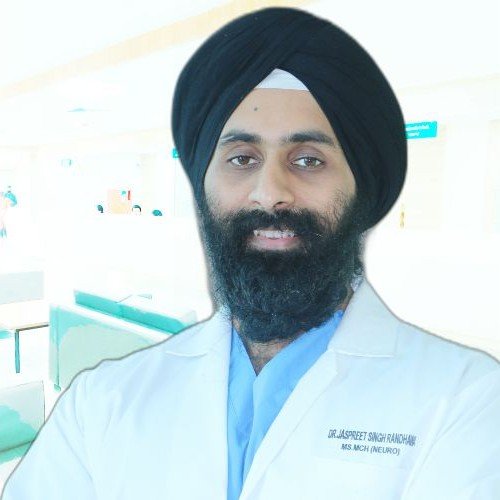
This article fixes that. It tells you the five questions that genuinely predict DBS surgical outcomes, how to evaluate any specialist’s answers, and why Dr. Jaspreet Singh Randhawa at Medisyn Neuro Centre, Mohali, belongs in the conversation for patients across North India and internationally.
Why “Best DBS Specialist” Is a More Specific Question Than It Sounds
DBS surgery is not one procedure. It is a family of procedures, each targeting a different brain structure, requiring different surgical approaches, and producing different outcome timelines depending on the underlying condition.
The best specialist for Parkinson’s disease DBS at the subthalamic nucleus is not automatically the best specialist for dystonia DBS at the globus pallidus. A surgeon who performs fifty Parkinson’s DBS procedures a year may have minimal experience with drug-resistant epilepsy ANT-DBS. And a specialist known nationally for one condition may not have the programming team infrastructure to optimise outcomes for a patient who lives eight hundred kilometres from their hospital.
When families search for the best deep brain stimulation specialist, what they actually need is the best specialist for their specific condition, at a centre they can realistically access for the follow-up programming that determines most of the outcome.
“Every family that walks into my clinic has already done research. They have names, they have rankings, they have hospital brochures. The first thing I do is ask them what condition we are treating and what they have been told so far about their specific situation. The generic best specialist question becomes the right question the moment we make it specific.”
Dr. Jaspreet Singh Randhawa, MCh Neurosurgery (Gold Medalist), Medisyn Neuro Centre, Mohali
Five Questions That Separate a Truly Exceptional DBS Specialist from the Rest
Question 1: What is your specific subspecialty training in functional neurosurgery?
General neurosurgeons can perform DBS. But the best outcomes consistently come from surgeons whose primary subspecialty is functional neurosurgery. This means dedicated training in stereotactic technique, microelectrode recording, and the specific anatomy of movement disorder brain targets beyond what general neurosurgery training provides.
The qualification to look for: MCh in Neurosurgery from a premier institution, combined with a fellowship or advanced training specifically in functional or stereotactic neurosurgery. Not a certificate course. Not occasional DBS cases within a general neurosurgery practice.
The answer you want to hear: a surgeon who trained at an institution like AIIMS, AFMC, or PGI Chandigarh for the MCh, and who describes functional neurosurgery as a primary focus, not a peripheral service.
Question 2: How many DBS procedures do you personally perform each year?
Volume matters in DBS surgery more than in almost any other neurosurgical procedure. The subthalamic nucleus is four millimetres wide. Electrode placement accuracy within two millimetres determines outcome. That accuracy comes from repetition, pattern recognition, and the refined intraoperative judgment that only comes from doing the procedure regularly.
Ask about the surgeon’s personal annual DBS volume, not the hospital group’s combined numbers. A surgeon performing three hundred DBS cases a year as part of a team of six surgeons may personally perform fifty. That distinction matters.
What the research shows: centres with higher procedural volume consistently produce better outcomes. The programmatic experience of the full team, from the surgeon to the programming neurologist, improves with every case.
Question 3: Do you use intraoperative microelectrode recording (MER) routinely?
Microelectrode recording is the gold standard for confirming electrode placement in real time during DBS surgery. It works by detecting the unique electrical signatures of individual neurons in the target structure, confirming that the electrode is precisely within the intended area before it is permanently fixed in place.
Not all DBS centres use MER routinely. Some rely on imaging-based targeting alone. MER adds surgical time and requires specific expertise but significantly reduces placement error.
The answer you want: yes, MER is a standard part of every procedure, not an optional add-on used selectively.
Question 4: Who handles post-operative programming and how is it structured?
DBS surgery delivers hardware. Programming delivers the outcome. The two to three months of parameter adjustment after device activation, where voltage, pulse width, and electrode configuration are refined to achieve the best symptom control with fewest side effects, determines most of the clinical benefit the patient ultimately experiences.
The best deep brain stimulation specialist works within a team that includes a dedicated movement disorder neurologist responsible for programming. This is not the same as a general neurologist who programmes the device between other clinic patients.
Ask: who will programme my device? How many programming sessions are expected in the first year? What happens if I have a side effect between scheduled visits?
Question 5: Can I realistically access this specialist for follow-up over years?
DBS is a lifelong commitment to a care team. The device requires programming at activation, then at regular intervals, then whenever the patient’s condition changes. For a patient in Chandigarh seeking a specialist in Mumbai, each programming visit becomes a significant logistical and financial event.
The best deep brain stimulation specialist for a North India patient may not be the nationally most famous name. It may be the most experienced specialist they can access consistently for years of follow-up, without the barrier of interstate travel and hotel stays compounding the cost of every visit.
“I have had patients come to me after surgery elsewhere, where the device was implanted well but the programming was done only twice in two years because they could not afford to keep travelling. The tremors they expected to disappear were only partially controlled, and they blamed the surgery. The surgery was fine. The access to programming was the problem. Location matters in DBS care as much as it does in the operating theatre.”
Dr. Jaspreet Singh Randhawa
Dr. Jaspreet Singh Randhawa: How He Answers Each of the Five Questions
On Subspecialty Training
Dr. Randhawa holds an MCh in Neurosurgery from Armed Forces Medical College (AFMC), Pune, where he was awarded the Gold Medal for the highest academic and clinical performance in the programme. This is not an administrative distinction. AFMC’s MCh in Neurosurgery is one of the most competitive postgraduate neurosurgery programmes in India, comparable in rigour to PGI Chandigarh and AIIMS.
His subsequent training at AIIMS New Delhi, Maulana Azad Medical College, and Fortis CDOC Hospital, Delhi, provided exposure to complex functional and vascular neurosurgery cases before he established his functional neurosurgery programme in Mohali.
On Surgical Volume and Scope
Dr. Randhawa has performed over 5,600 surgeries across his career, spanning more than fourteen years of active practice in Mohali. His DBS programme covers Parkinson’s disease, essential tremor, dystonia, and drug-resistant epilepsy, making Medisyn one of the few centres in North India offering the full spectrum of neuromodulation surgery.
He is also among the leading neurosurgeons in Chandigarh with expertise in Spinal Cord Stimulation (SCS) for Painful Diabetic Neuropathy. This advanced procedure requires the same functional neurosurgery expertise used in Deep Brain Stimulation (DBS), but targets the spinal cord instead of the brain.
On MER and Surgical Precision
Intraoperative microelectrode recording is a standard component of the DBS surgical protocol at Medisyn. The stereotactic equipment used for targeting follows internationally established protocols. Both aspects contribute to the electrode placement accuracy that the JAMA Neurology five-year outcomes data identifies as the primary predictor of DBS benefit.
On Post-Operative Programming
The programming team at Medisyn operates as an integrated unit with the surgical team. Programming activation, initial optimisation, and ongoing follow-up visits are conducted at the centre itself. Patients from across Punjab, Haryana, Himachal Pradesh, and Jammu and Kashmir can access programming visits without the travel burden of reaching a distant metropolitan centre.
On Total Treatment Cost
When comparing DBS centres, the surgery fee is only one part of the financial picture. Travel, hotel stays, local transportation, repeated follow-up visits, and time away from work can add significantly to the overall cost of treatment.
For patients across Punjab, Haryana, Himachal Pradesh, Jammu & Kashmir, and the wider North India region, Medisyn’s Mohali location reduces many of these additional expenses. The centre is located on Airport Road, approximately 12 kilometres from Chandigarh International Airport, making it easily accessible without lengthy domestic transfers. International patients from Canada, the UK, the USA, the Middle East, and Africa can often reach the treating team with fewer travel connections and shorter stays, helping control the non-medical costs associated with DBS treatment.
If cost is an important factor in your decision-making process, it is worth understanding how device selection, battery type, hospital stay, and long-term follow-up influence the final investment. Read our detailed guide on DBS Surgery Cost in Mohali before comparing centres and treatment options.
Credentials That Matter: A Complete Summary
| Credential | Detail |
|---|---|
| Primary degree | MBBS, Jawaharlal Medical College, Belgaum |
| Postgraduate | MS, PGI Medical Sciences, Rohtak |
| Superspecialty | MCh Neurosurgery (Gold Medalist), AFMC Pune |
| Institutional training | AIIMS New Delhi; MAMC New Delhi; Fortis CDOC Delhi; Bahra and Livasa Hospitals, Mohali |
| Total surgeries | 5,600+ across 14+ years of practice |
| DBS conditions covered | Parkinson’s; essential tremor; dystonia; drug-resistant epilepsy; diabetic neuropathy (SCS) |
| Professional memberships | Lifetime Member, Endoscopic Spine Foundation of India; Associate Member, Indian Society for Pediatric Neurosurgery; Associate Member, Neurological Surgeon’s Society of India |
| Media coverage | Hindustan Times; Punjab Times; Zee Punjab; ANI News (Adaptive DBS launch, April 2026) |
| International patients | Canada; USA; UK; Africa; Middle East |
What Makes a DBS Specialist the Best for North India Patients Specifically
The nationally celebrated DBS specialists operate from Mumbai and Delhi. Their credentials are extraordinary. Their case volumes for Parkinson’s DBS are among the highest in Asia. For a patient in Bandra or South Delhi, they are the natural choice.
For a patient in Chandigarh, Ludhiana, Amritsar, Patiala, Dharamsala, or Srinagar, the calculation is different. The best deep brain stimulation specialist is the most skilled and experienced specialist they can access not just for the surgery, but for every programming visit, every device check, and every medication review over the coming years.
That specialist, for North India patients, is Dr. Jaspreet Singh Randhawa at Medisyn Neuro Centre, Airport Road, Mohali.
According to the Parkinson’s Foundation, working with an experienced DBS centre, one that offers comprehensive evaluation, skilled surgery, and ongoing programming support, is the single most important factor in surgical outcome. Research published on PubMed reviewing long-term DBS outcomes confirms that patient selection and post-surgical management by an experienced team are the two strongest predictors of sustained benefit.
To begin your consultation with Dr. Randhawa and receive a specialist assessment of whether DBS is right for your condition, book your appointment at Medisyn online. Bring your most recent MRI, neurologist notes, and current medication list to make the most of your first visit.