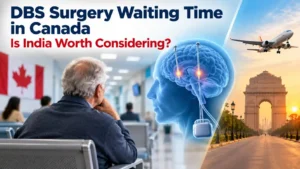
Your neurologist says deep brain stimulation could help. Then you find out the wait for neurosurgery in Canada can run close to a year. Meanwhile, the tremor gets worse, the “off” periods get longer, and simple things like buttoning a shirt take real effort.
That gap is why many families start looking at deep brain stimulation abroad. India has offered DBS since the late 1990s, uses the same approved devices, and can often move from evaluation to surgery within weeks.
Still, travel for neurosurgery is a serious step. I review records from Canadian patients India-bound every month, and my first job is not to sell surgery. It is to work out whether DBS is right for you, and whether the plan for care after you fly home is solid.
Key Takeaways
- Wait times are the main driver. In 2025, neurosurgery had the longest median wait of any specialty: 49.9 weeks from GP referral to treatment.
- The need is growing. More than 100,000 people in Canada live with Parkinson’s, and the number keeps rising.
- Cost in India is predictable. Bilateral DBS at Medisyn costs Rs.13 to 27 lakh (about US$15,000 to 32,000) all-inclusive, with pre-surgical tests billed separately at Rs.40,000 to 80,000.
- Results are well documented. In a long-term study of Parkinson’s patients followed for up to 13 years, tremor showed the strongest and most lasting benefit, at about 72.5% improvement.
- DBS controls symptoms; it does not cure Parkinson’s. It helps motor symptoms but does not stop the disease from progressing.
- Serious risks are uncommon but real. Published series report brain bleeding in about 1 to 2% and hardware infection in about 3 to 5% of patients (Doshi PK, Stereotact Funct Neurosurg, 2011).
- Plan for 3 to 4 weeks in India, and line up a DBS programming clinic at home before you book flights.
DBS Surgery in India for Canadians: Why Families Consider Travelling
In Canada, DBS is covered by provincial health plans. So for most families, going abroad is not about saving money. It is about saving time.
What usually pushes people to look further?
- Long queues. Waits stack up: GP to neurologist, neurologist to movement disorder clinic, then the surgical list.
- Few specialists. Parkinson Canada has reported roughly one Parkinson’s specialist for every 1,400 people with the condition.
- A narrowing window. DBS works best while you still respond well to levodopa. Waiting too long can mean balance and memory problems set in, and these respond poorly to surgery.
- Same hardware. Experienced Indian centres implant the same Medtronic and Abbott systems used in North America.
One honest point most medical tourism India websites skip: provincial plans rarely reimburse elective surgery abroad when it is available at home. Ask your province about out-of-country coverage before you plan around it.
Is DBS Right for You? Candidacy Comes First
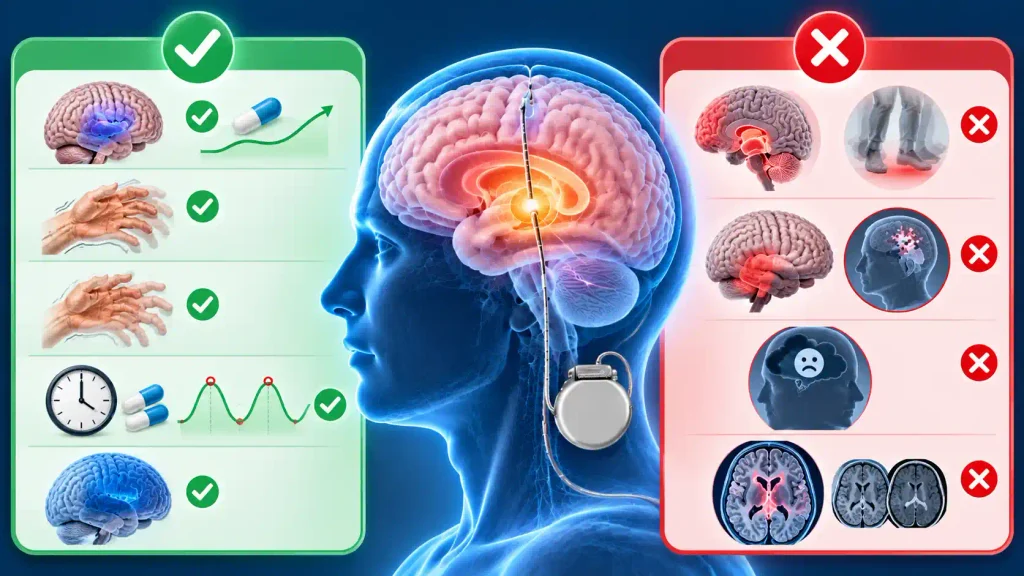
No flight, hotel or price matters if you are not a good candidate. DBS helps a specific group of people very well and others very little.
1. You may be a good candidate if:
- You have had idiopathic Parkinson’s for about four years or more
- Levodopa still works, but the effect wears off between doses
- You have troublesome dyskinesias (involuntary movements) from medication
- Your tremor does not respond well to medicines
- Your memory and thinking are largely intact
2. DBS may not help much if:
- Your main problems are falls, freezing or poor balance that do not improve with levodopa
- You have significant dementia or untreated depression
- Your diagnosis is a Parkinson’s-plus syndrome, such as MSA or PSP
If your medicines stop working the way they used to, that is often the right time to ask about DBS.
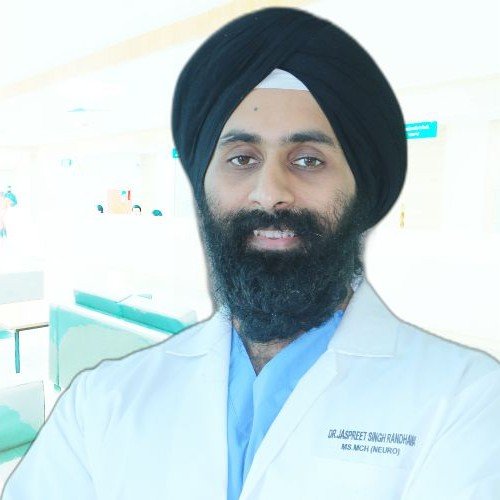
“The most useful thing I can do for a family overseas is say no early when DBS is not the right fit. If levodopa still helps but wears off, people usually do very well. If balance and memory are the main problems, I will tell you honestly that surgery may not help.” Dr Jaspreet Singh Randhawa
DBS Cost Comparison: India, Canada and the USA
Cost is only one piece of the decision. The table puts it alongside the factors that matter just as much.
| Factor | Canada (public system) | USA (private) | India (Medisyn, Mohali) |
|---|---|---|---|
| Surgery cost to patient | Usually covered by province | About US$60,000 to 100,000 | Rs.13 to 27 lakh (about US$15,000 to 32,000) |
| Typical wait | Neurosurgery median 49.9 weeks (2025) | Weeks to months | 4 to 8 weeks once records are reviewed |
| Devices | Medtronic, Abbott, Boston Scientific | Same | Medtronic, Abbott |
| Extra costs | Minimal | Travel if out of state | Flights, 3 to 4 weeks of stay, companion |
| Programming | Local clinic | Local clinic | First sessions in India, then at home |
The price range in India depends mostly on the device. A rechargeable battery costs more upfront but avoids replacement surgery every 3 to 5 years. Our full cost breakdown explains each option in plain numbers.
What Your Trip Looks Like, Week by Week
A well-planned trip feels calm, not rushed. Most of the work happens before you leave.
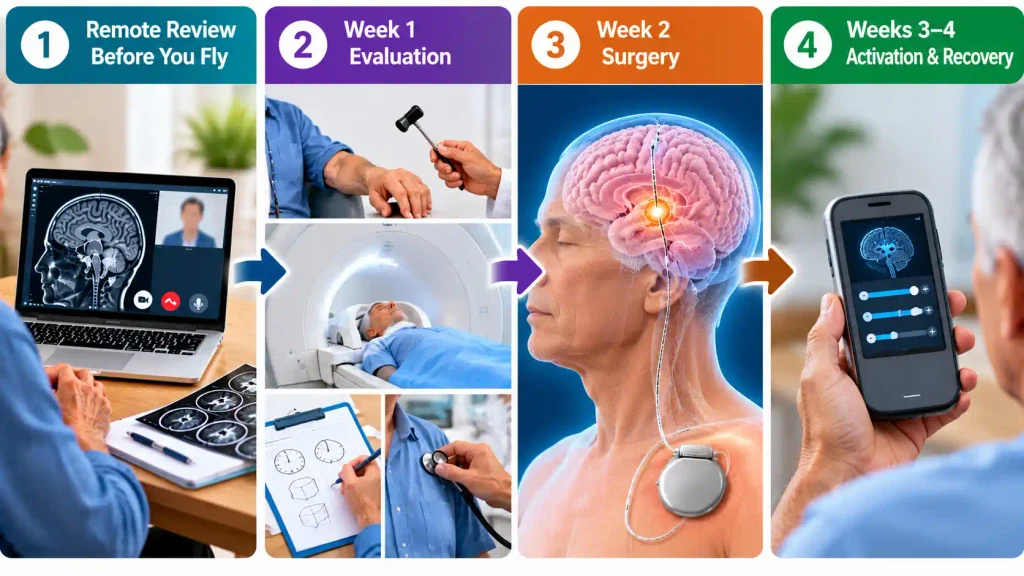
Before You Fly: Remote Review
You send your records. I review them and we speak on a video call. If DBS looks suitable, you get a written plan and estimate. If it does not, you hear that before spending anything on travel.
Week 1: Evaluation
- Consultation and neurological exam
- Levodopa challenge test (off and on medication)
- DBS-protocol brain MRI
- Memory, mood and thinking assessment
- Heart and anaesthesia clearance
Week 2: Surgery
- Stage 1: Electrodes are placed in the brain using precise MRI and CT planning
- Stage 2: The battery (pulse generator) is placed under the skin below the collarbone
- Most patients stay in hospital for a few days after each stage
Weeks 3 to 4: Activation and Recovery
- The device is switched on and first settings are tested
- Medicines are adjusted as stimulation starts to work
- Wounds are checked and stitches removed
- You receive your device ID card and a full report for your home team
Medical Reports to Send Before You Book
Good records shorten the process by weeks. Please gather:
- Neurologist letters confirming your diagnosis and how long you have had it
- Your full medication list with doses and timings
- Any recent brain MRI (images on a disc or link, plus the report)
- A short home video showing your “on” and “off” states
- Recent blood tests, ECG and a list of other health conditions
- Details of blood thinners, which usually need to be paused safely
Our international patient desk is here to help you collect and securely transmit these documents.
Safety and Risks: An Honest Look
DBS is an established, widely performed operation. But it is brain surgery, and you deserve clear numbers rather than reassurance alone.
Possible risks include:
- Bleeding in the brain (about 1 to 2%)
- Infection around the device (about 3 to 5%), sometimes needing removal
- Temporary confusion after surgery, especially in older patients
- Speech, mood or balance changes linked to stimulation, which can usually be reduced by reprogramming
- Lead or wire problems that may need a small repeat procedure
Cleveland Clinic lists a similar range of risks. For a broader view of outcomes, our DBS success rates explains what the evidence shows for each condition.
“Most of the risk in DBS sits in two places: where the electrode goes and whether the wound stays clean. Careful planning, a sterile theatre and proper rest in the first two weeks address most of it. I would rather you stay three extra days than fly with a wound I am not happy with.” Dr Jaspreet Singh Randhawa
Flying Home and Follow-Up Care
Most patients can fly about 7 to 14 days after the final stage, once wounds are healing well. At the airport, show your device ID card and ask for a hand search rather than lingering in scanners.
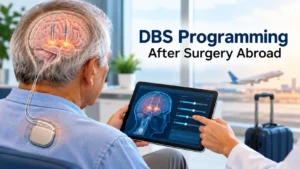
The bigger question is programming. DBS settings are fine-tuned over 3 to 12 months, and the device is useless without someone to adjust it.
Before you travel, make sure:
- A DBS or movement disorder clinic in Canada has agreed to see you, or you have a referral in progress
- Your chosen device brand is supported by that clinic
- You understand MRI safety rules for your specific system
- You know the warning signs that need urgent care: fever, wound redness or discharge, new weakness, severe headache or confusion
If a problem appears after you return, go to your local emergency department first. Bring your device card and our surgical report. We stay in touch with your home doctors and can share imaging and settings on request.
“The surgery takes a few hours, but the programming takes months. Before any international patient books a flight, I want to know who will adjust their device at home. If we cannot answer that clearly, we wait until we can.” Dr Jaspreet Singh Randhawa
How to Choose a DBS Surgeon and Hospital in India
Price comparison sites list hospitals but rarely tell you what to check. Use this list instead:
- Functional neurosurgery training. Ask how many DBS cases the surgeon performs each year, not just general neurosurgery numbers.
- A full team. Neurology, neuropsychology and a dedicated programming specialist should all be involved.
- Transparent pricing. You should get a written estimate covering device, both surgical stages and initial programming.
- Honest candidacy decisions. A good centre will sometimes tell you not to have surgery.
- A clear follow-up plan that connects with your care at home.
- A real international patient coordinator who handles visas, airport pickup, stay and records.
You can know about Dr Randhawa’s experience in DBS, spinal cord stimulation and complex brain surgery.
Final Thoughts
Parkinson’s surgery overseas makes sense for some families and not for others. The right decision rests on three things: whether you are a strong candidate, whether the surgical team is genuinely experienced, and whether your follow-up at home is secure.
If those three line up, India can offer world-standard DBS within weeks instead of a year. Send your reports for a no-obligation review, and you will get an honest answer about whether DBS is likely to help you.
Frequently Asked Questions
1. Can Canadian patients undergo DBS surgery in India for Parkinson’s disease?
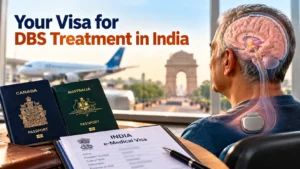
Yes. Canadian patients regularly travel to India for DBS, usually on an Indian medical visa. The first step is a remote review of your reports so we can confirm you are a suitable candidate before you plan any travel.
2. How much does DBS surgery cost in India compared with Canada?
In Canada, DBS is usually covered by your provincial plan, so the main cost is waiting time. In India, bilateral DBS at Medisyn costs Rs.13 to 27 lakh (about US$15,000 to 32,000), depending on the device, plus travel and a 3 to 4 week stay.
3. Is DBS surgery in India safe for international patients?
At experienced centres, DBS in India follows the same protocols and uses the same devices as North America. Safety depends far more on the surgeon’s DBS experience, careful patient selection and a clean surgical setting than on the country itself.
4. Who is an ideal candidate for deep brain stimulation surgery?
The best candidates have Parkinson’s that still responds to levodopa but wears off, or causes dyskinesias, with good memory and thinking. DBS also helps essential tremor and some types of dystonia. A levodopa challenge test and memory assessment confirm suitability.
5. How long should Canadian patients stay in India for DBS surgery and recovery?
Plan for 3 to 4 weeks. This covers evaluation, both surgical stages, device activation, wound checks and early programming before it is safe to fly.
6. What medical reports are required before travelling to India for DBS surgery?
Send your neurologist letters, full medication list, any recent brain MRI and blood tests. A short video of your “on” and “off” states is very helpful. These let us judge candidacy before you commit to travel.
7. Is DBS surgery effective for advanced Parkinson’s disease when medications stop working well?
DBS works best when medicines still help but wear off too quickly or cause dyskinesias. If levodopa no longer helps at all, DBS usually helps less, because it tends to improve the same symptoms that medicine once controlled.
8. What are the risks and possible complications of DBS surgery?
The main risks are brain bleeding in about 1 to 2% of patients and device infection in about 3 to 5%. Temporary confusion and stimulation side effects such as speech or mood changes can occur, but these often improve with reprogramming.
9. Does deep brain stimulation cure Parkinson’s disease or only control its symptoms?
DBS controls symptoms; it does not cure Parkinson’s or stop it progressing. Many patients gain more “on” time, fewer involuntary movements and lower medicine doses, which can greatly improve daily life for years.
10. How can Canadian patients choose the right DBS surgeon and hospital in India?
Look for a surgeon with specific functional neurosurgery training and regular DBS cases, a full multidisciplinary team, and a written, all-inclusive estimate. A centre that is willing to tell you when surgery is not right is a strong sign of honesty.
11. How soon can patients fly back to Canada after DBS surgery?
Most patients can fly about 7 to 14 days after the final surgical stage, once wounds are checked. Your surgeon should clear you personally, and you should carry your device ID card for airport security.
12. Will patients need DBS programming and follow-up care after returning home?
Yes. Programming continues for 3 to 12 months and then periodically for life. Arrange a DBS or movement disorder clinic at home before surgery, and choose a device brand that clinic supports.
13. Can DBS surgery reduce tremors, stiffness, and movement difficulties caused by Parkinson’s disease?
Yes, these are the symptoms DBS helps most. Tremor, stiffness, slowness and dyskinesias usually improve well. Balance, speech and memory problems respond much less.
14. What happens if complications develop after returning home following DBS surgery in India?
Go to your local emergency department first and bring your device card and surgical report. Our team shares imaging, settings and notes with your doctors and stays in contact during your recovery.
15. How can Canadian patients arrange medical consultations, travel, and hospital appointments for DBS surgery in India?
Start by contacting our international patient desk with your reports. We arrange the video consultation, visa invitation letter, estimate, hospital dates and airport pickup, so your family can focus on recovery.
Continue Exploring the Canadian DBS Patient Series: Review our main surgical overview for Deep Brain Stimulation surgery in Mohali and Chandigarh, examine provincial DBS surgery waiting times in Canada, compare itemised DBS surgery cost in India vs Canada and Australia, follow our India e-Medical visa guide for Canadian passport holders, and read how post-operative DBS programming works after you return home to Canada. WhatsApp our International Desk directly at +91 98765 40305.