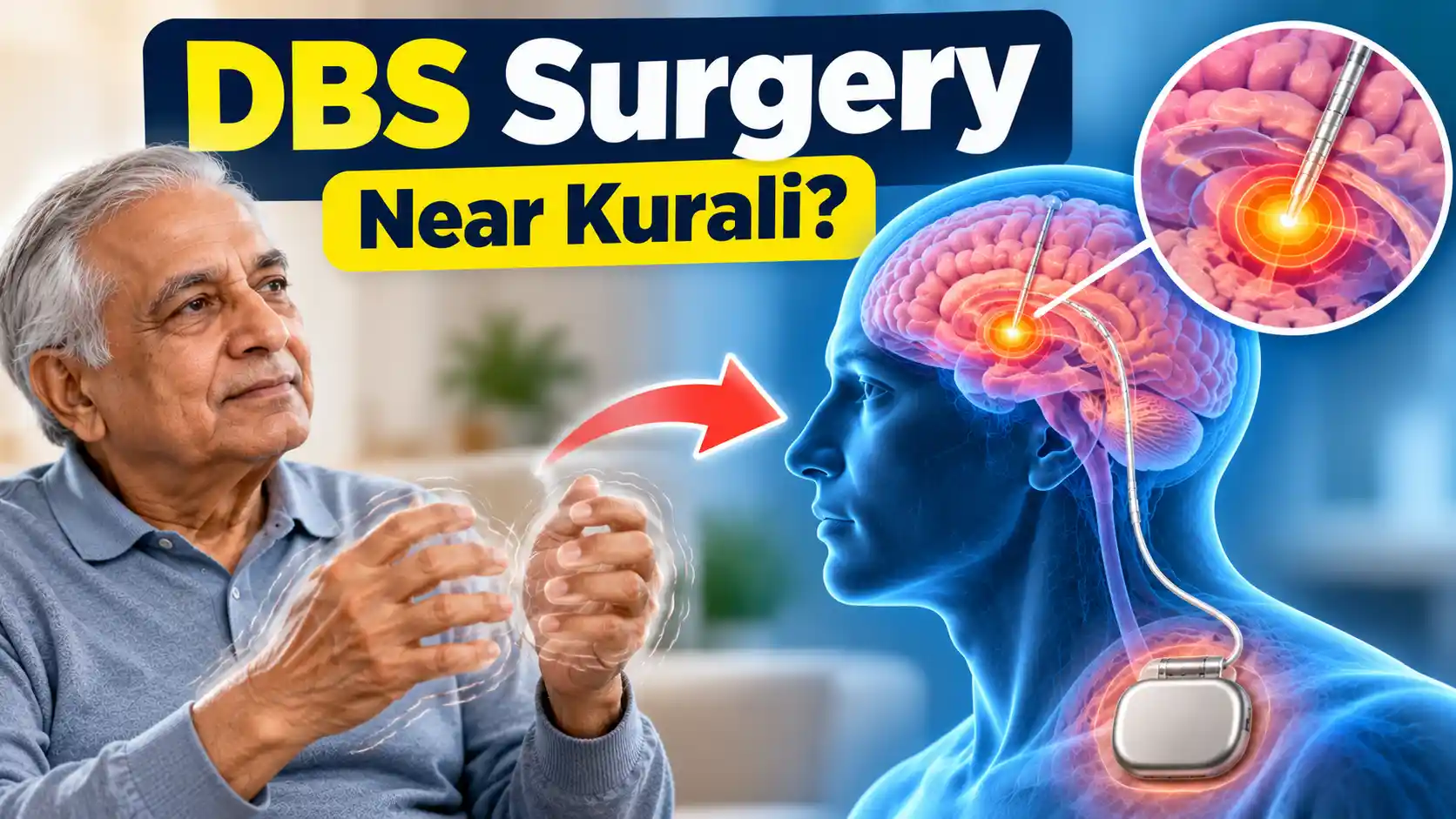
Your Parkinson’s tablets used to last for hours. Now they wear off fast. The shaking comes back before the next dose. Or your arms and legs start to twist and jerk once the dose kicks in.
Many families in Kurali live with this every day. Most believe nothing more can be done. For the right person, DBS surgery near Kurali can change that pattern.
Deep brain stimulation does not cure Parkinson’s. But it can bring back steadier and more predictable days. The key words are “the right person.” A careful check before surgery matters as much as the operation itself.
Key Takeaways
- Parkinson’s is rising fast. Prevalence has doubled in the past 25 years, and global estimates in 2019 showed over 8.5 million people with the disease.
- DBS is for symptoms that medicines no longer control well. It will not cure the condition, but it may lessen symptoms, and many people still need to keep taking medicines.
- It works best on movement symptoms. DBS is usually most effective for tremor, slowness of movement, rigidity and dyskinesia.
- Your response to levodopa predicts your result. Symptoms that do not improve with Parkinson’s medicine rarely improve with DBS, except tremor, which can sometimes still be treated.
- Serious risks are uncommon but real. One NHS service quotes a stroke risk of about 0.5% (1 in 200), a death risk of about 0.2% (1 in 500) and an infection risk of about 5% (1 in 20).
- Batteries need planned replacement. In one study of non-rechargeable devices, the median battery life was 45 months. Replacing the generator is done as an outpatient procedure.
- DBS is an ongoing treatment, not a one-day event. Finding the best settings can take as long as 4 to 6 months.
What Is Deep Brain Stimulation?
Deep brain stimulation is a type of movement disorder surgery. It sends mild electrical pulses to a small area deep in the brain. These pulses calm the faulty signals that cause tremor, stiffness and slowness.
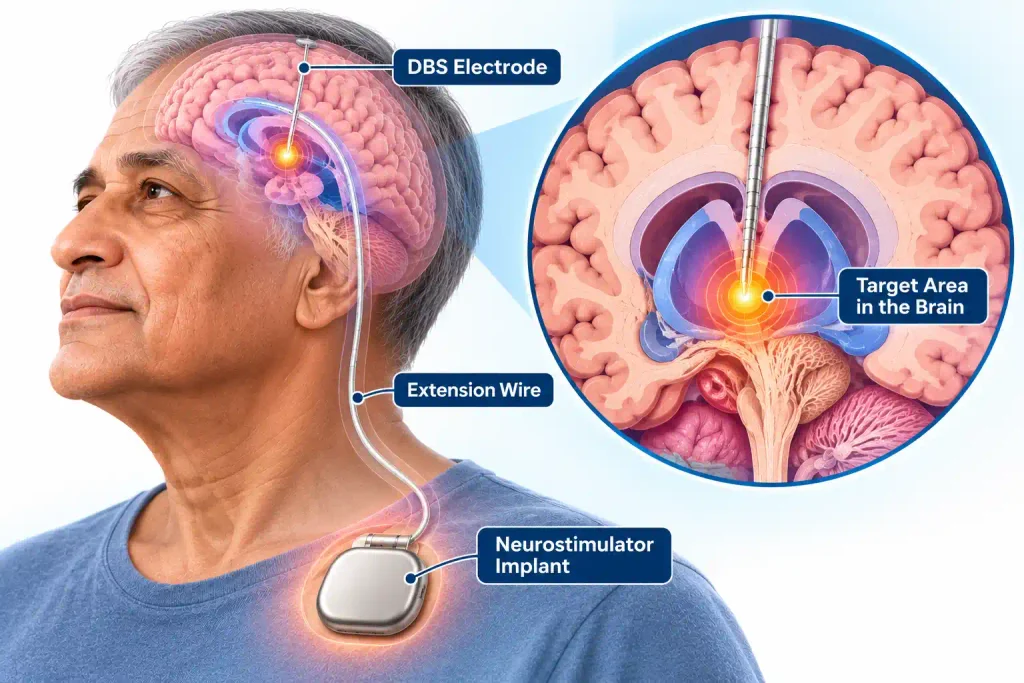
A DBS system has three parts:
- DBS electrodes: thin wires placed in a target area of the brain.
- Extension wire: runs under the skin of the scalp and neck.
- Neurostimulator implant: a small battery device placed under the skin below the collarbone, much like a heart pacemaker.
The device can be adjusted from outside the body. Nothing is destroyed in the brain. If needed, settings can be changed or switched off.
Who Should Consider DBS Surgery?
This is the most important question. A good result depends far more on picking the right patient than on any machine.
1. Signs You May Be a Good Candidate
- You have a clear diagnosis of Parkinson’s disease, usually for several years.
- Levodopa still helps you, but the effect wears off too soon.
- You have “on” and “off” swings during the day.
- You have troublesome involuntary movements (dyskinesia) from medicines.
- You have tremors that medicines do not control.
- Your memory and thinking are mostly intact.
- You are healthy enough for surgery and have family support for follow-up visits.
2. When DBS Is Usually Not Advised
- Significant memory loss or dementia.
- Severe, untreated depression or anxiety.
- Symptoms that never improved with levodopa (other than tremor).
- Atypical parkinsonism, such as multiple system atrophy or progressive supranuclear palsy.
- Main problems are falls and frozen walking even in your best “on” state.
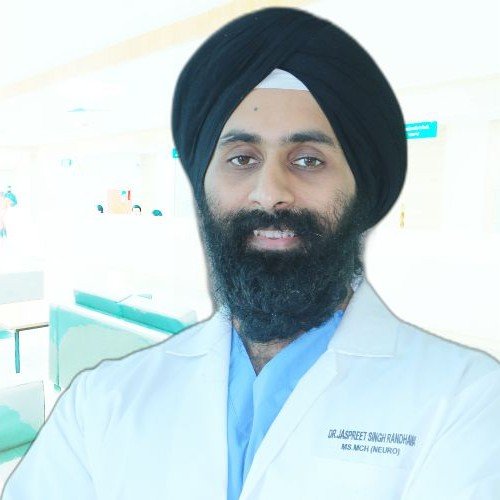
“I tell families that DBS improves what your best dose of medicine already improves. If levodopa makes you walk better for two hours, DBS can help you get more of those good hours. If levodopa never helps a symptom, the surgery usually will not fix it either.” Dr Jaspreet Singh Randhawa, Neurosurgeon
Can DBS Help When Parkinson’s Medicines Stop Working?
Often, yes. But “stop working” needs a closer look. In most people, levodopa still works. The problem is that each dose lasts a shorter time, and the doses cause side effects.
This pattern is called motor fluctuation. It is the classic reason to consider Parkinson’s surgery. If you feel your medicines stop working, a proper review comes first. Sometimes a change in timing or dose fixes the issue without surgery.
The Levodopa Challenge Test
Before DBS, most teams do this simple test:
- You stop your Parkinson’s medicine overnight.
- Your movements are scored in the morning while “off.”
- You take a dose of levodopa.
- Your movements are scored again at your best “on.”
A large difference between the two scores is a good sign. It suggests DBS is likely to help.
Which Movement Disorders Can DBS Treat?
Parkinson’s disease is the most common reason for DBS. Other conditions include:
- Essential tremor: shaking of the hands, head or voice that medicines fail to control.
- Dystonia: painful twisting or abnormal postures. Read more about DBS for dystonia.
- Epilepsy: selected patients with seizures that do not respond to medicines.
- Some psychiatric conditions: such as severe OCD, in specialised centres only.
Each condition uses a different target in the brain. The team chooses the target based on your main symptoms.
What Improves After DBS, and What Usually Does Not
Clear expectations prevent disappointment. The table below gives a general picture. Your own result depends on your symptoms and your levodopa response.
| Symptom | Usual response to DBS | Notes |
|---|---|---|
| Tremor | Strong improvement | Can help even when medicines do not |
| Stiffness (rigidity) | Good improvement | Often noticed early |
| Slowness (bradykinesia) | Good improvement | Tracks your best “on” state |
| Dyskinesia | Good improvement | Often because medicine doses can be lowered |
| “Off” time | Reduced | Days feel more even |
| Walking in “on” state | Similar to your best “on” | Freezing in “on” state rarely improves |
| Balance and falls | Limited | May not improve, can worsen in some |
| Speech | Limited | Can sometimes worsen with stimulation |
| Memory and thinking | Not improved | Not a treatment for dementia |
| Swallowing, bladder | Seldom helped | Needs separate care |
“Patients often ask if they will walk normally again. If your walking is good when your medicine works, DBS can help you keep that walking for more of the day. Balance and speech are harder to predict, so I always discuss them honestly before we plan surgery.” Dr Jaspreet Singh Randhawa, Neurosurgeon
Tests Before DBS Surgery
A full workup protects you from an operation that may not help. Expect some or all of these:
- Neurological exam and confirmation of the diagnosis.
- Levodopa challenge test with scoring.
- MRI of the brain to plan the target and rule out other problems.
- Memory and thinking assessment.
- Mood and mental health screening.
- Heart, blood and general fitness tests for surgery.
- A family meeting about goals and follow-up.
What Happens During Parkinson’s Surgery?
DBS is planned with great precision. Brain images guide the exact path of each electrode.
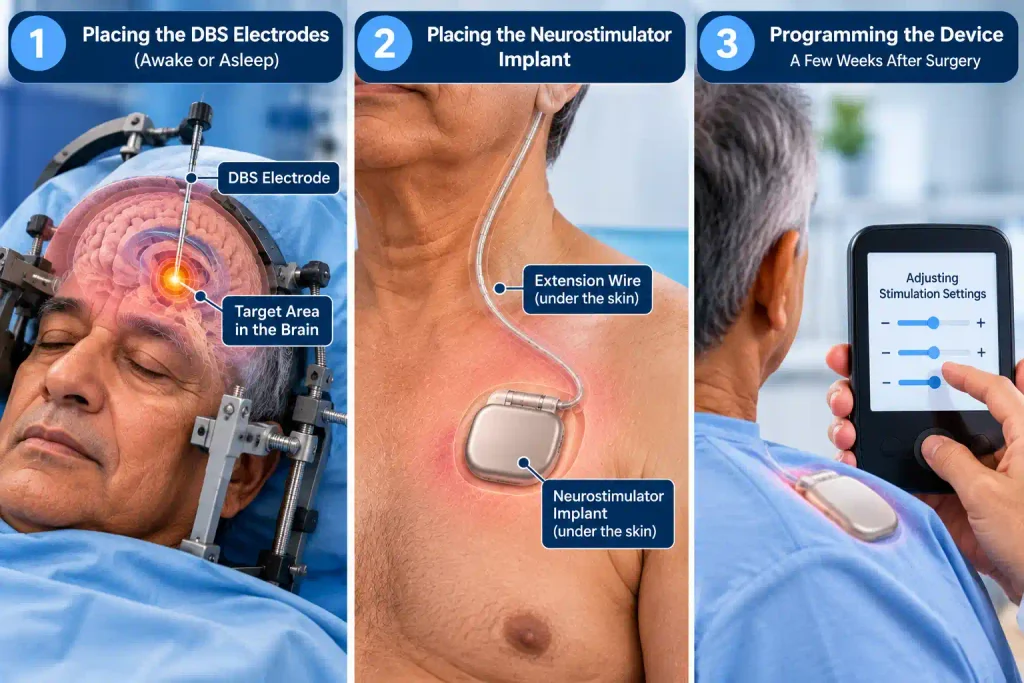
1. Is the Patient Awake or Asleep?
Both methods are used. In awake surgery, the scalp is numbed. The brain itself feels no pain. The team can test your tremor and stiffness live while placing the electrodes.
Many centres now use general anaesthesia with detailed imaging. The best choice depends on your health, your anxiety level and the surgical team’s approach.
2. Placing the Neurostimulator Implant
The battery is placed under the skin of the chest. This is usually done under general anaesthesia. It may happen on the same day or a few days later.
3. Programming the Device
The device is usually switched on a few weeks after surgery. Settings are then adjusted over several visits. Your medicines are reduced step by step as stimulation takes over. Never lower your tablets on your own.
Risks and Side Effects of DBS
Every brain surgery carries risk. A good team explains these openly. Known risks include:
- Bleeding in the brain, which can cause a stroke (uncommon).
- Infection around the device, sometimes needing removal.
- Wire breakage, movement or skin wearing over the hardware.
- Seizure soon after surgery (rare).
- Stimulation side effects such as tingling, speech changes, balance changes or mood changes.
Some settings can cause side effects, but these often improve with further changes to the device settings. This is a key advantage of DBS. Most stimulation side effects can be reversed.
Recovery and Life After the Neurostimulator Implant
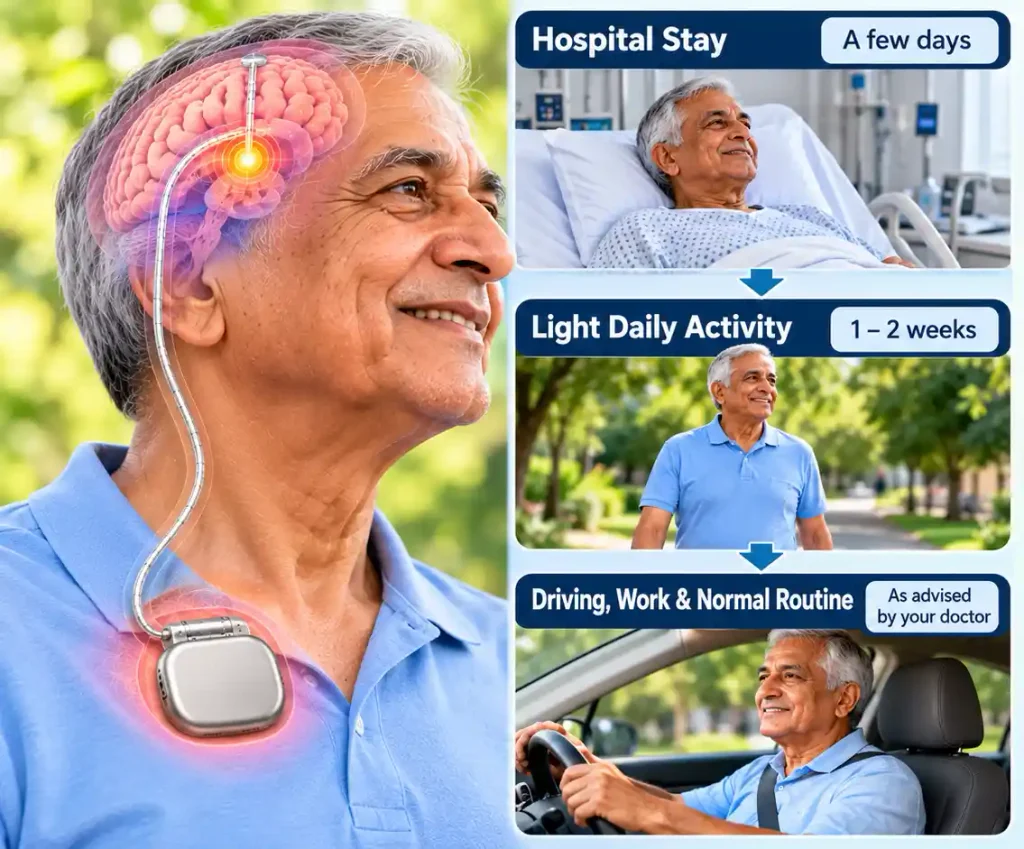
Most people stay in the hospital for a few days. Light daily activity often resumes within one to two weeks. Driving, lifting and work return depend on your progress and your doctor’s advice.
Full benefit comes slowly. It builds as programming is fine-tuned over the first few months.
How Long Does the Battery Last?
It depends on the device and the settings:
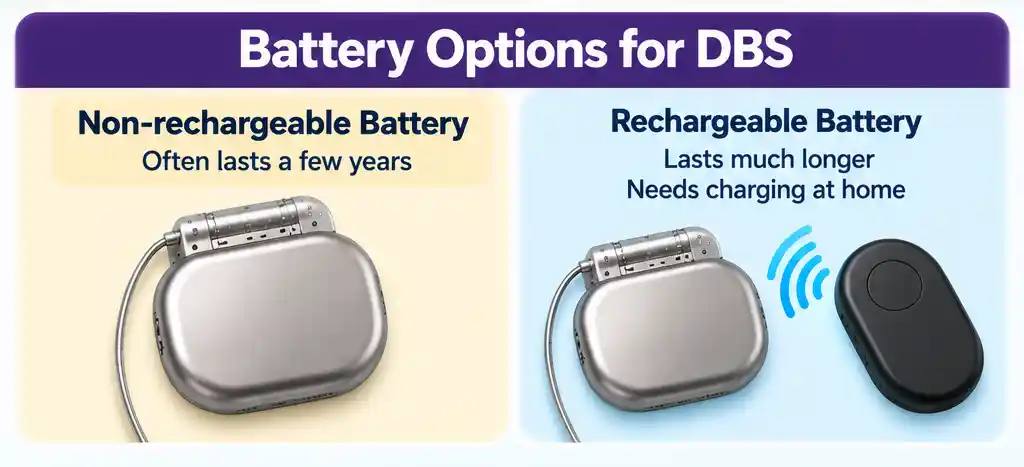
- Non-rechargeable batteries: often last a few years and need a small replacement procedure.
- Rechargeable batteries: last much longer but need charging at home.
The brain wires do not need changing when the battery is replaced.
“Think of DBS as a long partnership, not a single operation. The real work happens in the months after surgery, when we adjust settings and reduce medicines together. Patients who keep their follow-up visits usually get the most from their system.” Dr Jaspreet Singh Randhawa, Neurosurgeon
Cost of DBS Surgery Near Kurali
DBS is a major procedure, and cost is a fair concern. The total depends on several factors:
- One side of the brain or both sides.
- Type of device: rechargeable or non-rechargeable, standard or directional leads.
- Hospital stay, imaging and anaesthesia.
- Pre-surgery tests and assessments.
- Programming visits in the first year.
- Insurance cover or eligibility under health schemes.
Ask for a written estimate that lists each item. Our DBS cost explains these factors in more detail.
Finding the Right Neurosurgeon in Kharar and Mohali
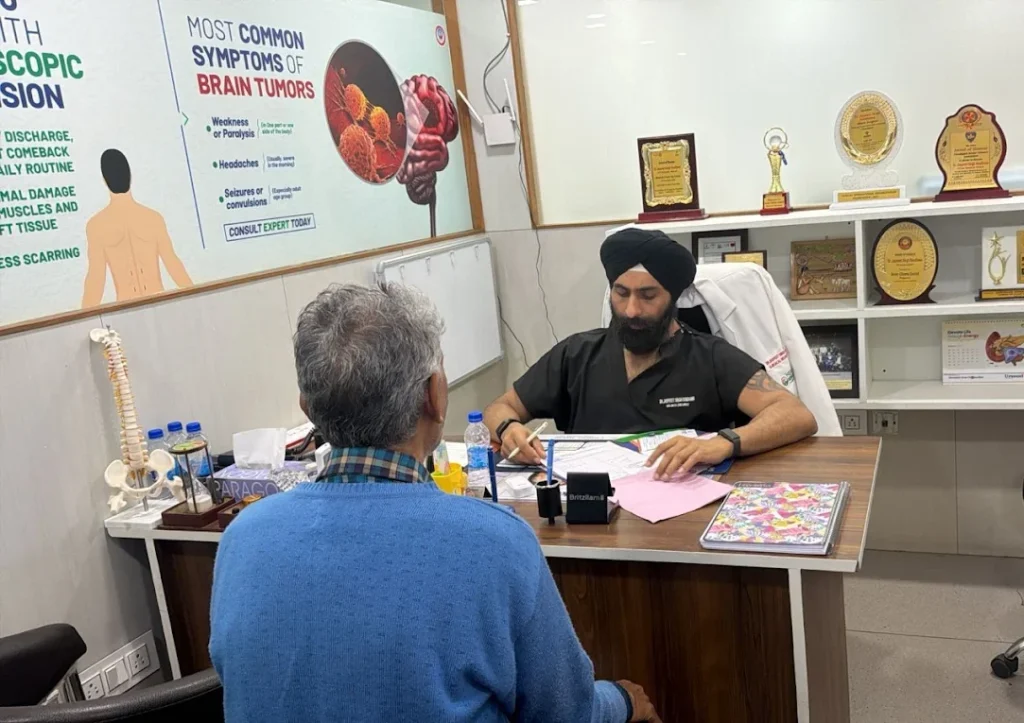
Kurali patients no longer need to travel to distant metro cities for evaluation. A neurosurgeon in Kharar or Mohali is a short drive away. Proximity matters, because DBS needs regular follow-up visits.
When choosing a DBS hospital in Punjab, ask:
- Does the team include a neurosurgeon and a movement disorder neurologist?
- Do they perform a levodopa challenge test before deciding?
- Who will programme the device after surgery, and how often?
- How are battery checks and replacements handled?
- Can they share honest expected outcomes for your symptoms?
Final Thoughts
DBS is not for everyone with Parkinson’s. But for people whose good hours keep shrinking despite medicine, it can be one of the most effective options available. The decision should rest on careful testing, honest goals and a team that stays with you for the long term.
If you or a family member is considering DBS surgery near Kurali, start with a thorough assessment. Bring your medicine list, your symptom diary and your questions. You can book a consultation with Dr Jaspreet Singh Randhawa at Medisyn.
Frequently Asked Questions
1. Who is the right candidate for deep brain stimulation (DBS) surgery?
The best candidates have Parkinson’s that still responds to levodopa, but with wearing-off, “on-off” swings or dyskinesia. They have good memory and thinking, stable mood and reasonable general health. A full assessment by a neurosurgeon and neurologist confirms suitability.
2. Can DBS surgery help Parkinson’s disease when medicines no longer control symptoms effectively?
Yes, in many cases. DBS works well when medicines still help but their effect is short or causes side effects. If medicines never helped a symptom, DBS is unlikely to help it, tremor being the main exception.
3. Which movement disorders can be treated with deep brain stimulation besides Parkinson’s disease?
DBS is also used for essential tremor and dystonia. Selected patients with drug-resistant epilepsy may benefit too. Some psychiatric conditions, such as severe OCD, are treated only in specialised settings.
4. Does DBS surgery cure Parkinson’s disease, or does it only help manage symptoms?
DBS manages symptoms. It does not cure Parkinson’s or stop it from progressing. However, it can give many people better control of movement and a more independent daily life for years.
5. What symptoms of Parkinson’s disease improve most after DBS surgery?
Tremor, stiffness, slowness and medicine-induced dyskinesia usually improve the most. “Off” periods become shorter and less severe. Memory, swallowing and bladder problems are not expected to improve.
6. What are the risks and possible complications of deep brain stimulation surgery?
Risks include bleeding in the brain, stroke, infection, seizure and hardware problems such as wire breakage. Serious complications are uncommon. Some side effects come from stimulation settings and often improve after adjustment.
7. Can patients reduce their Parkinson’s medication after a neurostimulator implant?
Many patients can lower their medicine doses, depending on the brain target used. This reduction is done slowly by the treating team during programming. Never reduce or stop medicines on your own.
8. Is DBS surgery performed while the patient is awake or under general anaesthesia?
Both methods are used. Awake surgery lets the team test symptoms live, while asleep surgery relies on precise imaging. Your surgeon will suggest the best option for your health and comfort.
9. What tests are required to determine whether someone is suitable for DBS surgery?
Common tests include a neurological exam, a levodopa challenge test, brain MRI, memory testing and mood screening. General fitness tests for surgery are also needed. These help predict benefit and reduce risk.
10. How long does recovery take after DBS surgery, and when can patients resume daily activities?
Most people go home within a few days and return to light activities in one to two weeks. Full benefit builds over a few months as the device is programmed. Your doctor will guide you on driving, work and exercise.
11. How long does a DBS battery last, and will the neurostimulator need replacement surgery?
Non-rechargeable batteries often last a few years, depending on settings. Replacement is a short procedure on the chest device only, and the brain wires stay in place. Rechargeable devices last longer but need regular home charging.
12. Can DBS improve walking, balance, speech, and stiffness in Parkinson’s patients?
Stiffness usually improves well. Walking often improves to match your best “on” state, but balance and speech are less predictable. Speech can sometimes worsen, so these goals need a frank discussion before surgery.
13. What is the cost of DBS surgery near Kurali, and what factors affect the total cost?
Cost depends on the device type, whether one or both sides are treated, hospital stay, tests and follow-up programming. Insurance cover can also change what you pay. Ask for an itemised estimate after your assessment.
14. How can patients from Kurali, Kharar, and Mohali find the right specialist for DBS surgery?
Look for a team that includes a neurosurgeon and movement disorder neurologist, performs proper pre-surgery testing and offers long-term programming. Being close to home makes regular follow-up easier. Ask clear questions about outcomes and aftercare.
15. How can I consult Dr Jaspreet Singh Randhawa at Medisyn about deep brain stimulation?
You can book an appointment online through the Medisyn website or call the clinic in Kharar, Mohali. Bring your prescriptions, scans and a note of how your symptoms change through the day. This helps make your first visit more useful.