





A woman who has already seen three doctors for the same pelvic pain, each one prescribing a different painkiller without ever asking about her cycle, is one of the most common stories in endometriosis forums. It is also one of the clearest signals that the next appointment should be with a specialist, not another general opinion.
An endometriosis specialist in Mohali brings something a routine gynecology visit often cannot: focused experience reading the specific pattern of symptoms, imaging, and history that points toward this particular condition.
Key Takeaways
- Repeated dismissal of severe period pain, an inconclusive scan, or symptoms that are worsening over time are all reasonable triggers to ask for specialist referral
- A general gynecologist and an endometriosis specialist are not automatically the same thing, even though both can treat gynecological conditions
- A first specialist consultation typically covers detailed history, symptom review, and a decision on further imaging, not an immediate surgical plan
- Bringing prior scans, a symptom timeline, and specific questions makes a first consultation considerably more useful
- Book a consultation for endometriosis treatment in Mohali if your symptoms have not been fully explained after a general gynecology visit
What an Endometriosis Specialist in Mohali Actually Does Differently
An endometriosis specialist is a gynecologist with focused experience in recognizing, diagnosing, and managing endometriosis specifically, including its less obvious presentations that a general gynecology visit can miss. The distinction matters because endometriosis can look different from one woman to the next, and a clinician who sees the condition often is more likely to recognize a pattern that a less specialized exam might attribute to something else.
A general gynecologist is not automatically less capable, but endometriosis specifically benefits from repeated, focused exposure to its variations, since the disease can present with a normal scan, atypical pain patterns, or symptoms overlapping with bowel or bladder conditions. This is a large part of why patients across endometriosis forums repeatedly describe years passing before the right referral happened.
7 Signs It May Be Time to See an Endometriosis Specialist
A number of specific signals suggest specialist evaluation is worth pursuing rather than continuing with general management alone.
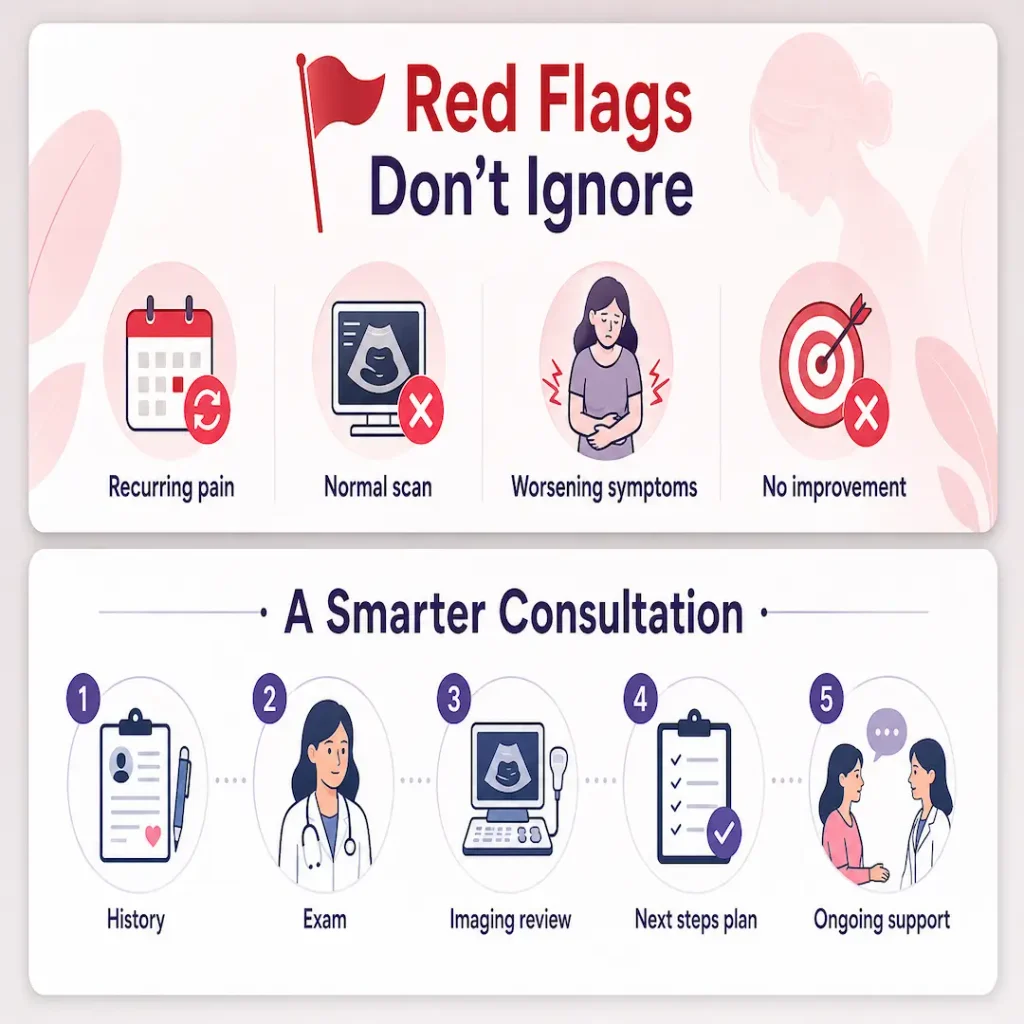
- Period pain that is severe enough to interfere with school, work, or daily plans on a recurring basis
- A normal ultrasound report despite persistent, significant pelvic pain
- Pain during or after intercourse alongside period related symptoms
- Bowel or bladder symptoms, such as painful movements or urgency, that follow your menstrual cycle
- Difficulty conceiving alongside a history of painful periods
- Symptoms that keep returning or worsening despite standard treatment such as painkillers or hormonal birth control
- A family history of endometriosis combined with your own persistent symptoms
None of these signs alone confirms endometriosis. Together, they are a reasonable basis for asking specifically for specialist referral rather than repeating the same general treatment cycle without new answers.
Endometriosis Consultation: What Actually Happens at the First Visit
Patients preparing for their first endometriosis consultation often expect an immediate diagnosis or surgical plan. That is rarely how the first visit works.
| Step | What It Involves |
|---|---|
| History review | Detailed discussion of when symptoms started, how they have changed, and their impact on daily life |
| Symptom mapping | Specific questions about pain location, timing relative to the cycle, and associated bowel or bladder symptoms |
| Physical exam | A pelvic examination when clinically appropriate to the presentation |
| Imaging review | Review of prior scans, or a referral for ultrasound or MRI if not already done |
| Next steps discussion | A specific plan for further testing, initial treatment, or both, based on what has been found so far |
According to Mayo Clinic, diagnosis generally starts with a detailed history and pelvic exam, with imaging such as ultrasound or MRI used to look for signs of endometriosis, and laparoscopy reserved for select cases rather than being routine at each visit. This matches what a first specialist consultation for endometriosis specialist in Mohali patients typically looks like: a structured information gathering step, not a single decisive test.
How to Get Referred When Your Doctor Is Not Moving Forward
A recurring frustration described across patient communities is a general practitioner or gynecologist who keeps prescribing the same medication without progressing toward a specialist opinion. This is worth addressing directly rather than accepting silently.
- Ask specifically for referral to a gynecologist experienced in endometriosis, rather than a general follow up appointment
- Describe the functional impact clearly, for example missed work or school days, rather than describing pain alone
- Bring a written symptom timeline, since a clear record is harder to dismiss than a verbal description in a short appointment
- Ask directly what evidence supports or argues against endometriosis in your specific case, rather than accepting a general reassurance
Being specific about functional impact tends to move a consultation forward faster than describing pain severity alone. A doctor hearing that pain is preventing work attendance for several days each cycle has a clearer basis for referral than a general description of discomfort.
Endometriosis Specialist in Mohali: Preparing for Your Consultation
A short preparation checklist makes a meaningful difference to how much a first consultation actually accomplishes.
- Write down when symptoms started and how they have changed over time
- Bring copies of any prior ultrasound, MRI, or operative reports, even if they were reported as normal
- Note specific patterns, such as pain timing relative to your cycle, bowel symptoms, or pain during intercourse
- List current medications and what has or has not helped so far
- Prepare your specific questions in advance, since appointments can move quickly and details are easy to forget under time pressure
Bringing a trusted friend or family member to the appointment is common practice and genuinely useful, since processing detailed medical information during a single visit is difficult, particularly when the appointment itself may feel emotionally loaded after a long search for answers. Cleveland Clinic notes that keeping a symptom diary ahead of your visit helps a specialist see the pattern behind your pain rather than a single description from one appointment.
Endometriosis Gynecologist Mohali Patients Ask About: Is It the Same as a Specialist
Not automatically. An endometriosis specialist is a gynecologist, but a gynecologist does not automatically have focused, ongoing experience specifically with endometriosis, since gynecology as a field covers a considerably broader range of conditions.
Reasonable questions to ask directly include how often the doctor manages confirmed or suspected endometriosis cases, whether they perform or refer for excision surgery when appropriate, and how they approach cases where imaging looks normal but symptoms remain significant. A doctor confident in their specific experience with this condition is generally comfortable answering these questions directly rather than deflecting them. Reviewing profiles such as the clinic’s gynecologist in Mohali listing before booking can help you compare specific experience ahead of time.
Endometriosis Specialist in Mohali: Where This Fits Into Your Broader Care
Specialist evaluation is one part of a longer process, not a single appointment that resolves everything at once. Diagnosis for endometriosis often takes more than one visit, and reviewing the fuller diagnostic picture, including why a normal scan does not rule out the condition, is worth doing directly with a dedicated endometriosis treatment guide before your appointment.
Women researching an endometriosis doctor Mohali families recommend, or comparing an endometriosis specialist Chandigarh consultation against a Mohali based clinic, generally find that a combined approach, covering diagnosis, symptom management, and fertility planning together, gives a clearer overall picture than separate opinions across multiple clinics. Patients across Punjab searching for an endometriosis doctor Punjab wide describe the same pattern: a single, focused specialist consultation moves things forward faster than repeated general visits.
If a general visit has already left you with a normal scan but ongoing symptoms, or if your gynecologist and a fertility specialist have reached different conclusions, an endometriosis specialist in Mohali consultation is a reasonable next step, and booking directly through the clinic’s appointment page is the most direct way to get that conversation started.
Frequently Asked Questions
1. How do I know if it is time to see an endometriosis specialist rather than my regular gynecologist?
Specialist evaluation is worth pursuing when period pain is severe enough to affect school, work, or daily activity, when a scan comes back normal but symptoms remain significant, or when standard treatment such as painkillers or birth control has not resolved recurring symptoms. Bowel or bladder symptoms that follow your menstrual cycle, pain during intercourse alongside period symptoms, or difficulty conceiving are additional reasons to ask specifically for specialist referral. None of these signs alone confirms endometriosis, but together they form a reasonable basis for requesting focused evaluation rather than continuing the same general management without new answers.
2. My doctor will not refer me to a specialist. What can I do?
Ask specifically and directly for referral to a gynecologist experienced in endometriosis, rather than accepting a general follow up appointment with the same plan repeated. Describing the functional impact of your symptoms clearly, such as missed work or school days, tends to move the conversation forward more effectively than describing pain severity alone. Bringing a written symptom timeline also helps, since a documented pattern is harder to dismiss in a short appointment than a verbal description under time pressure. If a referral still does not happen, seeking a second opinion from another gynecologist is a reasonable and common step, not an unusual one.
3. What actually happens during a first consultation with an endometriosis specialist?
A first consultation generally focuses on gathering detailed information rather than delivering an immediate diagnosis. This typically includes a review of your symptom history, specific questions about pain timing and associated bowel or bladder symptoms, a pelvic examination when clinically appropriate, and a review of any prior imaging you bring along. Based on what is found, the specialist will usually recommend a specific next step, whether that is further imaging, an initial treatment trial, or in select cases a discussion about surgical evaluation. Expecting a full diagnosis at the very first visit is not realistic in most cases, and that does not mean the appointment was unproductive.
4. Do I need a laparoscopy before I can even see a specialist?
No, laparoscopy is not a prerequisite for a specialist consultation. A specialist can review your symptom history, prior imaging, and examination findings without any surgical procedure having taken place first. Laparoscopy may be discussed later as part of the diagnostic or treatment process, but current medical guidance does not treat it as automatically required before specialist evaluation or even before a working diagnosis is reached. If you have been told you need surgery simply to get an appointment, it is reasonable to ask directly why that step is being requested before any clinical review has taken place.
5. I have been told my pain is just normal periods. How do I get taken seriously?
Being specific rather than general tends to change how a conversation is received. Instead of describing pain as bad, describe its actual impact, for example the number of days it prevents you from attending work or school, or specific activities it consistently interferes with. Bringing a written log of symptoms over a few cycles, including pain severity, timing, and any bowel or bladder changes, gives a doctor concrete information to act on rather than a general complaint to interpret. If a first doctor continues to dismiss clearly documented, significant symptoms, seeking a second opinion from another gynecologist, ideally one with specific experience in endometriosis, is a reasonable and common next step.
6. What should I bring to my first endometriosis specialist appointment?
Bring copies of any prior ultrasound, MRI, or operative reports, even ones that came back reported as normal, along with a written timeline of when your symptoms started and how they have changed. A list of current medications and what has or has not helped is useful, as is a specific note of patterns such as pain timing relative to your cycle, bowel symptoms, or pain during intercourse. Preparing your questions in writing beforehand helps you stay focused during a visit that may move quickly, and bringing a trusted friend or family member is common practice, since processing detailed medical information in a single appointment can be genuinely difficult.
7. Is a general gynecologist the same as an endometriosis specialist?
Not automatically. An endometriosis specialist is trained as a gynecologist, but a gynecologist does not automatically have focused, ongoing experience specifically managing endometriosis, since general gynecology covers a considerably broader range of conditions beyond this one. This does not mean a general gynecologist cannot help, particularly for milder or more straightforward presentations. For cases involving a normal scan with persistent symptoms, conflicting opinions, or suspected deep endometriosis, specific experience with the condition becomes more relevant, which is a reasonable basis for asking directly about a doctor’s background with endometriosis before your appointment.
8. How long does it typically take to get answers after seeing a specialist?
Recovery of a clear diagnosis, or at minimum a specific working plan, generally takes more than one visit, since specialist evaluation often includes further imaging or testing that cannot be completed within a single appointment. Some patients receive meaningful clarity after the first consultation, particularly when prior imaging or history already points strongly in one direction, while others need a small number of follow up visits before a full picture forms. This variation depends on how straightforward or complex the individual presentation is, not on how thorough the specialist is being. A specific timeline for your own next steps is something reasonable to ask about directly at the end of your first visit.
9. Can I bring someone with me to the consultation?
Yes, bringing a trusted friend or family member to an endometriosis consultation is common practice and generally welcomed by specialists. A second person in the room can help you process detailed medical information, remember questions you meant to ask, and recall what was actually said afterward, particularly if the appointment brings up emotionally difficult topics such as fertility or a long history of dismissed symptoms. If you would prefer not to bring anyone, some patients find it helpful to record the consultation with the doctor’s permission, so they can revisit the details later without relying purely on memory.
10. What questions should I ask to know if a specialist is actually experienced with endometriosis?
Reasonable questions include how often the doctor manages confirmed or suspected endometriosis cases, whether they perform or refer for excision surgery specifically when it becomes relevant, and how they typically approach cases where imaging looks normal but symptoms remain significant. Asking directly what evidence would change their assessment of your case is also useful, since it reveals whether they are working from a specific clinical picture or a general impression. A specialist confident in their experience with this particular condition is generally comfortable answering these questions directly, without treating them as an unusual or unwelcome line of inquiry.