


Imagine being told you have a condition called “the furniture disease.”
Every doctor you see focuses on your furniture. They check it, scan it, measure it.
But the actual problem is the plumbing in your house, not the furniture at all. The plumbing is why the floors are warping, the walls are damp, and the electricity is misbehaving. But because the name says furniture, furniture is what gets treated.
That is almost exactly what happened to more than 170 million women worldwide who were diagnosed with Polycystic Ovary Syndrome, or PCOS. The word “polycystic” pointed everyone at the ovaries. The ovaries were scanned, studied, and made the centrepiece of treatment. But the real engine of the condition was the hormonal and metabolic system, not the ovaries. And for 91 years, the name kept everyone looking in the wrong room.
On May 12, 2026, that finally changed.
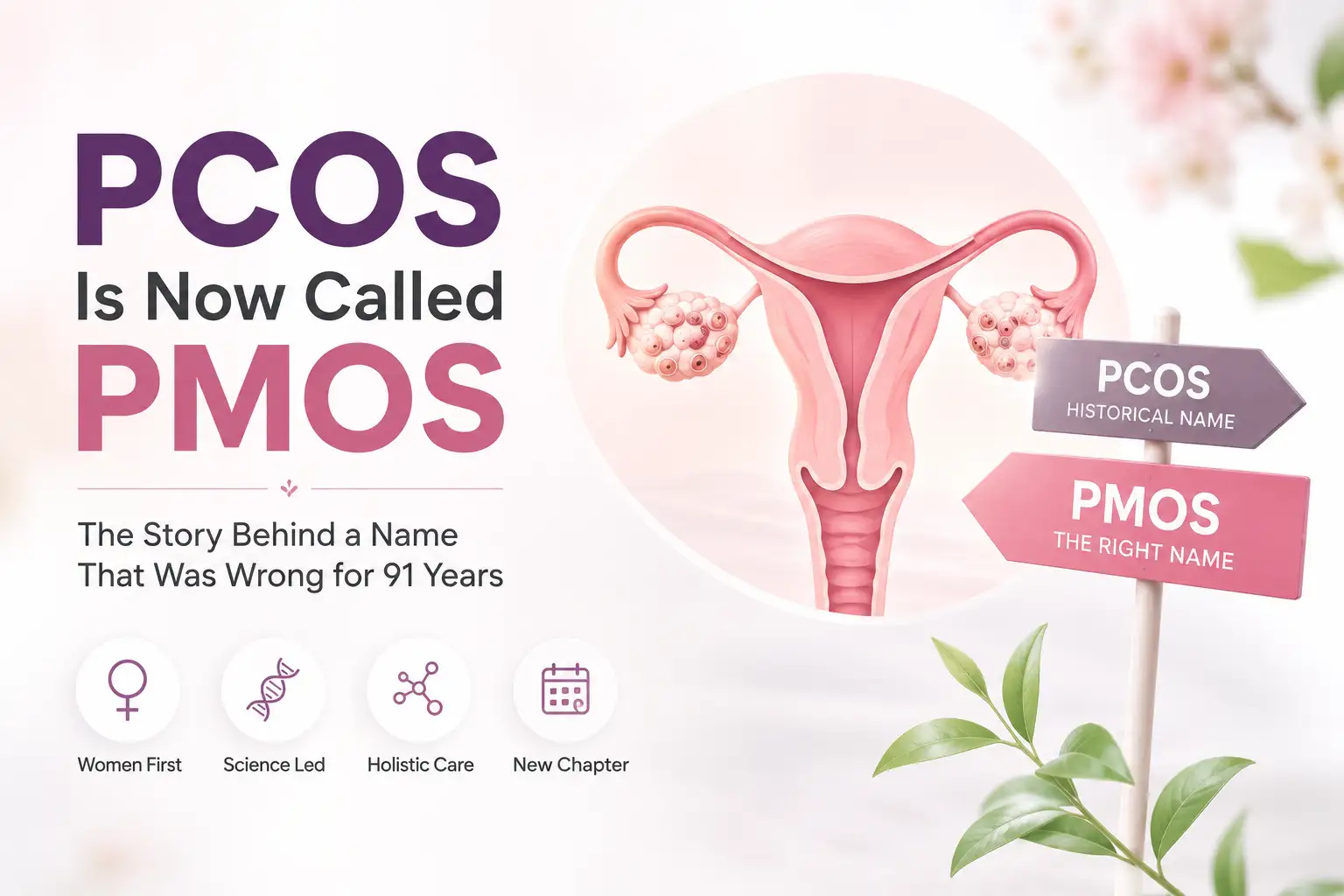
What Happened on May 12, 2026: The Official PCOS Name Change to PMOS
A paper titled Polyendocrine metabolic ovarian syndrome, the new name for polycystic ovary syndrome: a multistep global consensus process was published in The Lancet (2026;407(10545):2329-2339, DOI: 10.1016/S0140-6736(26)00717-8). At the same time, the finding was announced at the 28th European Congress of Endocrinology in Prague.
The new name is Polyendocrine Metabolic Ovarian Syndrome, or PMOS.
One letter changed in the abbreviation. The full meaning changed entirely. And behind that single letter change was one of the largest and most methodical renaming processes in modern medicine.
“What we now know is that there is actually no increase in abnormal cysts on the ovary, and the diverse features of the condition were often unappreciated. It was heartbreaking to see the delayed diagnosis, limited awareness and inadequate care afforded those affected by this neglected condition.” Professor Helena Teede, Director, Monash Centre for Health Research and Implementation, Monash University, lead author of the Lancet paper.
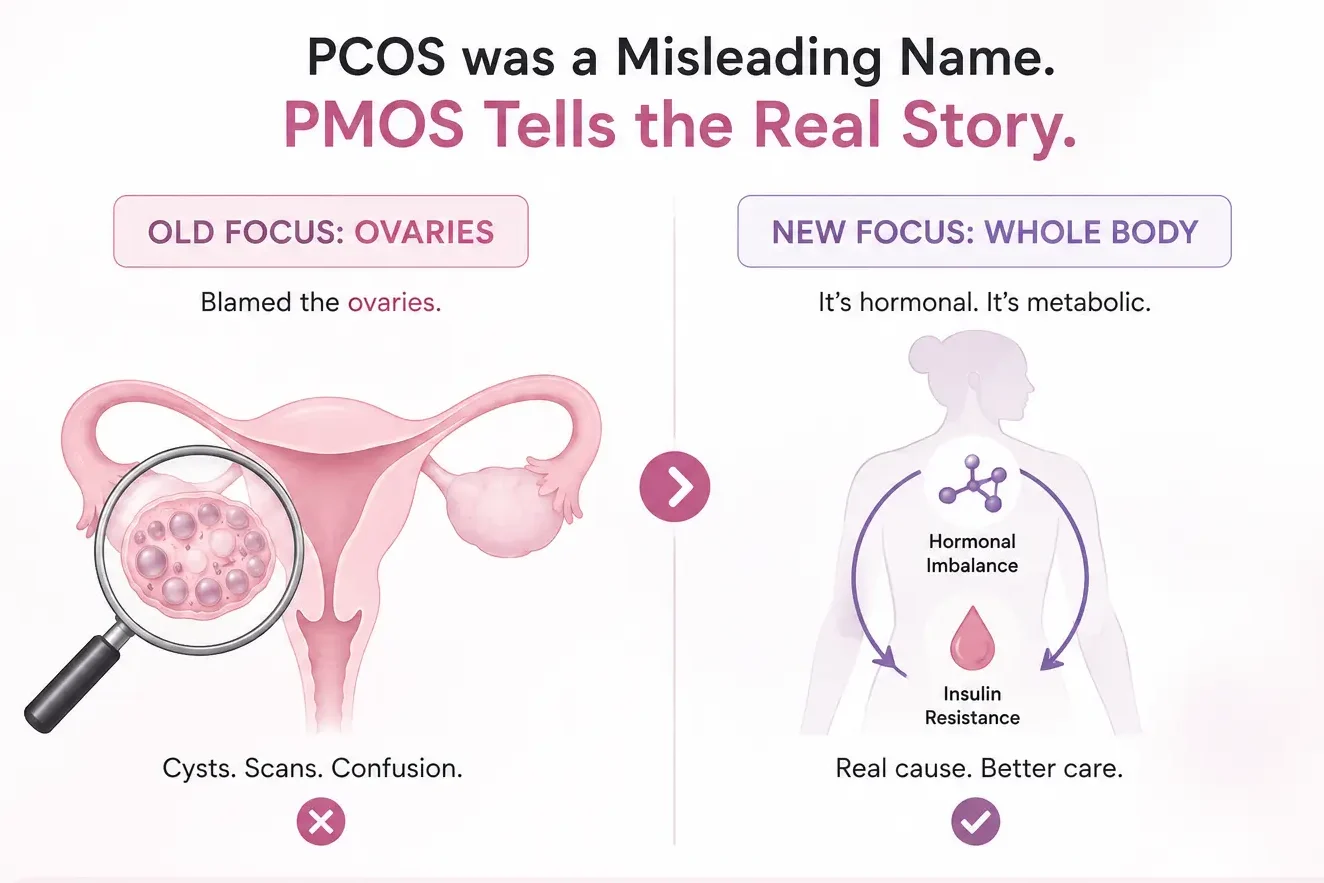
Why the Old Name Was a Problem: The PCOS Lie That Lasted 91 Years
PCOS was first described in 1935 by two American researchers, Irving Stein and Michael Leventhal. They observed a pattern of irregular periods, excess body hair, and enlarged ovaries with a distinctive appearance on imaging. They named it accordingly.
At the time, that name made sense. In 1935, medical imaging was limited, hormonal science was in its infancy, and the metabolic connections were not yet understood.
The problem is that science did not stand still, but the name did.
What researchers discovered over the following decades completely changed the picture:
- The fluid filled follicles visible on ultrasound are not pathological cysts at all. They are normal physiological structures of the ovary, small sacs each containing an immature egg. They are not painful, they do not need surgical removal, and they are not the cause of the condition.
- Not every woman with PCOS even had these follicles on ultrasound. Diagnosing it required meeting other criteria, yet the name kept pointing everyone at something many patients did not have.
- The real drivers of the condition are hormonal. Elevated androgens, insulin resistance, and disrupted endocrine signals cause the full range of what women actually experience: weight gain that does not respond to diet, irregular or absent periods, acne, excess hair on the face and body, mood disruption, difficulty conceiving, and elevated long term risk of diabetes and heart disease.
Think of it this way. If someone has a broken thermostat in their house, the radiators will misbehave, the pipes may crack, the windows will fog. You could spend all your time measuring the radiators and cataloguing the cracked pipes. But fixing the thermostat is the actual solution. The old name, PCOS, was measuring the radiators. The new name, PMOS, points at the thermostat.
The 14 Year Journey: How PMOS Came to Be
This name change did not happen overnight. It was one of the most rigorous naming consensus processes in the history of medicine.
The timeline, in brief:
- 2012: Concerns about the misleading nature of the name PCOS begin to be formally documented in research literature. The Androgen Excess and PCOS Society flags that the name obscures the hormonal and metabolic dimension of the condition.
- 2015: The first round of international surveys goes out. Patients and clinicians across six continents are asked about their experience of the condition, the name, and whether a change is needed. 7,708 responses come back, clearly showing that the name is contributing to misdiagnosis and inadequate care.
- 2015, November: A structured name change workshop is held at the Androgen Excess and PCOS Society annual meeting in Syracuse, Italy, bringing together leading clinicians and patient advocacy leaders.
- 2023: International evidence based guidelines for PCOS are updated, formally acknowledging the cardiovascular, metabolic, reproductive, and psychological dimensions. A second round of surveys runs from September 2023 to February 2024, reassessing perspectives and testing proposed alternative names.
- 2024 to 2025: Multiple Delphi consensus rounds are conducted, in which a panel of experts independently vote on proposed names, share reasoning, revise, and vote again until a strong consensus emerges. Several candidate names are evaluated against agreed principles: scientific accuracy, patient benefit, ease of communication, cultural appropriateness, and freedom from stigma.
- May 12, 2026: The Global Name Change Consortium, representing 56 leading academic, clinical, and patient organisations including the Endocrine Society, the Androgen Excess and PCOS Society, and Verity (a UK based patient charity), publishes the final paper in The Lancet. PMOS is announced to the world.
The total consultation reached more than 22,000 people across six continents. It is described by Monash University as the largest initiative ever undertaken to change the name of a medical condition.
What PMOS Actually Means: Breaking Down the New Name
The name Polyendocrine Metabolic Ovarian Syndrome is not just longer than PCOS. Every word carries medical weight that the old name lacked.
| Word | What it means | Why it matters |
|---|---|---|
| Poly- | Multiple | The condition involves more than one system. Not just one organ. |
| Endocrine | Relating to hormonal glands and signals | The core driver is hormonal. Androgens, insulin, and other endocrine signals are where the problem begins. |
| Metabolic | Relating to how the body processes energy | Insulin resistance and metabolic disruption are central features, not side effects. This connects to weight, blood sugar, and heart risk. |
| Ovarian | Relating to the ovaries | The ovaries are affected and involved, just not the starting point of the problem. The word stays, but in proportion. |
| Syndrome | A collection of features that occur together | Retained because it is a syndrome, a pattern of features rather than a single disease with a single cause. |
In plain language: PMOS is a condition where multiple hormonal glands go out of sync, the body’s metabolism is disrupted, and the ovaries are one of several affected organs, not the origin story.
What Changes for Women Already Diagnosed With PCOS
This is the question that matters most to the millions of women in India and globally who carry a PCOS diagnosis.
The answer is direct:
- Your diagnosis is still valid. If you were diagnosed with PCOS, you now have PMOS. Nothing about your health history changes. No new tests, no new procedures, no fresh diagnosis needed.
- Your symptoms are unchanged. Irregular periods, excess hair, insulin resistance, acne, weight difficulty, fertility challenges. The biology is the same. Only the name changed.
- Your treatment approach may expand. The renaming signals a shift in how the medical community is expected to treat the condition. PMOS demands a whole body, metabolic, and hormonal approach. A doctor who only looks at your ovaries and prescribes a hormonal pill is now, officially, missing the point.
- A three year transition period is underway. Both PCOS and PMOS will be in simultaneous use through 2029. International classification systems, medical school curricula, hospital coding, and clinical guidelines will update gradually. Expect to see both names for some time.
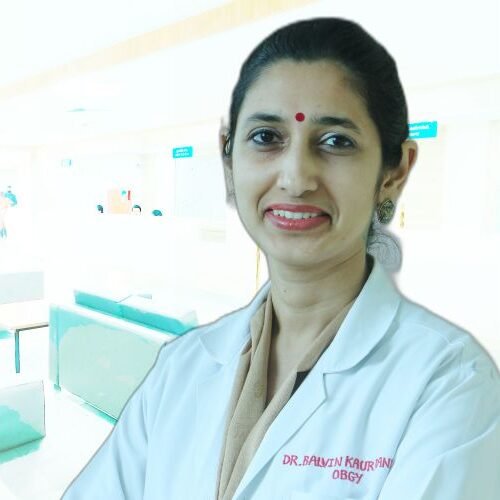
“In my consultations at Medisyn Neuro and Gynae Centre, I have been explaining for years that what we call PCOS is really a hormonal and metabolic condition that simply has its most visible effects on the ovarian cycle and fertility. The name change to PMOS is medicine finally catching up with what clinicians who treat this condition closely have known for a long time.” Dr. Balvin Kaur Ghai, Senior Consultant Gynaecologist, Medisyn Neuro and Gynae Centre, Mohali
Why the Name Change Matters Clinically: The Diagnosis Delay Problem
This is where the name change has the most immediate human consequence.
Research associated with the naming process found that women with PCOS wait an average of 2 to 4 years before receiving a correct diagnosis. In some studies, the delay stretched beyond 5 years. During that time, women are often told their symptoms are unrelated, are prescribed treatments targeting only one feature, or are simply dismissed.
The name contributed to this in two concrete ways:
- The cyst obsession. Women without visible follicles on ultrasound were frequently told they did not have PCOS, even when they had every other diagnostic feature. Because “polycystic” is in the name, the absence of visible cysts led doctors down the wrong path.
- The gynaecology silo. Because the name said “ovary syndrome,” the condition landed in gynaecology departments. But much of the effective treatment sits in endocrinology, metabolic medicine, and cardiology. Women were getting half a picture.
PMOS corrects both of these structurally. It names the hormones. It names the metabolism. It places the ovary in its correct proportional position, important but not dominant.
What PMOS Means for Women in India: A Note From Dr. Balvin Kaur Ghai
India has one of the highest reported prevalences of PCOS in the world, with estimates suggesting that 1 in 5 Indian women are affected. The condition is closely connected to dietary patterns, sedentary lifestyles, stress, and genetic predisposition.
Yet diagnosis rates in India remain low relative to the actual prevalence, and the quality of management varies enormously. Women in tier 2 cities and smaller towns are particularly underserved. Many continue to receive only hormonal contraceptive pills as a management strategy, without addressing the metabolic, dietary, and psychological dimensions.
The PMOS renaming matters in this context because it puts language behind a treatment approach that integrative gynaecologists have been advocating for years: metabolic screening, insulin resistance management, lifestyle intervention alongside medication, and long term cardiovascular risk monitoring.
At Medisyn Neuro and Gynae Centre in Mohali, Dr. Balvin Kaur Ghai has been managing PCOS and now PMOS through a comprehensive protocol that includes metabolic workup, hormonal assessment, dietary guidance, and long term cycle monitoring, not just a prescription at the end of a five minute consultation. Women dealing with pregnancy complications related to PMOS, those looking for informed family planning guidance with a PMOS background, and patients navigating related gynaecological conditions like fibroids will find a structured approach to care at the Medisyn centre.
Frequently Asked Questions About PCOS Renamed PMOS
1. Has PCOS actually been renamed, or is this just a proposal?
It is official. The renaming was published in The Lancet on May 12, 2026 and announced at the European Congress of Endocrinology in Prague. The Global Name Change Consortium, representing 56 medical and patient organisations, formally adopted PMOS as the replacement term. A three year transition period runs until approximately 2029.
2. What does PMOS stand for?
Polyendocrine Metabolic Ovarian Syndrome. Each word reflects a system the condition affects: the endocrine system (hormones), the metabolic system (insulin and energy regulation), and the ovaries (though they are affected, not the origin of the condition).
3. Do I need a new diagnosis if I already have PCOS?
No. Your existing diagnosis is automatically carried over. PCOS and PMOS refer to the same condition. No new tests, no new paperwork, no new procedures are required. Doctors will simply begin using the term PMOS alongside PCOS during the transition period.
4. Why did it take 91 years to change the name?
Medical nomenclature changes very slowly because it requires consensus across research, clinical practice, patient groups, regulatory bodies, and insurance systems globally. The process that led to PMOS started around 2012 and involved 14 years of surveys, workshops, Delphi consensus rounds, and international collaboration. It is described as the largest naming change process ever undertaken for a medical condition.
5. Does the name change mean my treatment will change?
Not immediately and not automatically. But it signals a clinical shift. The new name demands that doctors treat the full condition, not just the ovarian symptoms. Over time, clinical guidelines will align with the PMOS framework, meaning more emphasis on metabolic management, insulin resistance treatment, cardiovascular risk monitoring, and psychological support.
6. My ultrasound shows no cysts. Does that mean I do not have PMOS?
The absence of visible follicles on ultrasound does not rule out PMOS. This was one of the core problems with the old name. Diagnosis of PMOS, like PCOS before it, is based on a combination of criteria including irregular periods, hormonal markers (particularly androgens), and metabolic signs, not only ultrasound findings.
7. Can men have PMOS?
The Lancet paper noted that the condition likely affects people beyond cisgender women, including transgender and non binary individuals and some men who carry the underlying endocrine and metabolic features without the ovarian manifestation. Research in this area is ongoing and is one of the scientific reasons the word “ovarian” was retained but not front loaded in the name.
8. Where was the name change announced?
The official paper was published in The Lancet (DOI: 10.1016/S0140-6736(26)00717-8) on May 12, 2026. The announcement was simultaneously presented at the 28th European Congress of Endocrinology in Prague by lead author Professor Helena Teede of Monash University, Australia.
9. How does this affect PCOS treatment in India?
Indian clinical guidelines will be updated to align with the PMOS framework over the transition period. In practical terms, patients should now expect and request a more complete workup: not just hormonal panels and an ultrasound, but also metabolic screening, insulin resistance testing, cardiovascular risk assessment, and psychological support where relevant.
10. Is PMOS being treated differently from PCOS at Medisyn in Mohali?
The treatment approach at Medisyn under Dr. Balvin Kaur Ghai has always reflected the full hormonal and metabolic picture of the condition, consistent with what PMOS now formally describes. The name change gives clinical language to what was already good practice: treating the whole patient, not just the ovarian symptom cluster.
This article is for patient education and general awareness. The information on the PMOS name change is based on the Lancet paper published May 12, 2026 (DOI: 10.1016/S0140-6736(26)00717-8). For a personalised consultation regarding PMOS diagnosis and management, please contact Medisyn Neuro and Gynae Centre in Mohali and book an appointment with Dr. Balvin Kaur Ghai.