




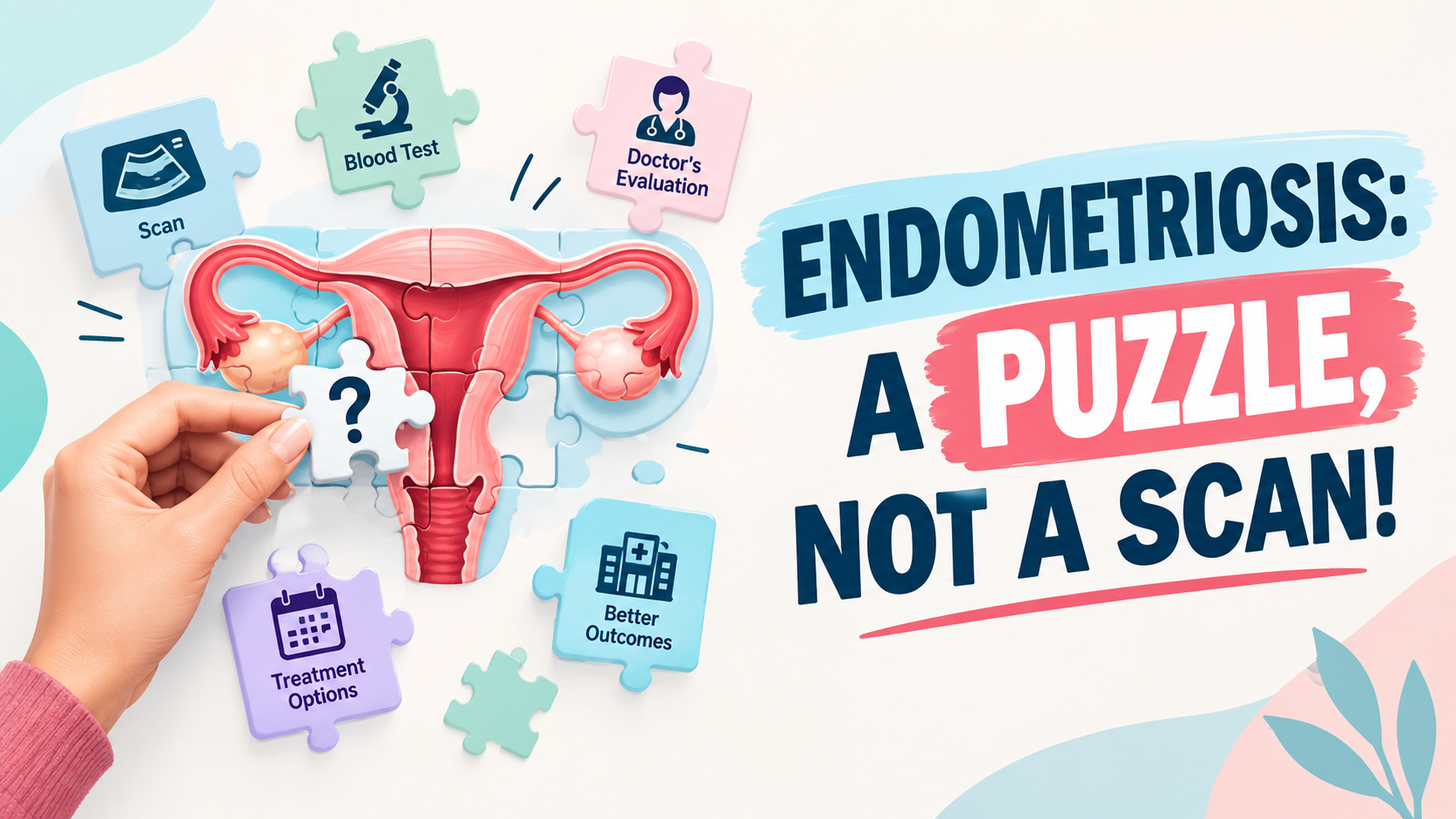
A normal ultrasound does not rule out endometriosis, and that single fact confuses more patients than any other part of the process. Endometriosis diagnosis rarely comes from one scan or one appointment. It builds from a symptom history, a pelvic exam, imaging, and sometimes a surgical look inside the pelvis, pieced together over more than one visit rather than confirmed on the spot.
Key Takeaways
- Endometriosis diagnosis is a process, not a single test, and a clear scan does not mean the condition is absent.
- Menstrual pattern, pain timing and family history carry as much diagnostic weight as any scan.
- Transvaginal ultrasound and MRI can detect endometriomas and deep nodules, but laparoscopy remains the only way to confirm smaller lesions.
- Delays of several years between symptom onset and diagnosis are common, largely because symptoms overlap with other pelvic conditions.
- A structured pelvic ultrasound combined with a detailed symptom history is usually the practical starting point before deciding whether further testing is needed.
The Symptom Pattern That Makes a Doctor Suspect Endometriosis
Diagnosis rarely starts with a scan. It starts with a conversation about when the pain happens, how long it lasts, and what makes it worse. Doctors are listening for a specific pattern rather than pain severity alone.
- Pain that consistently worsens in the days before or during menstruation.
- Pain during intercourse, bowel movements, or urination, particularly around the menstrual cycle.
- Heavy or irregular bleeding, sometimes with spotting between periods.
- A family history of endometriosis in a mother or sister.
- Longstanding pelvic pain that has not responded to standard painkillers or contraceptive pills.
None of these signs alone confirms the condition. Together, they shift the conversation from ordinary period pain toward a structured diagnostic pathway.
What a Pelvic Examination Can and Cannot Confirm
A physical pelvic exam gives real information. A doctor can sometimes feel nodules behind the uterus, tenderness in specific areas, or reduced mobility of the pelvic organs, all of which point toward possible endometriosis and its scarring.
A normal exam does not close the door, though. Deep lesions and smaller implants are often too small to feel by hand, which is exactly why an exam is treated as one piece of the picture rather than a final answer on its own.
Endometriosis Diagnosis Tests: Ultrasound, MRI and Blood Work
A transvaginal ultrasound is usually the first imaging test, since it can detect ovarian endometriomas and assess whether the uterus and bowel slide freely against each other, a sign associated with deep pelvic adhesions. An MRI adds detail for deep infiltrating disease when ultrasound findings are unclear or surgery is being planned.
Blood tests, including CA125, are sometimes used alongside imaging, though this marker is not specific to endometriosis and can be raised by several other pelvic conditions. It supports a suspected diagnosis rather than confirming one by itself.
| Test | What It Detects | Main Limitation |
|---|---|---|
| Transvaginal ultrasound | Endometriomas, organ mobility, some deep nodules | Small superficial implants are often missed |
| Pelvic MRI | Deep infiltrating disease, bowel or bladder involvement | More expensive, not always needed for milder disease |
| CA125 blood test | A supportive marker in some cases | Not specific to endometriosis, can be raised by other conditions |
| Diagnostic laparoscopy | Direct visualization and biopsy of lesions | Surgical procedure, generally reserved for unclear or treatment resistant cases |
Why Laparoscopy Is Still Considered the Gold Standard
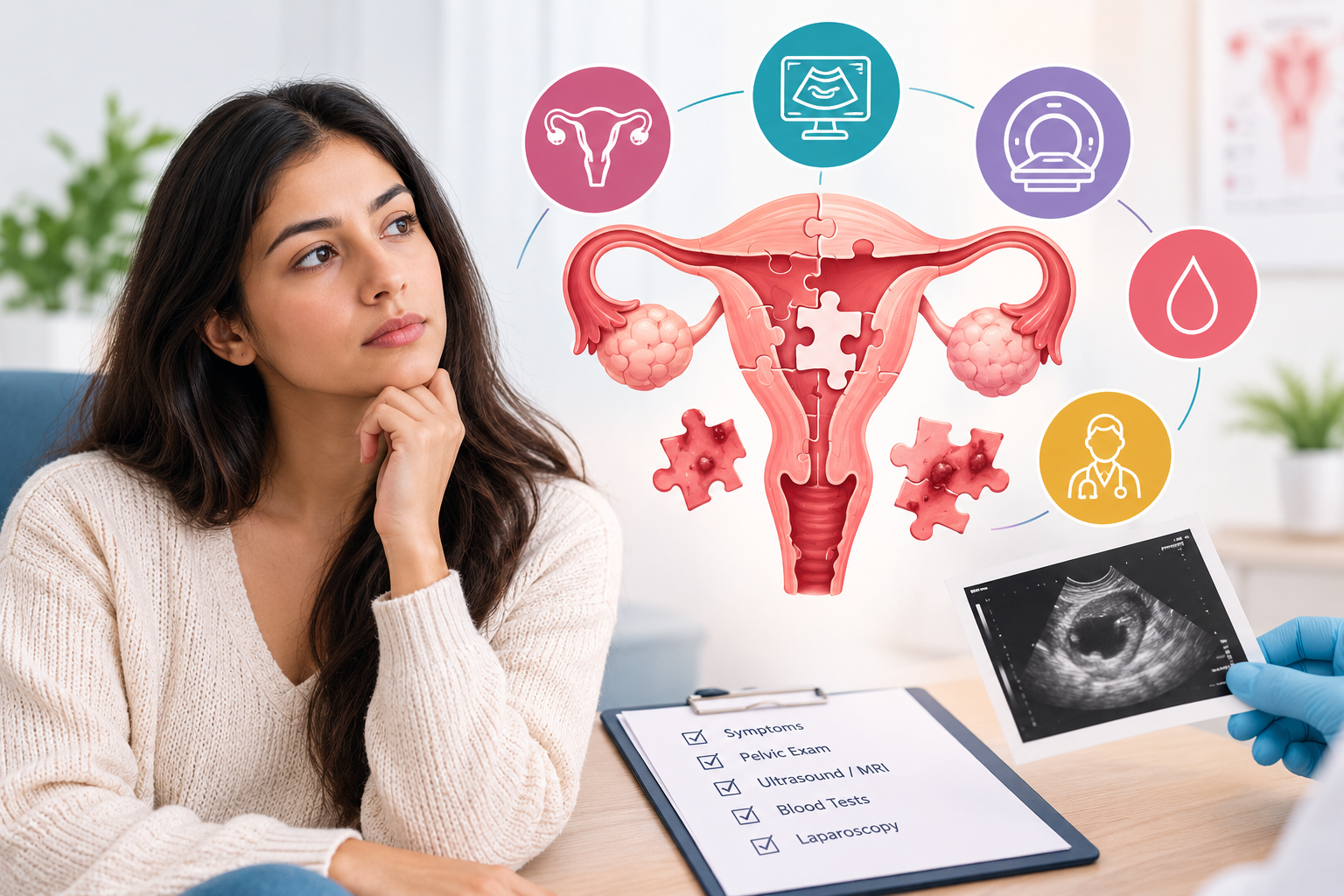
Laparoscopy remains the only way to directly see and biopsy small implants that imaging cannot reliably catch. A thin camera is passed through a small incision, allowing a surgeon to examine the ovaries, fallopian tubes, and pelvic lining directly, and to take tissue samples for confirmation.
Laparoscopy is not automatically the first step for a woman with suspected endometriosis. Since it is a surgical procedure with its own recovery period, it is generally reserved for cases where imaging is inconclusive, symptoms are severe, or fertility treatment planning requires a definitive answer.
According to Mayo Clinic, endometriosis diagnosis often combines a pelvic exam, imaging and sometimes laparoscopy, since no single non surgical test can rule the condition in or out with complete certainty. Cleveland Clinic similarly notes that a definitive diagnosis typically requires direct visualization of tissue, even though imaging and symptom history guide the decision on whether that step is needed.
8 Questions Doctors Ask Before Confirming Endometriosis
Most consultations follow a similar structure, whether the visit happens in Mohali, Chandigarh, or anywhere else. These eight questions shape the diagnostic path more than any single scan result.
- When did the pelvic pain start, and has it changed in intensity or pattern over time?
- Does the pain follow the menstrual cycle, or does it occur independently of periods?
- Is there pain during intercourse, bowel movements, or urination?
- How heavy or irregular has menstrual bleeding been over recent cycles?
- Has a close family member been diagnosed with endometriosis?
- Have previous treatments, such as painkillers or hormonal birth control, provided any relief?
- Is fertility a current concern, since this can change how quickly imaging or laparoscopy is recommended?
- Are there bowel or bladder symptoms suggesting the disease may extend beyond the pelvis?
The answers to these questions determine whether a doctor moves straight to ultrasound, adds an MRI, or discusses laparoscopy sooner rather than later.
Why an Endometriosis Diagnosis Can Take Years
A delay between first symptoms and confirmed diagnosis is common, and it is rarely a sign that a patient was not taken seriously. Symptoms overlap significantly with other conditions, which slows the process down.
- Pelvic pain and bowel symptoms can resemble irritable bowel syndrome, leading to a gastroenterology workup first.
- Painful periods are frequently dismissed as normal, delaying the first specialist referral.
- Ovarian cysts and endometriomas can look similar on early ultrasound, requiring follow up scans to tell them apart.
- Adenomyosis, a related but distinct condition affecting the uterine muscle, can produce nearly identical pain patterns.
Recognizing this overlap is part of why a structured diagnostic pathway, rather than a single test, tends to produce a more reliable answer.

When a Specialist Opinion Becomes Necessary
A general practitioner can start the process, order an initial endometriosis ultrasound, and rule out simpler explanations. Persistent symptoms, an inconclusive scan, or fertility concerns are the usual triggers for a referral to a gynecologist experienced specifically in endometriosis, sometimes described locally as an endometriosis doctor in Chandigarh or Mohali.
Our Endometriosis Specialist in Mohali team reviews symptom history and imaging together before deciding whether an MRI or laparoscopy adds real value for a specific case, rather than ordering the full test panel by default. This assessment connects directly with our Endometriosis Treatment in Mohali pillar page for the treatment options that follow once a diagnosis is confirmed.
Getting Evaluated for Endometriosis Diagnosis in Mohali and Chandigarh
Patients across Mohali, Chandigarh, and the wider Tricity region typically begin with a detailed symptom history and a transvaginal ultrasound before any decision about further imaging or surgery is made, and this is often where diagnosing endometriosis in Punjab practically starts. Bringing a record of period dates, pain patterns, and any prior treatment tried speeds up this first assessment considerably.
Getting an endometriosis diagnosis confirmed, or reasonably ruled out, is what allows a treatment plan to actually match the underlying condition instead of managing symptoms in isolation. A structured evaluation, built around history, examination and the right imaging, remains the most reliable way to reach that answer.
Frequently Asked Questions
1. Can endometriosis be diagnosed without surgery?
Yes, to a meaningful extent. A symptom history, pelvic exam and transvaginal ultrasound or MRI can strongly suggest endometriosis, particularly when an endometrioma or deep nodule is visible. What imaging cannot always do is confirm smaller, superficial implants, which is why laparoscopy is still considered the definitive test in cases where the diagnosis remains uncertain or treatment decisions depend on a confirmed answer.
2. Does a normal ultrasound rule out endometriosis?
No. A normal or clear ultrasound reduces the likelihood of larger findings like endometriomas, but small superficial implants and some deep lesions are frequently missed on standard imaging. This is one of the most common sources of confusion in early consultations, since a clean scan can feel reassuring while the underlying condition is still present and causing symptoms.
3. Why did it take so long to get an endometriosis diagnosis?
Diagnostic delay is common and usually reflects how closely endometriosis symptoms resemble other conditions, including irritable bowel syndrome, ovarian cysts and adenomyosis. Painful periods are also often initially treated as normal rather than investigated. A structured symptom history focused on the cyclical pattern of pain, combined with targeted imaging, tends to shorten this timeline compared with addressing each symptom separately as it appears.
4. What blood tests are used to check for endometriosis?
CA125 is the most commonly discussed blood marker, and it can be elevated in some cases of endometriosis. It is not specific to the condition, however, and can also rise with ovarian cysts, pelvic infection or other gynecological conditions. For that reason, CA125 is generally used to support a suspected diagnosis alongside imaging and symptoms, rather than as a standalone confirmatory test.
5. Can an MRI detect endometriosis that ultrasound misses?
Often, yes, particularly for deep infiltrating disease involving the bowel, bladder or ligaments supporting the uterus. MRI gives more detailed soft tissue contrast than standard ultrasound, which helps when planning surgery or when ultrasound findings are unclear. It is not typically the first test ordered, since ultrasound is quicker, more accessible and sufficient for a large share of initial evaluations.
6. Is laparoscopy the only way to confirm endometriosis for certain?
For definitive confirmation of smaller lesions, yes, laparoscopy with biopsy remains the most reliable method available. Imaging and symptom based assessment can make a diagnosis highly likely without surgery, and treatment sometimes proceeds on that basis. Laparoscopy becomes more relevant when the diagnosis is genuinely unclear, symptoms persist despite treatment, or a fertility evaluation specifically requires a confirmed answer.
7. Can endometriosis be mistaken for ovarian cysts or IBS?
Yes, this overlap is one of the main reasons diagnosis takes time. Endometriomas can resemble other types of ovarian cysts on early ultrasound, and bowel related symptoms can closely mimic irritable bowel syndrome. Differentiating between these conditions usually requires a combination of symptom pattern, follow up imaging and, in some cases, response to initial treatment, rather than relying on a single test result in isolation.
8. What questions should I ask my doctor if I suspect endometriosis?
Useful questions include what specific findings, if any, appear on ultrasound, whether an MRI would add meaningful information, and what would change the recommendation between continued monitoring, hormonal treatment, or laparoscopy. Asking how the diagnosis might affect fertility planning, if relevant, and what symptom changes should prompt a follow up sooner, also helps set clear expectations for the process ahead.
9. Does endometriosis show up on a routine pap smear?
No. A pap smear screens for cervical cell changes and is not designed to detect endometriosis, which affects tissue outside the uterus rather than the cervix itself. A normal pap smear result says nothing about the presence or absence of endometriosis, so it should not be used as reassurance against the condition when other symptoms are present.
10. Can you have endometriosis with normal, regular periods?
Yes. While heavy or irregular bleeding is common, some women with confirmed endometriosis have regular cycles with normal flow, and their main symptoms are pain related instead. Diagnosis is based on the overall symptom pattern, including pain timing and associated bowel, bladder or fertility symptoms, not on menstrual regularity alone, which is why period regularity should not delay an evaluation if other signs are present.
A confirmed endometriosis diagnosis, reached through history, examination and the right combination of tests, is what allows treatment to target the actual condition rather than managing individual symptoms one at a time. For anyone noticing a pattern of cyclical pain, heavy bleeding or unexplained fertility difficulty, that structured evaluation is a reasonable next step rather than something to postpone.