
A patient walks into a clinic unsure whether to book with an orthopedic surgeon or a neurosurgeon, and that single decision often delays treatment by weeks. Anyone comparing a spine surgeon Chandigarh option against a general orthopedic clinic runs into this same fork early on. It is one of the most common starting points for anyone researching spine surgery in Chandigarh, and it is worth settling early, because the right specialist from the outset shapes everything that follows, from imaging to the treatment plan itself.
Key Takeaways
- Both orthopedic surgeons and neurosurgeons treat spine conditions, and referral often depends on the hospital rather than a strict rule
- A genuine trial of conservative treatment generally comes before spine surgery in Chandigarh is discussed as an option
- Cauda equina syndrome, foot drop, and loss of bladder or bowel control need urgent evaluation rather than a routine appointment
- Pediatric spine surgery and spinal tumor cases follow a distinct evaluation path from typical disc related back pain
- Spine surgery in Chandigarh follows the same evaluation standards as any established spine unit, from imaging review to a clear discussion of options
- Book a consultation with a neurosurgeon in Chandigarh for a direct assessment of your imaging and symptoms
Spine Surgery in Chandigarh: What It Actually Treats
Spine surgery is a set of procedures used to relieve pressure on the spinal cord or nerve roots, stabilize an unstable spine, or remove damaged or diseased tissue, most commonly involving a herniated disc, spinal stenosis, spondylolisthesis, a spinal tumor, or trauma. The specific procedure chosen depends entirely on which of these is causing the symptoms, not on pain severity alone. Spine treatment decisions are made on this basis rather than a fixed protocol applied the same way in each case.
Chandigarh and the surrounding tri city region see a fairly consistent pattern of spine cases: disc related sciatica, degenerative narrowing in older patients, and a smaller but important group involving tumors, fractures, or congenital spinal conditions in younger patients.
Orthopedic Surgeon or Neurosurgeon: Who Should You See First
Both orthopedic spine surgeons and neurosurgeons treat spinal conditions, and the right first appointment often comes down to the hospital’s specific specialization rather than a strict universal rule.
- Nerve related symptoms such as numbness, weakness, or pain radiating down a leg or arm are generally guided toward a neurosurgeon or dedicated spine specialist
- Bone related concerns such as fractures, deformity, or joint degeneration are commonly seen first by an orthopedic spine surgeon
- A general orthopedic consult is a reasonable starting point either way, since referral to the right specialist can happen after an initial exam and imaging review
What matters more than the exact title on the door is whether the surgeon has specific spine training and regularly treats the condition in question, which is worth asking about directly during the first visit.
Signs That Warrant a Spine Surgery Consultation
A number of symptoms point toward needing a proper spine evaluation rather than continued self management at home.
- Leg or arm pain that radiates from the back or neck and does not settle with rest
- Numbness or tingling that is spreading or worsening rather than staying stable
- Progressive weakness in a limb, or a leg that feels like it is giving way while walking
- Foot drop, where lifting the front of the foot becomes difficult
- Loss of bladder or bowel control, which needs same day emergency evaluation
Pain alone, without one of these additional findings, is rarely treated with surgery as a first step. It is the combination of severity, duration, and neurological signs together that shapes the recommendation.
Non Surgical Treatment Comes Before Spine Surgery Is Considered
A genuine trial of conservative treatment is the standard first step for most spinal conditions, and it is worth doing properly rather than rushing through it. This generally includes physiotherapy, appropriate medication, and sometimes targeted injections, given a fair length of time to work before surgery becomes part of the conversation.
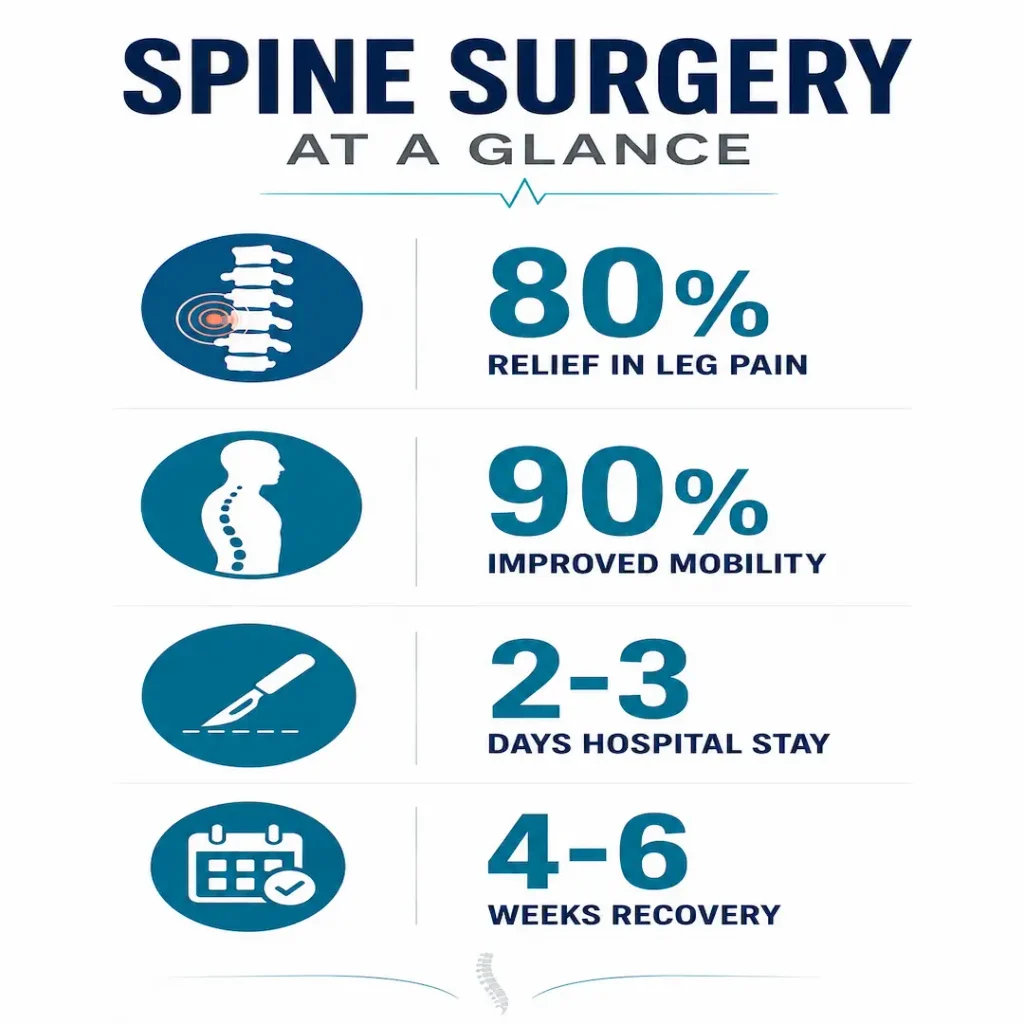
According to Mayo Clinic, back surgery tends to relieve leg pain more reliably than back pain itself, and a second opinion from a qualified spine specialist is a reasonable step before agreeing to any procedure, since back and leg pain can involve several contributing factors that benefit from more than one clinical perspective.
Spinal Surgery Chandigarh Patients Typically Undergo
The specific operation depends on the diagnosis, not personal preference for a particular technique.
| Procedure | What It Treats | Typical Approach |
|---|---|---|
| Microdiscectomy | Herniated disc pressing on a nerve root | Minimally invasive, small incision |
| Laminectomy | Spinal stenosis, nerve compression from narrowing | Removes part of the vertebra to create space |
| Spinal fusion | Instability, spondylolisthesis, or deformity | Joins two or more vertebrae permanently |
| Tumor resection | Spinal tumors affecting the cord or nerve roots | Varies by tumor type, location, and size |
Pediatric spine surgery is a distinct category worth naming directly. Spine surgery in children and teenagers is performed for tumors, fractures, and congenital conditions when medically necessary, though it involves specific considerations around growth and long term development that a pediatric spine specialist addresses separately from adult cases.
Spine Surgery in Chandigarh: Emergency Conditions That Cannot Wait
Most spine problems allow time for a proper evaluation and a trial of conservative care first. A small number do not.
Cauda equina syndrome is a surgical emergency, whether it results from a disc herniation, a spinal tumor, or nerve root clumping, because delayed treatment risks permanent nerve damage, including loss of bladder or bowel control and leg function. According to Cleveland Clinic, this condition happens when an injury or herniated disk compresses the nerve roots at the base of the spinal cord, and quick surgical treatment may prevent lasting complications. Any sudden combination of severe back pain, leg weakness, and loss of bladder or bowel control needs emergency evaluation, not a scheduled appointment.
What Recovery Looks Like and Warning Signs Not to Ignore
Recovery timelines vary depending on the specific procedure and individual healing, and it is not unusual to have some internal back pain months after an otherwise successful surgery, since ongoing healing, scar tissue, or musculoskeletal adjustment can all contribute. Pain that does not gradually improve, or that changes character, is worth reporting to the surgeon rather than assuming it is permanent.
A specific set of warning signs after spine surgery needs prompt attention rather than waiting for a routine follow up appointment.
- Worsening pain, or new pain appearing in a different location than before surgery
- Numbness or tingling that develops or gets worse rather than improving
- Signs of infection at the incision site, including redness, swelling, fever, or discharge
- Leg swelling, which can indicate a blood clot
- Any new loss of bladder or bowel control after surgery
Numbness or tingling in the leg tends to improve more slowly than pain does after decompression surgery, with a number of patients seeing meaningful improvement within about six months, though some residual numbness can persist longer, particularly in older patients or those who had more severe symptoms before surgery.
Spine Surgery in Chandigarh: How the Consultation and Referral Process Works
A back surgery Chandigarh consultation, or any consultation for spine surgery in Chandigarh, typically begins with a clinical exam and a review of existing imaging, followed by a discussion of whether conservative treatment still has room to work or whether the case has reached the point where surgical evaluation makes sense. A neurosurgeon in Chandigarh, functioning as a spine specialist Chandigarh residents can consult directly, can usually give this level of clarity within a single visit, particularly when a prior report or scan has left the diagnosis feeling incomplete.
A number of Chandigarh patients travel a short distance for a direct consultation with a spine specialist in Mohali, since the tri city area shares specialist capacity across Mohali, Chandigarh, and Panchkula rather than each city operating in isolation. Patients from further out, including those consulting a neurosurgeon in Panchkula, follow a similar path of imaging review, clinical exam, and a direct conversation about treatment options.
If you are not currently in Chandigarh, a preliminary review of your MRI or X ray report shared digitally can help guide next steps, through the clinic’s international patient desk, though an in person examination is still generally needed before finalizing a treatment plan or surgical decision.
Cases involving a spinal tumor deserve a specific mention, since they follow a different evaluation path from disc related back pain. Anyone with a suspected spinal tumor should expect additional imaging and a more detailed workup before any surgical decision is made. When conservative treatment has been tried and a surgical opinion feels like the right next step, booking directly through the clinic’s appointment page is the most direct way to get a consultation with Dr. Jaspreet Singh Randhawa and a clear read on your specific case.
Frequently Asked Questions
1. Which doctor should I consult for spine problems, orthopedic or neurosurgeon?
Both orthopedic spine surgeons and neurosurgeons treat spinal conditions, and the choice often comes down to the specific hospital’s specialization rather than a strict universal rule. For nerve related symptoms such as numbness, weakness, or radiating pain, patients are commonly guided toward a neurosurgeon or dedicated spine specialist first, since these symptoms point toward nerve involvement rather than a purely structural bone issue. That said, a general orthopedic consultation is a reasonable starting point as well, since a proper exam and imaging review can clarify which type of specialist your specific case needs, and a referral between the two happens routinely when appropriate.
2. Is it normal to still have internal back pain months after a successful spine surgery?
Persistent internal pain after surgery, even when the patient otherwise feels improved overall, is common and can result from ongoing healing, scar tissue formation, or general musculoskeletal adjustment as the body settles into its new alignment. This does not automatically mean the surgery has failed. What matters is the pattern: pain that gradually eases over weeks to months is generally expected, while pain that stays the same, worsens, or changes character should be reported to the operating surgeon rather than assumed to be a permanent outcome. A follow up exam helps distinguish normal healing from something that needs further attention.
3. My feet go numb after walking for a while, even years after my back healed. Should I be concerned?
New numbness that appears specifically after walking a certain distance, even years after an earlier back problem resolved, can indicate a new or progressing issue rather than a return of the original one. Spinal stenosis, which narrows the space around the nerve roots gradually over time, is one common cause of this specific pattern. This generally warrants a fresh MRI and a neurological evaluation, rather than assuming the symptom is connected to the old problem that had already settled. Catching a new cause early gives more treatment options than waiting until the symptom becomes more limiting.
4. Is spine surgery risky? Can it cause paralysis or permanent damage?
All spine surgery carries some degree of risk, including the possibility of nerve damage, which is exactly why choosing an experienced spine surgeon and having a clear, honest conversation about risks and realistic outcomes before the procedure matters as much as the operation itself. For confirmed cases of severe nerve compression, however, the risk of continuing to delay surgery has to be weighed against the risk of the procedure, which is generally low in experienced hands for well selected cases. Neither risk should be dismissed, and a surgeon who takes time to walk through both sides of this balance with you is generally giving you a complete, honest picture rather than a one sided sales pitch.
5. What are the warning signs of a problem after spine surgery that I should not ignore?
Specific warning signs include worsening pain or new pain appearing in a different area than before surgery, numbness or tingling that develops or gets worse, signs of infection such as redness, swelling, fever, or discharge at the incision site, leg swelling that could indicate a blood clot, and any new loss of bladder or bowel control. Any of these should prompt immediate contact with the surgical team rather than waiting for a routine follow up appointment scheduled weeks later. Catching a developing problem early, whether it is infection, a clot, or a new area of nerve compression, generally leads to a more straightforward resolution than discovering it later.
6. How long does numbness or tingling take to improve after spine surgery?
Recovery from numbness varies considerably from patient to patient, and improvement in leg numbness after decompression surgery is generally slower than relief from pain itself. A number of patients see meaningful improvement within about six months, though some residual numbness can persist for longer, particularly in older patients or those who had more severe symptoms before the operation. The nerve has to recover after the pressure on it is relieved, and that process happens on its own timeline rather than a fixed schedule, which is why your surgeon will typically track this over several follow up visits rather than expecting an immediate resolution.
7. Can a child or teenager need spine surgery for a tumor or fracture?
Yes, pediatric spine surgery is performed for tumors, fractures, and congenital spinal conditions when medically necessary, and it is treated as a distinct category from adult spine surgery because of the additional considerations involved. Growth plates, long term spinal development, and how a young, still developing spine responds to surgery all factor into the surgical plan differently than they would for an adult. These cases are specifically discussed with a pediatric spine specialist, who weighs the immediate medical need against the long term impact on the child’s growth and spinal alignment as they continue to develop.
8. Is a screw or rod causing pain years after the original surgery normal?
Hardware related pain that develops well after the original healing period has finished can indicate that a screw or rod may be loosening, shifting position, or irritating nearby tissue, and this typically requires fresh imaging to assess rather than being dismissed as ordinary ongoing discomfort. It is not automatically a sign of surgical failure, since some hardware related sensitivity can occur without a serious underlying problem. The safest approach is reporting new or changing pain near a previous surgical site to your surgeon, who can order imaging to see exactly what is happening with the hardware before assuming either a benign or a serious cause.
9. Can spine surgery be done for cauda equina syndrome caused by a spinal tumor?
Yes, cauda equina syndrome is treated as a surgical emergency regardless of whether the underlying cause is a disc herniation, a spinal tumor, or nerve root clumping, because delayed treatment risks permanent nerve damage, including loss of bladder or bowel control and leg function. When a spinal tumor is the cause, the surgical approach also has to account for the tumor itself, not only the immediate nerve compression, which can make these cases more complex than a typical disc related emergency. Speed still matters most in the initial response, since the window for preventing permanent damage narrows the longer the nerves remain under pressure.
10. If I am not in Chandigarh, can I still get a consultation by sharing my MRI report remotely?
A number of spine specialists, including clinics serving Chandigarh and the wider Punjab region, offer a preliminary review of MRI or X ray reports shared digitally to help guide next steps for patients who are not local. This can clarify whether your case looks urgent, whether conservative treatment still has room to work, or whether an in person surgical consultation should be prioritized. That said, an in person examination is typically still needed before finalizing a treatment plan or surgical decision, since a physical exam adds information that imaging and reports alone cannot fully capture. A remote review is a useful first step, not a replacement for the full evaluation.