

A sore back rarely means an emergency. A foot that suddenly will not lift properly sometimes does. That difference, between ordinary pain and a nerve under real threat, is exactly what separates the patients who need physiotherapy from the small number who need an operating table. Knowing when is spine surgery needed comes down to specific warning signs, not how bad the pain feels on any given day, and those signs are worth learning before panic or denial takes over.
When Is Spine Surgery Needed: The Warning Signs to Watch
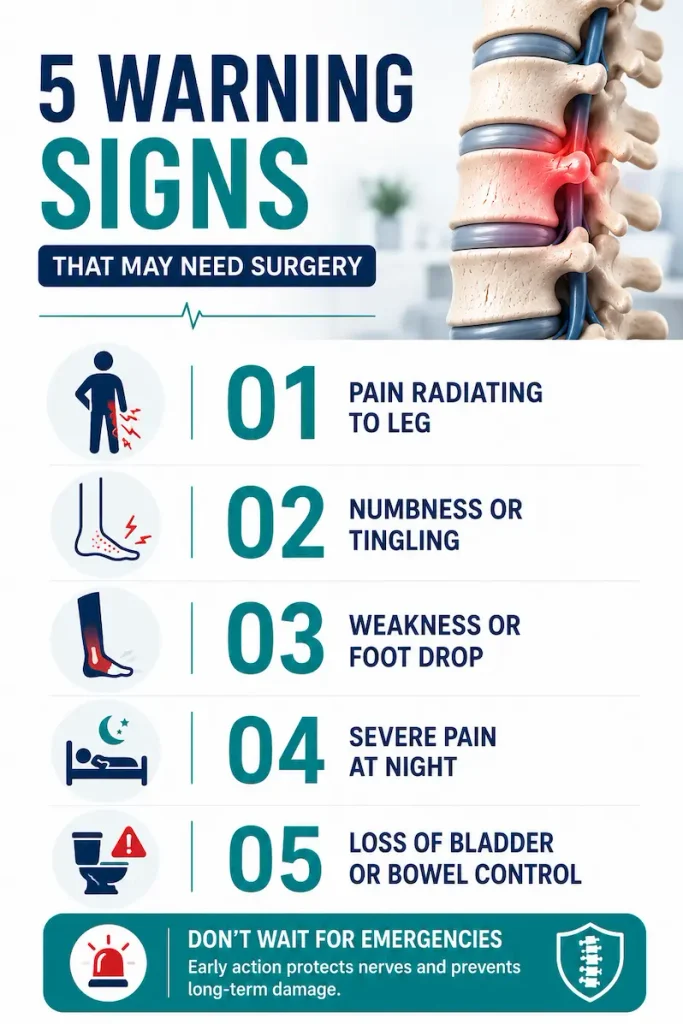
Most back pain, even severe back pain, settles with rest, movement and time. A smaller group of symptoms points toward nerve compression that needs a closer look, and these are the ones worth tracking rather than brushing off.
- Pain that radiates from the lower back down one or both legs, rather than staying in the back itself.
- Numbness, tingling or a pins and needles feeling in the legs or feet that does not ease with rest.
- Weakness when lifting the foot, gripping, or standing from a chair.
- Pain that is severe enough to disturb sleep or stop normal daily function despite medication.
- Any new loss of bladder or bowel control, discussed separately below because it needs urgent attention.
Spine surgery indications generally fall into three groups: confirmed nerve compression that has not improved with conservative care, spinal instability, and progressive neurological weakness. Pain alone, without one of these three findings, is rarely treated with surgery first.
How Long to Try Conservative Treatment Before Considering Surgery
Patience is genuinely part of the treatment plan, not a delay tactic. Most spinal problems, including a straightforward herniated disc, are given a fair trial of nonsurgical care before surgery is even discussed, and this trial period is exactly where the question of when is spine surgery needed usually gets answered.
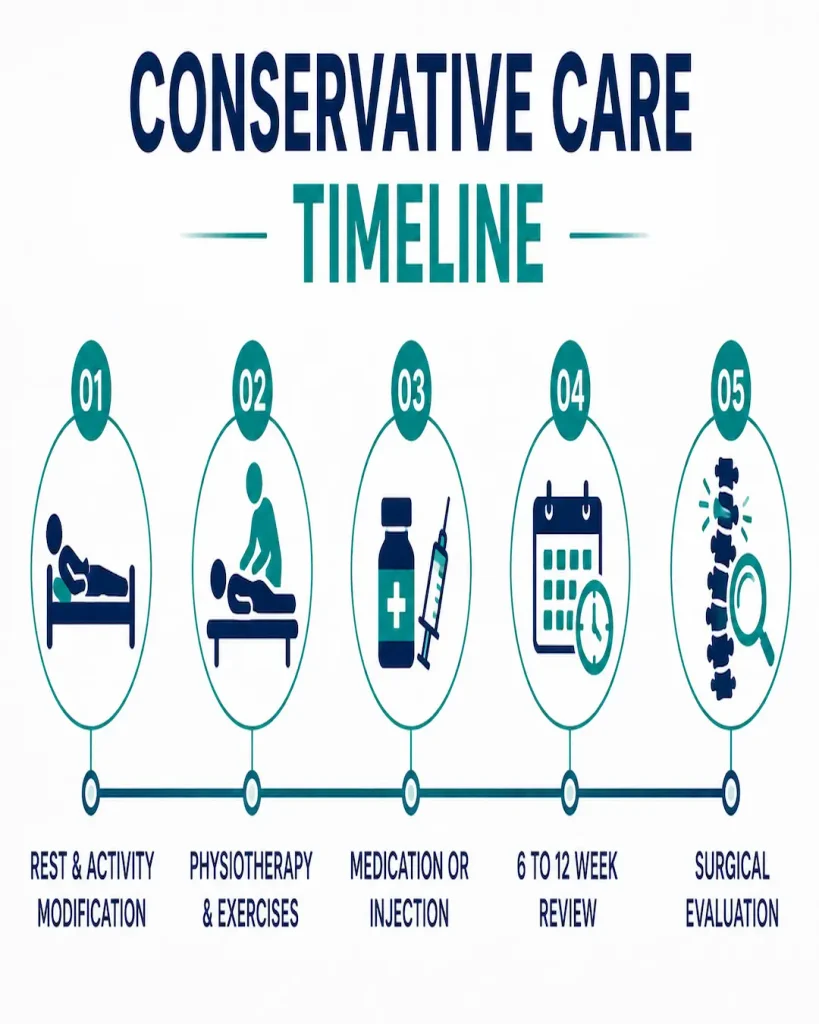
- Rest and activity modification for the first one to two weeks, avoiding movements that clearly worsen symptoms.
- Physiotherapy and core strengthening, usually continued for several weeks rather than days.
- Medication or image guided injections if pain is limiting movement or sleep.
- Reassessment around the six to twelve week mark, since many disc related symptoms improve within this window.
- Surgical evaluation if there has been little improvement by then, or sooner if weakness is getting worse rather than better.
Surgery versus conservative treatment is not really a competition between two equal options. Conservative treatment is almost always tried first, and slip disc treatment often resolves without ever reaching the operating table. Surgery becomes the more reasonable option specifically when nerve compression persists past that trial period or when symptoms are actively worsening.
Numbness, Tingling and Foot Drop: When Nerve Compression Needs More Than Rest
Numbness and tingling in the hands or feet come up constantly in spine consultations, and they deserve a proper look rather than a quick reassurance. These sensations, along with clumsiness or trouble with balance, can point to a nerve being compressed somewhere along the spine.
One specific warning sign is foot drop, difficulty lifting the front of the foot while walking. According to Mayo Clinic, foot drop is often caused by a compressed nerve, and in the spine this commonly traces back to a herniated disc, spinal stenosis, or degenerative disc disease. Left unaddressed too long, this type of nerve involvement can become harder to reverse, which is why foot drop is treated with more urgency than ordinary back pain.
Not every episode of tingling and numbness comes from the spine. Diabetes, nutrient deficiencies and other nerve conditions can cause similar sensations, so an accurate diagnosis, usually involving an MRI and a nerve function test, matters more than guessing from symptoms alone.
Emergency Symptoms That Cannot Wait for a Scheduled Consultation
A handful of symptoms fall outside the usual step by step approach entirely. These need same day emergency assessment, not a routine outpatient booking.
Sudden loss of bladder or bowel control, numbness in the inner thighs or groin area, or rapidly worsening leg weakness are treated as a spinal emergency. According to Cleveland Clinic, this pattern of symptoms can signal pressure on the nerve bundle at the base of the spine, and prompt evaluation is what protects long term nerve function.
If any of these symptoms appear, whether or not back pain has been present for a while, the right step is an emergency department visit, not waiting for the next available specialist slot. This is one of the few situations where when is spine surgery needed has a same day answer rather than a gradual one.
Back Pain Without Leg Symptoms: Does It Ever Need Surgery?
Back pain that stays in the back, without radiating into a leg, numbness or weakness, is generally managed with conservative treatment first and rarely needs surgery on its own, since pain alone is a less reliable indicator than confirmed nerve compression or instability. That said, isolated back pain caused by spinal instability, a fracture, or advanced spinal degeneration can still justify surgery once imaging confirms a mechanical cause rather than simple strain.
Muscle Weakness and Wasting: A Different Kind of Red Flag
Weakness behaves differently from pain. A leg that gives way unexpectedly, a weakening grip, or visible muscle wasting over a foot or calf points toward a neurological problem rather than a purely mechanical one.
- Progressive weakness, getting worse week over week, is taken more seriously than weakness that has stayed the same for months.
- Muscle wasting suggests the nerve supplying that muscle has been under pressure for some time.
- Weakness combined with numbness in the same leg strengthens the case for a nerve compression diagnosis.
Spine surgery is considered more readily for this symptom than for pain alone, since delaying treatment for genuine nerve compression risks the weakness becoming permanent. For weakness specifically, when is spine surgery needed tends to have a shorter answer than it does for pain.
Second Opinions, Age and Making the Decision
A second opinion is one of the most useful steps a patient can take before agreeing to any spinal procedure, particularly when different surgeons suggest different approaches, such as fusion, disc replacement, or continued conservative care. Asking a second surgeon to review the same imaging is a normal part of the process, not a sign of distrust.
Age alone rarely settles the question either way. What matters more is overall health, bone density and how well the body is expected to tolerate the surgery and the recovery that follows. Some patients in their seventies and eighties are cleared for surgery without difficulty, while some younger patients with other health conditions are guided toward continued nonsurgical management instead.
Getting Evaluated for Spine Surgery in Mohali
If any of these warning signs sound familiar, the next useful step is a proper clinical evaluation rather than guessing from a symptom checklist. Patients across Mohali, SAS Nagar, Chandigarh, Kharar, Zirakpur and Panchkula typically start with an MRI and a neurological examination, which together clarify whether nerve compression, instability or something else is behind the symptoms.
Our spine specialist in Mohali team reviews imaging alongside symptoms rather than treating pain scores in isolation, since that combination determines whether conservative care, a procedure, or continued observation is the right path. If leg pain, numbness or weakness has lasted more than a few weeks, or any emergency symptom above appears, book a consultation for a focused assessment rather than wondering when is spine surgery needed on your own.
Key Takeaways
- Ordinary back pain is usually managed with rest, physiotherapy and medication, not surgery.
- Confirmed nerve compression, spinal instability and progressive weakness are the main reasons surgery becomes the next step.
- Conservative treatment is generally given six to twelve weeks to work before surgery is seriously considered.
- Loss of bladder or bowel control, or numbness around the inner thighs, needs emergency care, not a scheduled appointment.
- Weakness and muscle wasting are treated as more urgent than pain alone, since delay carries a risk of permanent nerve damage.
- A second opinion is a reasonable and normal step before agreeing to any spinal procedure.
Frequently Asked Questions About When Spine Surgery Is Needed
When is spine surgery actually necessary instead of physiotherapy or medication?
Conservative treatment, meaning physiotherapy, medication and sometimes injections, is almost always tried first for several weeks before surgery is discussed. Spine surgery becomes the more reasonable option when these approaches have not improved the condition after a fair trial, particularly when nerve compression is confirmed on imaging and is causing ongoing pain, numbness or weakness. It rarely enters the conversation until conservative care has had a genuine chance to work and the underlying cause has been properly identified through examination and scans.
What are the warning signs that I might need spine surgery?
The key warning signs, often called red flags, include severe or unrelenting pain, pain that radiates into an arm or leg rather than staying local, and any numbness, tingling or weakness that does not ease with rest. Loss of bladder or bowel control is treated as a separate and urgent red flag on its own. None of these signs should be ignored, since early evaluation makes a real difference to how well nerve compression responds to treatment.
Is numbness or tingling in my hands or feet a sign I need surgery?
It can be, but it is not the only explanation. Numbness, tingling, weakness, poor coordination and balance problems can all point toward an underlying spinal condition, particularly when the sensation follows a specific pattern down one leg or arm. These symptoms can also come from causes unrelated to the spine, such as diabetes or a nutrient deficiency. An accurate diagnosis, usually involving an MRI and a nerve function test, determines whether surgery is even a reasonable option.
What is foot drop and does it always mean I need surgery?
Foot drop describes difficulty lifting the front of the foot while walking, often leading to a dragging gait. It commonly results from nerve compression connected to a herniated disc, spinal stenosis, or degenerative disc disease in the lower spine, though it can also come from nerve problems outside the spine. Foot drop does not automatically mean surgery is required, but because untreated nerve compression can eventually cause lasting weakness, it is generally evaluated with more urgency than ordinary back pain.
How long should I try conservative treatment before considering surgery?
Many herniated disc related symptoms improve within about six to twelve weeks of consistent conservative treatment, including physiotherapy, activity modification and pain management. If there has been little improvement by that point, or if weakness is progressively getting worse during that window, surgery becomes a more appropriate option to discuss. This timeframe is a general guide, and a surgeon may recommend earlier evaluation if red flag symptoms appear at any stage.
Can back pain alone, without leg pain or numbness, be a reason for surgery?
Isolated back pain, without pain radiating into a leg or any numbness, is generally managed conservatively first. Surgery for back pain alone is typically reserved for cases where imaging confirms a specific structural cause, such as spinal instability or a fracture, rather than pain severity by itself. Pain that significantly limits daily function despite genuine conservative treatment can still justify surgery, but the decision rests on a confirmed diagnosis, not on how intense the pain feels on a difficult day.
What symptoms mean I should seek emergency care rather than wait for a scheduled consultation?
Sudden loss of bladder or bowel control, an inability to urinate, numbness around the inner thighs or groin area, and rapidly worsening leg weakness all call for immediate emergency evaluation rather than a routine appointment. These symptoms can indicate significant pressure on the nerves at the base of the spine, and prompt assessment, sometimes followed by urgent surgery, is what helps protect long term nerve function. If these appear, the right step is the nearest emergency department, not waiting at home.
Can spine surgery help with weakness or muscle wasting in the legs?
Yes, when the weakness is caused by nerve compression that surgery can directly relieve. Progressive weakness, such as a foot that is harder to lift than a few weeks ago, a weakening grip, or visible muscle wasting, is treated as a clearer surgical indication than pain alone, since it points to an active neurological problem. The longer significant nerve compression continues untreated, the greater the risk that weakness becomes permanent, which is why it is usually evaluated with more urgency than routine back pain.
Should I get a second opinion before agreeing to spine surgery?
Generally, yes, and most experienced spine surgeons expect and welcome this. A second opinion is particularly useful when different surgeons suggest different approaches, such as fusion versus disc replacement versus continued conservative care, since it confirms the recommended path genuinely fits the diagnosis. Getting an independent review of the same imaging before committing to a major spinal procedure is good practice, not a sign of doubt in either surgeon.
Does age affect whether spine surgery is recommended?
Age on its own is rarely the deciding factor. What matters more is general health, bone density, and how well the body is likely to tolerate the surgery and the recovery period afterward. Some older patients, including those in their seventies, are cleared for surgery without significant concern once these factors are assessed, while some younger patients with other health conditions may be guided toward continued conservative management if the surgical risk outweighs the expected benefit.
Most back pain never needs a surgeon, and that is genuinely good news rather than a reason to dismiss ongoing symptoms. The patients who do need an operation are usually the ones with a clear, confirmed reason, whether that is nerve compression that has not settled, spinal instability, or weakness that keeps getting worse. Understanding when is spine surgery needed, and recognising the difference between symptoms that can wait for a scheduled evaluation and those that cannot, is what allows a spine to be treated appropriately rather than either rushed into surgery or left untreated for too long.