
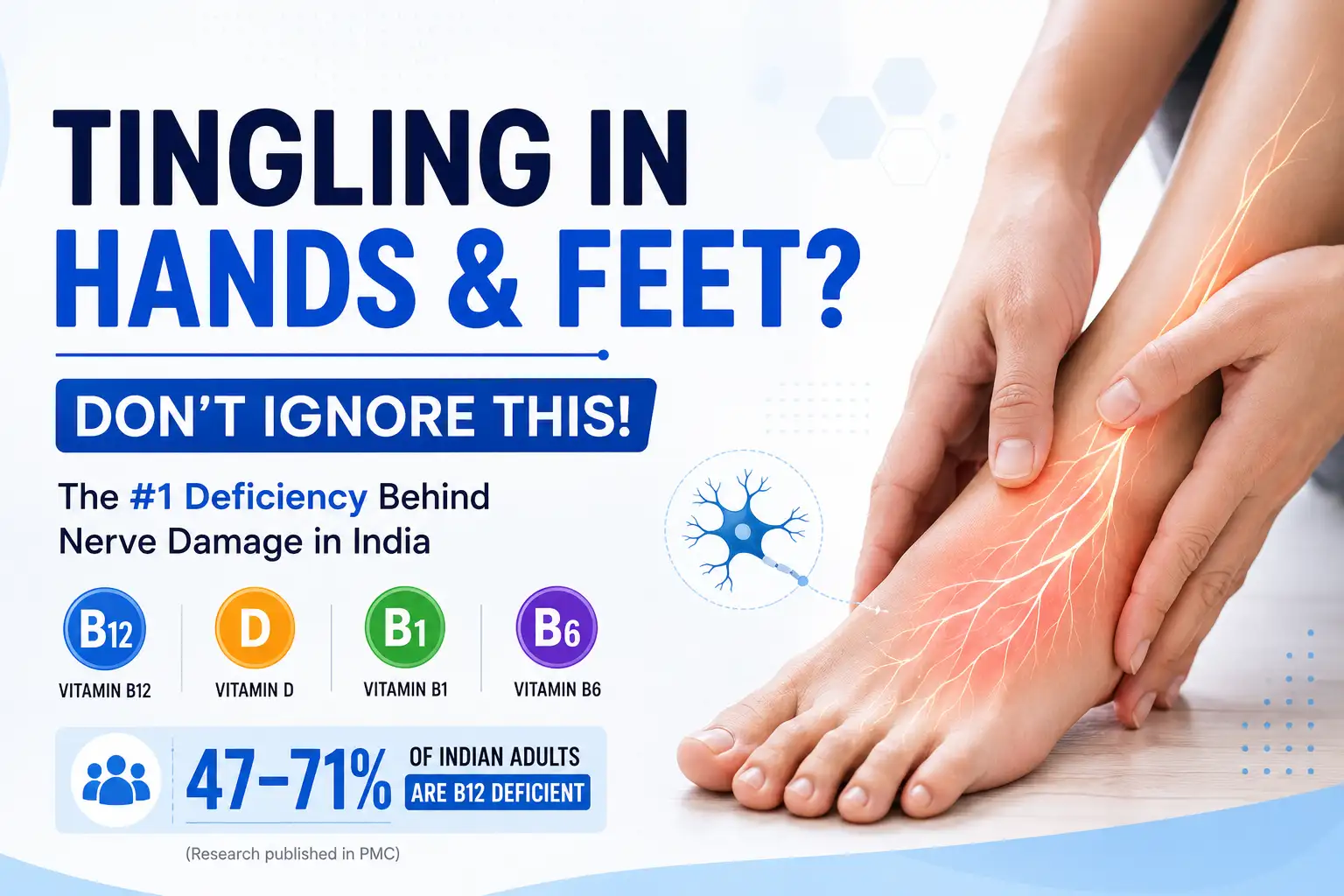
That pins and needles feeling.
Sometimes in the feet at night. Sometimes in both hands after sitting a certain way. Sometimes a burning sensation that starts in the toes and creeps upward.
Most people assume it is a circulation problem or a compressed nerve from a bad posture. Sometimes it is. But when tingling in hands and feet is frequent, appears without an obvious physical cause, or comes with numbness, weakness, or pain, it is almost always a nerve problem. And the most common reason for a nerve problem of this kind in India is a nutritional deficiency.
Research published in PMC estimates that 47 to 71% of Indian adults are vitamin B12 deficient. That is not a minor statistic. It means that for a large proportion of people experiencing tingling sensation in feet or hands, the answer is already in their blood test, waiting to be found.
Dr. Jaspreet Singh Randhawa, neurosurgeon at Medisyn Neuro Centre in Mohali, explains which deficiencies cause tingling in hands and feet, what is happening to the nerve when a deficiency develops, which tests confirm it, and which foods give the nervous system what it needs to repair itself.
What Is Actually Happening When You Feel Tingling in Your Feet or Hands?
The medical term for tingling, pins and needles, or abnormal sensation is paresthesia.
It is produced when peripheral nerves, the nerves running from your spinal cord out to your hands and feet, are either irritated, compressed, or damaged. Peripheral nerves rely on a protective insulating layer called the myelin sheath to transmit signals accurately and at the right speed.
When this sheath is damaged or absent, signals leak, misfire, or slow down. The brain interprets these disordered signals as tingling, burning, numbness, or an electric-shock sensation in the area the nerve supplies.
The hands and feet are affected first in most nutritional deficiency neuropathies because they sit at the furthest ends of the longest nerves in the body. These distal nerves are the first to feel the effects of reduced nutritional supply.
“When a patient comes to me with tingling in both feet that is worse at night, my first three tests are B12, vitamin D, and fasting blood sugar. These three alone account for the majority of cases I see. The examination takes 10 minutes. The tests take one day. And most of the time, the answer is reversible.”
Dr. Jaspreet Singh Randhawa, Medisyn Neuro Centre, Mohali
5 Deficiencies That Cause Tingling in Hands and Feet
Deficiency 1: Vitamin B12, The Most Common and Most Reversible Cause
B12 is not optional for nerve function.
It is directly involved in the production and maintenance of myelin, the protective sheath around every peripheral nerve. Without adequate B12, myelin breaks down. Nerve conduction slows. Signals misfire. The result is tingling, numbness, and in advanced cases, weakness and balance problems.
Reports in PMC confirm that 47 to 71% of Indian adults are B12 deficient, making this the single most important deficiency to test for in any patient with unexplained tingling in hands and feet.
Who is most at risk in India:
- Vegetarians and vegans: B12 is found almost exclusively in animal products. Pure vegetarian diets provide minimal B12 unless fortified foods or supplements are taken consistently
- People on long-term metformin: the diabetes medication metformin reduces B12 absorption from the gut. Studies show a significant prevalence of B12 deficiency among metformin-treated diabetics
- Adults over 50: gastric acid production declines with age, reducing the gut’s ability to extract B12 from food
- People with gastritis or those on long-term proton pump inhibitors (omeprazole, pantoprazole): reduced stomach acid impairs B12 absorption
Tingling pattern of B12 deficiency: Both hands and both feet simultaneously. Often worse at night. May be accompanied by fatigue, pale or yellowish skin, shortness of breath, memory changes, or difficulty walking.
Test to confirm: Serum vitamin B12. A level below 200 pg/mL is deficient. Between 200 and 300 pg/mL is borderline and may still cause neurological symptoms in some people.
What restores it: Oral B12 supplements work for most people. Intramuscular B12 injections are faster and more reliable in people with absorption problems. an Indian clinical study showed that B12 treatment improved sensory nerve conduction velocity in the feet by 29.4% over 11 months.
“The mistake I see most often is a patient being given a B12 injection once and told they are fine. B12 deficiency neuropathy takes months to develop and months to fully reverse. One injection does not undo six months of myelin damage. These patients need a sustained supplementation programme with nerve conduction monitoring, not a single shot and discharge.”
Dr. Jaspreet Singh Randhawa
Deficiency 2: Vitamin D, The Nerve Protector Most People Only Think of as a Bone Vitamin
Vitamin D receptors are found throughout the nervous system, including in peripheral nerve cells. Vitamin D supports the production of nerve growth factor, a protein that maintains the survival and function of peripheral nerves. It also has anti-inflammatory effects that reduce the nerve irritation underlying paresthesia.
As GoodRx explains, vitamin D deficiency can lead to tingling hands and feet alongside the more commonly known symptoms of bone pain and muscle weakness.
In India, despite abundant sunshine, vitamin D deficiency is widespread because most indoor workers, office employees, students, and urban adults get minimal sun exposure on their skin during peak UV hours. Skin that is covered, sun avoidance due to heat, and the lower UV index in winter months in Punjab all contribute.
Tingling pattern of vitamin D deficiency: Usually more muscle-related than the sharp pins-and-needles of B12. May present as generalised tingling, muscle cramps, heaviness in the legs, or bone pain alongside the sensory symptoms.
Test to confirm: Serum 25-hydroxyvitamin D. Below 20 ng/mL is deficient. Between 20 and 30 ng/mL is insufficient and sufficient to cause neurological symptoms in sensitive individuals.
What restores it: Oral vitamin D3 supplementation, typically 60,000 IU weekly for 8 to 12 weeks followed by a maintenance dose. Combined with calcium where indicated. Sun exposure on arms and face for 15 to 20 minutes between 10am and 2pm daily where feasible.
Deficiency 3: Vitamin B6, The One That Works Both Ways
B6 is unusual among nutritional causes of tingling because both too little and too much B6 can damage peripheral nerves and produce paresthesia.
GoodRx notes that B6 deficiency typically causes tingling that begins in the feet and moves upward through the legs and into the arms. B6 toxicity from excessive supplementation (above 200mg daily for extended periods) causes a sensory neuropathy with a similar but often more severe pattern.
In India, B6 deficiency is less common than B12 or D deficiency but occurs in people with poor dietary diversity, alcoholism, or certain medications including isoniazid (used for tuberculosis treatment), which depletes B6 directly.
Test to confirm: Plasma pyridoxal phosphate (PLP), the active form of B6. Routine blood panels do not routinely include this, so it must be specifically requested.
Important caution: Do not self-supplement B6 above 10mg daily without medical supervision. Paradoxically, high-dose B6 supplements marketed for nerve health can themselves cause the tingling they claim to treat.
Deficiency 4: Folate (Vitamin B9), The B12 Partner That Is Often Overlooked
Folate and B12 work together in many neurological pathways. Deficiency of either one produces similar symptoms because both are required for the synthesis of myelin and for the management of homocysteine, an amino acid that at elevated levels is directly toxic to nerve cells.
WebMD confirms that deficiencies in B vitamins, including folate, are among the most common nutritional causes of tingling hands and feet. Elevated homocysteine from folate deficiency damages the endothelium of the small blood vessels supplying peripheral nerves, causing a microvascular neuropathy on top of the direct neurological effects.
Folate deficiency is common in people with low vegetable intake, alcoholism, or those on long-term methotrexate or antiepileptic medications. It is also particularly important in pregnancy, where deficiency causes neural tube defects in the developing infant rather than neuropathy in the mother.
Test to confirm: Serum folate and red cell folate. Red cell folate is a more accurate indicator of long-term folate status than serum folate alone.
Deficiency 5: Magnesium, The Nerve Stabiliser That Affects Everything Quietly
Magnesium is required for over 300 enzymatic reactions in the body, including those that regulate nerve excitability and neuromuscular transmission. When magnesium is low, nerve membranes become hyperexcitable: they fire more easily and inappropriately. The clinical result is tingling, muscle cramps, restless legs, and a generalised heightened sensitivity to touch or temperature.
Deficiencies in magnesium can lead to tingling hands and feet, alongside the more classic symptoms of muscle cramps and involuntary twitching.
Magnesium deficiency is common in people with type 2 diabetes (the kidneys excrete more magnesium when blood sugar is high), those on diuretics, heavy coffee or alcohol consumers, and people with poor vegetable intake.
Test to confirm: Serum magnesium. Note that serum magnesium can be normal even when intracellular magnesium is low. If serum magnesium is borderline and symptoms are present, a trial of supplementation under medical guidance is often the most practical diagnostic step.
Test to confirm: Serum magnesium. Note: serum magnesium can appear normal even when intracellular stores are depleted, so clinical judgment alongside blood results matters.
When Tingling Is Not a Deficiency: Other Important Causes
Deficiencies account for a large proportion of tingling in hands and feet, but not all of it.
Dr. Jaspreet Singh Randhawa evaluates every tingling patient for the following before attributing the symptoms to nutrition alone:
- Diabetes: Diabetic peripheral neuropathy is the most common cause of tingling feet globally. Even pre-diabetes with borderline blood sugar can cause early neuropathic changes. A fasting blood sugar and HbA1c are mandatory in any patient with unexplained tingling in feet
- Cervical or lumbar nerve compression: A compressed nerve root in the neck or lower back refers tingling into the arm or leg in a dermatomal pattern. Tingling limited to specific fingers (not the whole hand) or following a clear band down the leg points toward a spinal cause rather than a nutritional one
- Hypothyroidism: Low thyroid function causes a peripheral neuropathy through mechanisms not fully understood. TSH is a routine part of the neuropathy workup
- Carpal tunnel syndrome: Compression of the median nerve at the wrist causes tingling specifically in the thumb, index, middle, and part of the ring finger, classically worse at night and with wrist flexion
The distinction between these causes and a nutritional deficiency is made through clinical examination and targeted blood tests. An electromyography (EMG) and nerve conduction study (NCS), available at Medisyn in Mohali, provides objective evidence of peripheral nerve damage and helps localise whether the problem is in the nerve endings (deficiency), along the nerve trunk (compression), or in the nerve roots (spinal).
Patients with spinal-related nerve symptoms can find further information in the article on slip disc treatment, which covers cervical and lumbar nerve compression in detail.
7 Foods That Heal Nerve Damage: What the Evidence Actually Says
Searching for the best food for nerves repair is the right instinct, but food cannot replace supplementation when a deficiency is already established and causing neurological symptoms. The damage needs a therapeutic dose to correct, and food alone rarely provides that.
But once supplementation has restored levels, diet determines whether they stay restored.
These are the 7 foods most consistently supported by evidence for nerve repair and maintenance:
- Fatty fish (salmon, mackerel, sardines): Rich in omega-3 fatty acids, which research shows support myelin sheath regeneration and reduce neuroinflammation. Aim for 2 servings per week minimum
- Eggs: One of the best dietary sources of B12 and B6 combined. Medical News Today notes that B12’s role in myelin production makes eggs a direct nerve-support food. 2 eggs daily provides a meaningful B12 contribution for non-vegetarians
- Dark leafy greens (spinach, methi, palak, kale): High in folate, B6, vitamin E, and antioxidants. Folate supports homocysteine reduction. Vitamin E protects nerve membranes from oxidative damage. Daily inclusion in meals is the easiest consistent source
- Nuts and seeds (almonds, walnuts, sunflower seeds): Vitamin E is concentrated in almonds and sunflower seeds. Evidence from systematic reviews shows vitamin E supplementation improves nerve function in people with peripheral neuropathy, particularly in diabetics. A daily handful provides therapeutic amounts over time
- Legumes (dal, rajma, chana, moong): Excellent plant-based sources of B6, folate, magnesium, and protein. For vegetarians who cannot get B12 from animal sources, ensuring maximal intake of these B-vitamin alternatives reduces the severity of deficiency effects on other nerve pathways. Dal is arguably the most accessible daily nerve-support food in a North Indian diet
- Turmeric with black pepper: Curcumin, the active compound in turmeric, has documented anti-inflammatory and neuroprotective effects. The critical point: curcumin has very poor bioavailability on its own. Pairing it with piperine from black pepper increases absorption by up to 2000%. Haldi milk or turmeric added to food with black pepper is not a folk remedy. It is a pharmacologically sound combination
- Fortified dairy and cereals: For vegetarians and vegans, fortified milk, paneer made from fortified milk, and fortified breakfast cereals provide the only realistic dietary B12 and D3 sources outside supplementation. Checking labels for fortification is a practical and important daily habit
“I tell every patient with B12 neuropathy the same thing. The injection I give today starts the repair. The food you eat every day determines whether you need another injection in six months. Nerve health is not a one-time treatment. It is a long-term nutritional commitment.”
Dr. Jaspreet Singh Randhawa, Medisyn Neuro Centre, Mohali
When to See a Neurologist for Tingling in Hands and Feet
Occasional tingling after sitting awkwardly is normal.
The following patterns are not:
- Tingling in both feet that is present most nights or most days
- Tingling spreading from feet toward the calves or from hands toward the forearms
- Tingling accompanied by weakness, difficulty walking, or loss of balance
- Tingling that has been present for more than 4 weeks without an obvious postural cause
- Tingling in a person with diabetes, even if blood sugar appears controlled
- Tingling alongside fatigue, pallor, memory changes, or other systemic symptoms
At Medisyn Neuro Centre, the evaluation of tingling in hands and feet includes a detailed neurological examination, targeted blood tests (B12, D, folate, magnesium, TSH, fasting glucose, HbA1c), and nerve conduction studies where indicated. The investigation is specific and the treatment, when the cause is nutritional, is straightforward and effective when started early.
For patients with associated headaches, the article on daily headache causes explains how nutritional deficiencies overlap with chronic headache patterns, since B12 and vitamin D deficiency both contribute to persistent head pain alongside peripheral nerve symptoms.
Book a consultation at Medisyn online.
10 Questions People Ask About Tingling in Hands and Feet
1. What deficiency causes tingling in hands and feet most commonly in India?
Vitamin B12 deficiency is the most common nutritional cause of tingling in hands and feet in India, affecting an estimated 47 to 71% of Indian adults according to research. The second most significant is vitamin D deficiency. Both are diagnosable with a standard blood test and reversible with supplementation when caught before permanent nerve damage occurs.
2. Can tingling in feet be caused by vitamin D deficiency alone?
Yes. Vitamin D receptors are present throughout the peripheral nervous system, and deficiency reduces nerve growth factor production and increases neuroinflammation. Tingling from vitamin D deficiency often accompanies muscle pain, bone tenderness, and fatigue, unlike the more isolated nerve-symptom pattern of B12 deficiency. Both can coexist, which is why testing for both simultaneously is more efficient than testing one at a time.
3. How long does it take for tingling to stop after starting B12 supplements?
It depends on how long the deficiency has been present and how severe the nerve damage is. Early-stage deficiency with mild tingling can show improvement within 4 to 8 weeks of adequate supplementation. Established neuropathy with more significant symptoms may take 3 to 6 months to show meaningful improvement, and in some cases of prolonged severe deficiency, partial permanent damage may limit full recovery. This is why early testing and treatment matters.
4. Is tingling sensation in feet at night always a deficiency?
Not always. Nocturnal tingling in feet is commonly caused by B12 or vitamin D deficiency, diabetic neuropathy, or restless legs syndrome. It can also reflect positional nerve compression during sleep. The pattern that suggests deficiency is bilateral, symmetric tingling that is not position-dependent and does not resolve quickly with movement. Compression-related tingling typically resolves within seconds to minutes of changing position.
5. Which foods are best for nerve repair after a B12 deficiency?
The most effective dietary sources for B12 restoration are eggs, dairy products, and fatty fish (salmon, mackerel, sardines). For vegetarians who rely on plant sources, fortified milk and cereals are the most practical options. Supplementation is usually necessary to restore levels to therapeutic range, after which consistent dietary intake helps maintain them. The 7 foods listed in this article cover the full spectrum of nutrients the nervous system needs for repair and protection.
6. Can magnesium deficiency cause tingling in hands?
Yes. Magnesium regulates nerve membrane excitability. Low magnesium causes peripheral nerves to fire more easily and spontaneously, producing tingling, pins and needles, and muscle cramps. Magnesium-related tingling often comes with muscle twitching, restless legs, poor sleep, and anxiety. It is more common in diabetics, heavy caffeine consumers, and people on diuretics.
7. Should I take a B12 injection or tablet?
For mild to moderate B12 deficiency without significant absorption problems, oral high-dose B12 (1000 mcg daily) is effective and well-tolerated. For people with conditions that impair B12 absorption, including atrophic gastritis, long-term PPI use, or post-bariatric surgery, intramuscular injections bypass the gut and deliver B12 directly into the bloodstream. Dr. Jaspreet Singh Randhawa determines which route is appropriate based on the clinical picture and blood test results.
8. Can tingling in hands and feet be a sign of something serious?
Most tingling in hands and feet is caused by a nutritional deficiency, diabetes, or a mechanical nerve compression, all of which are treatable. Rarely, tingling can be an early sign of a more serious neurological condition including multiple sclerosis, Guillain-Barre syndrome, or a spinal cord disorder. Features that raise concern for a serious cause include rapidly progressive tingling, ascending weakness starting in the feet, tingling with bowel or bladder changes, or tingling associated with vision problems or significant balance disturbance. These presentations require urgent neurological evaluation.
9. Why is tingling worse at night?
Several mechanisms make nerve-related tingling worse at night. Blood flow to the extremities slows in the lying position. Body temperature drops, which affects nerve conduction. Daytime activity and distraction mask the sensation. For B12 neuropathy specifically, the nerve is not in a worse state at night, but the absence of competing sensory input makes the abnormal signals more perceptible. Diabetic neuropathy also classically worsens at night for similar reasons.
10. When should I see Dr. Jaspreet Singh Randhawa in Mohali for tingling?
See Dr. Randhawa at Medisyn Neuro Centre if your tingling in hands and feet has been present for more than 4 weeks, if it is worsening rather than stable, if it is accompanied by any weakness or balance problems, if you are diabetic or pre-diabetic, or if you are vegetarian and have never been tested for B12. The evaluation is straightforward. The treatment, when the cause is nutritional, is one of the most satisfying in neurology because the improvement is real, measurable, and meaningful for the patient.