




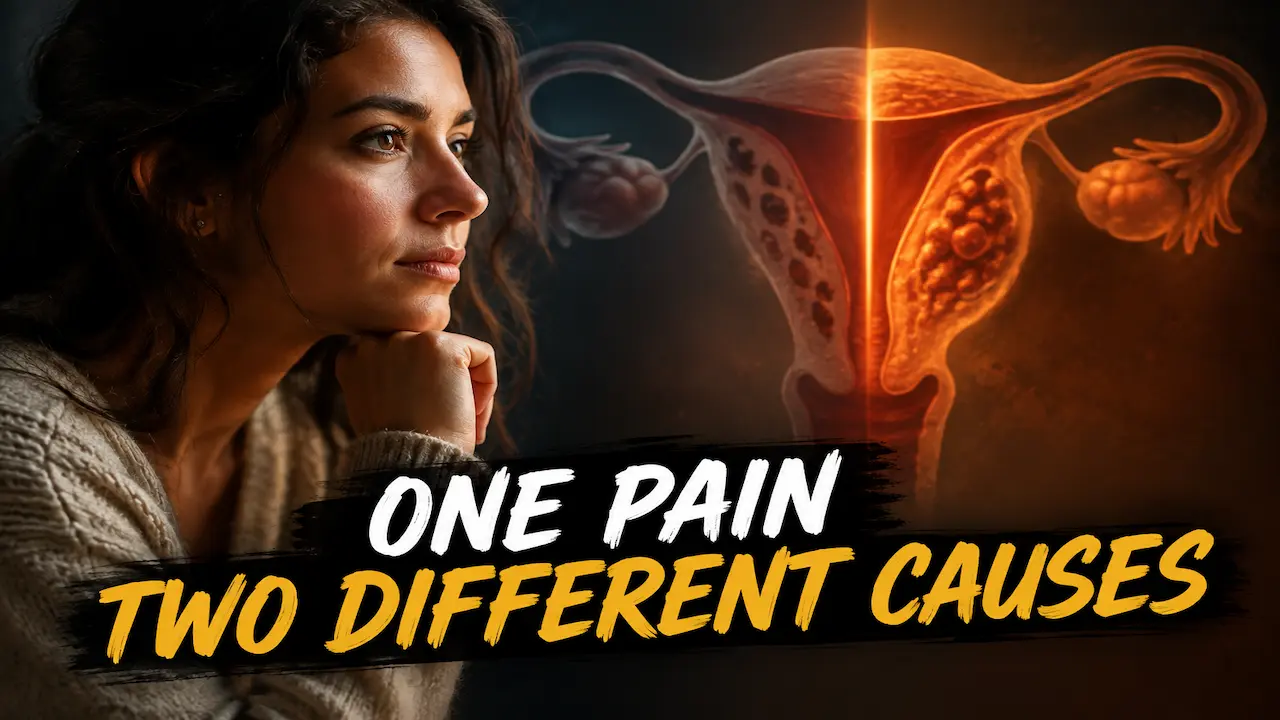
Two women can describe identical periods, heavy bleeding, sharp cramping, pain that lingers for days, and still walk away with two completely different diagnoses. Endometriosis vs adenomyosis comes down to one core distinction: where the misplaced tissue actually grows, and that single anatomical difference shapes everything from imaging findings to fertility risk to which treatment actually helps.
Key Takeaways
- Endometriosis involves tissue similar to the uterine lining growing outside the uterus, while adenomyosis involves that same type of tissue growing into the uterine muscle wall itself.
- Both conditions can cause heavy periods, pelvic pain and painful sex, which is why symptom overlap alone cannot separate them.
- Adenomyosis is generally diagnosed through ultrasound or MRI, while endometriosis often needs laparoscopy for full confirmation.
- The two conditions can coexist in the same woman, and having one does not rule out the other.
- A structured Endometriosis Diagnosis in Mohali workup, paired with an ultrasound assessing the uterine muscle wall, is what separates one condition from the other, or confirms both together.
Where the Tissue Actually Grows
The location of the misplaced tissue is the anatomical starting point for every other difference between these two conditions.
Endometriosis is a condition where tissue similar to the uterine lining grows outside the uterus, commonly on the ovaries, fallopian tubes or pelvic lining. Adenomyosis occurs when that same type of tissue grows directly into the muscular wall of the uterus, causing the uterus itself to enlarge and thicken.
This distinction explains why an endometrioma forms on an ovary while adenomyosis simply makes the uterus feel larger, softer and more tender on examination, without any cyst forming elsewhere in the pelvis.
8 Differences Between Endometriosis and Adenomyosis
Symptom overlap makes these two conditions genuinely confusing to tell apart from history alone. A side by side comparison makes the practical differences clearer.
| Difference | Endometriosis | Adenomyosis |
|---|---|---|
| Tissue location | Outside the uterus, on ovaries, tubes or pelvic lining | Inside the muscular wall of the uterus |
| Typical age group | Often diagnosed in the 20s and 30s | More common after 35, especially after childbirth |
| Uterus size | Usually normal sized | Often enlarged, sometimes described as boggy on exam |
| Primary imaging test | Transvaginal ultrasound, MRI for deep disease | Transvaginal ultrasound, MRI when findings are unclear |
| Definitive confirmation | Laparoscopy with biopsy | Often based on imaging, or histology after hysterectomy |
| Fertility impact | Can block tubes or affect egg quality directly | Can affect implantation, evidence is less extensive |
| Cyst formation | Endometriomas can form on the ovary | No cyst formation, tissue stays within the uterine wall |
| Typical bleeding pattern | Variable, sometimes normal cycle length | Frequently heavy, prolonged menstrual bleeding |
Symptoms That Overlap, and the Small Clues That Do Not
Pelvic pain around periods, painful sex and cramping severe enough to disrupt daily life show up in both conditions, which is exactly why symptoms alone rarely settle the question.
- A uterus that feels notably enlarged or tender on exam leans toward adenomyosis.
- Pain that radiates toward the rectum or bladder, or worsens with bowel movements, leans toward endometriosis involving the pelvic lining.
- Heavy, prolonged bleeding with clotting is reported more consistently with adenomyosis.
- A visible cyst on the ovary during ultrasound points toward an endometrioma rather than adenomyosis.
These clues guide suspicion. They do not replace a proper diagnostic workup, since both patterns can shift depending on disease severity and whether the two conditions are occurring together.
How Diagnosis Actually Separates the Two Conditions
A transvaginal ultrasound is usually the starting point for both. For adenomyosis, the scan looks at the thickness and texture of the uterine muscle wall itself. For endometriosis, the same scan checks the ovaries for endometriomas and looks at whether the uterus and bowel slide freely against each other.
Adenomyosis is frequently confirmed through imaging alone or discovered after a hysterectomy performed for other reasons, since a definitive tissue diagnosis during life is less commonly pursued. Endometriosis, by contrast, often still relies on laparoscopy with biopsy when imaging alone leaves genuine doubt.
According to Mayo Clinic, adenomyosis shares overlapping symptoms with uterine fibroids and endometriosis, which is exactly why testing sometimes needs to rule out several conditions rather than confirm one directly. Cleveland Clinic notes that a substantial share of people with adenomyosis have no symptoms at all, which adds another layer of complexity when a woman is being evaluated for pelvic pain from a separate cause.

Can You Have Both Endometriosis and Adenomyosis at Once?
Yes, and this is more common than patients typically expect. The two conditions share a similar underlying tissue type, and having one increases the likelihood of the other being present as well.
- An ultrasound may show both an enlarged uterine wall and an ovarian endometrioma in the same scan.
- Symptom severity can be higher when both conditions overlap, since pain sources are effectively doubled.
- Treatment planning becomes more layered, since hormonal therapy that helps one condition does not always address the other equally well.
- Fertility evaluation in this situation usually looks at both uterine cavity health and pelvic anatomy together, rather than assuming one diagnosis explains the full picture.
Fertility Considerations for Each Condition
Endometriosis affects fertility through several mechanisms, including blocked fallopian tubes, pelvic adhesions and inflammation that can reduce egg quality. Adenomyosis is thought to affect fertility more through its impact on the uterine cavity and implantation, though the evidence base here is still developing compared with endometriosis research.
A woman planning pregnancy with either diagnosis benefits from a fertility focused evaluation rather than treating the condition purely for pain relief, since the two goals sometimes call for different approaches.
When to Seek Specialist Care in Mohali, Chandigarh or Punjab
Heavy periods that soak through protection within an hour, pelvic pain that limits daily activity, or difficulty conceiving after several months of trying are reasonable triggers for a specialist evaluation rather than continued self management. Patients across Mohali, Chandigarh and the wider Punjab region typically start with a detailed symptom history and pelvic ultrasound before further testing is planned.
Our Adenomyosis and Endometriosis Specialist in Mohali team evaluates both conditions together during the same workup, since treating one while missing the other rarely resolves the full symptom picture. This connects directly with our Endometriosis Treatment in Mohali pillar page for the treatment pathways that follow once imaging and history point toward a specific diagnosis.
Getting an Accurate Diagnosis Before Choosing Treatment
Endometriosis vs adenomyosis is not a comparison between one common condition and one rare one. Both show up often enough that overlapping symptoms should prompt a proper workup rather than an assumption based on age or period pattern alone. An endometriosis diagnosis pathway that also assesses the uterine wall directly gives a fuller picture than checking for one condition and stopping there.
Frequently Asked Questions
1. What is the main difference between endometriosis and adenomyosis?
The main difference is tissue location. Endometriosis involves tissue similar to the uterine lining growing outside the uterus, typically on the ovaries, fallopian tubes or pelvic lining. Adenomyosis involves that same tissue type growing directly into the muscular wall of the uterus itself, causing the uterus to enlarge. Both conditions share a similar underlying tissue behavior, but where that tissue ends up changes the symptoms, imaging findings and treatment approach considerably.
2. Can adenomyosis be mistaken for endometriosis?
Yes, this happens fairly often, since both conditions cause pelvic pain, heavy periods and painful sex. Adenomyosis is generally suspected when the uterus feels enlarged or tender and ultrasound shows thickening of the uterine wall, while endometriosis is more often suspected when an ovarian cyst, tenderness behind the uterus, or reduced organ mobility is found. Because the two can also occur together, a careful ultrasound assessment of the uterus itself, alongside the ovaries, helps tell them apart.
3. Which condition causes heavier periods, endometriosis or adenomyosis?
Adenomyosis is more consistently associated with heavy, prolonged menstrual bleeding, since the misplaced tissue sits within the uterine muscle and can interfere with normal uterine contraction during periods. Endometriosis can also cause heavy bleeding in some cases, but pelvic pain and pain with bowel movements or intercourse tend to be more prominent complaints. Bleeding pattern alone is a useful clue but not a definitive way to separate the two conditions.
4. Does adenomyosis affect fertility the same way endometriosis does?
Not in exactly the same way. Endometriosis has well documented effects on fertility through blocked tubes, pelvic adhesions and reduced egg quality from inflammation. Adenomyosis is thought to affect fertility mainly through its impact on the uterine cavity and embryo implantation, though research in this area is less extensive than for endometriosis. Both conditions justify a fertility focused evaluation rather than assuming either one automatically prevents pregnancy.
5. Can you have both endometriosis and adenomyosis at the same time?
Yes, having one condition raises the likelihood of the other being present, since both involve the same type of displaced tissue behaving abnormally. An ultrasound can sometimes show signs of both in the same scan, such as an enlarged uterine wall alongside an ovarian endometrioma. When both are confirmed together, treatment planning usually needs to address each condition specifically rather than assuming one treatment approach covers both.
6. How is adenomyosis diagnosed if surgery is not usually done?
Adenomyosis is most often diagnosed through transvaginal ultrasound or MRI, both of which can show thickening, enlargement or a characteristic texture change in the uterine muscle wall. A definitive tissue diagnosis technically requires examining the uterus directly, which is why some cases are only fully confirmed after a hysterectomy performed for other reasons. In practice, imaging findings combined with symptoms are usually sufficient to guide treatment without surgery being required first.
7. Is endometriosis or adenomyosis more common?
Both conditions are relatively common among women of reproductive age, and estimates vary depending on the population studied and how thoroughly each condition is investigated. Adenomyosis becomes more frequently diagnosed after age 35 and particularly after childbirth, while endometriosis is often identified earlier, in the twenties and thirties. Neither condition should be assumed unlikely purely based on age, since both can occur outside their typical age patterns.
8. Does a normal ultrasound rule out adenomyosis or endometriosis?
No, for either condition. Ultrasound can miss smaller endometriosis implants and can sometimes miss milder adenomyosis, particularly in its early stages. A normal scan reduces the likelihood of larger findings, such as a significant endometrioma or a clearly enlarged uterine wall, but it does not completely exclude either condition if symptoms strongly suggest one of them. Persistent symptoms despite a normal scan usually warrant further evaluation rather than reassurance alone.
9. Can adenomyosis go away on its own or does it need treatment?
Adenomyosis symptoms often improve after menopause, since the condition is driven by hormonal activity that declines at that stage. During reproductive years, symptoms typically persist and sometimes worsen without treatment, particularly heavy bleeding and pain. Hormonal therapy can manage symptoms for a good number of women, while more definitive treatment options are considered based on symptom severity, age and whether future fertility is a priority.
10. Should I ask specifically for adenomyosis testing if I already have an endometriosis diagnosis?
It is a reasonable question to raise, particularly if heavy bleeding or an enlarged feeling uterus persists despite treatment aimed at endometriosis. Since the two conditions can coexist and require different treatment considerations, a specific ultrasound assessment of the uterine wall, not only the ovaries and pelvic lining, helps confirm whether adenomyosis is contributing to ongoing symptoms that endometriosis treatment alone has not resolved.
Endometriosis vs adenomyosis ultimately comes down to a careful look at where the tissue has settled, not a guess based on symptoms that genuinely overlap between the two. A workup that checks the uterine wall alongside the ovaries and pelvic lining, rather than assuming one diagnosis explains everything, gives the clearest path toward treatment that actually matches what is happening in the body.