
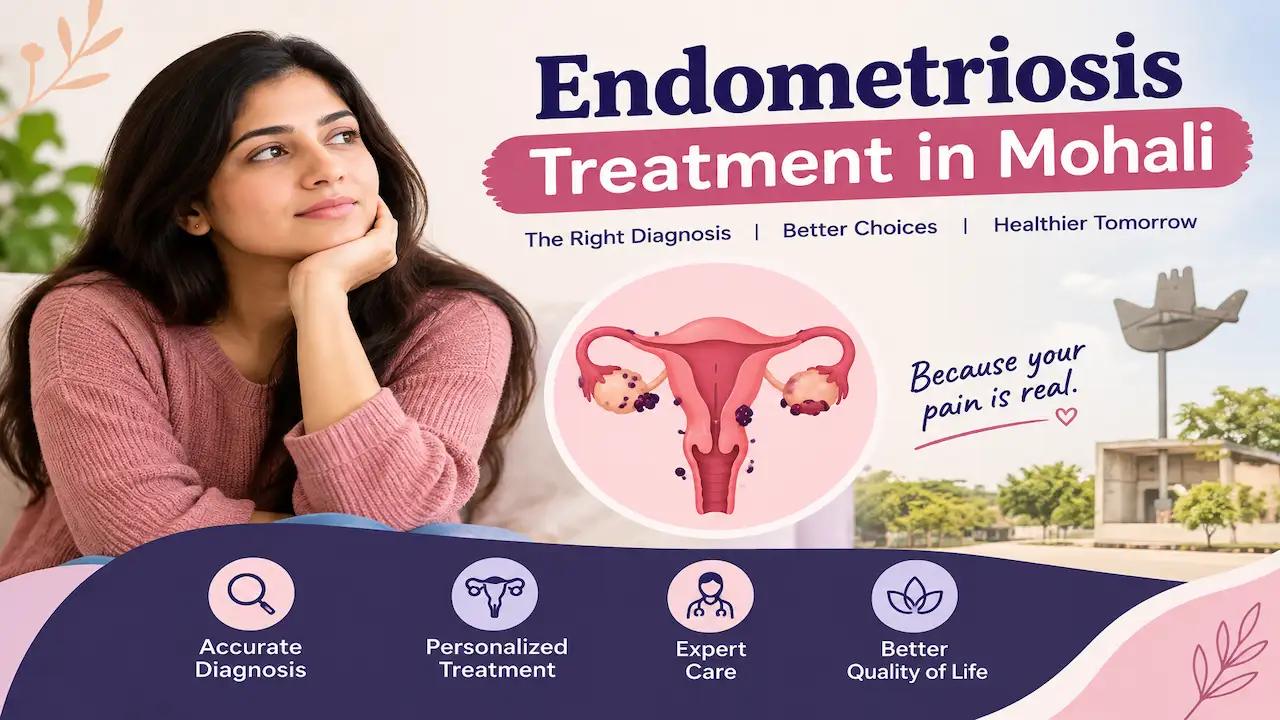
A normal ultrasound report and severe period pain in the same folder is one of the most frequent, and most frustrating, combinations a gynecologist sees. It does not mean the pain is imagined, and it does not mean endometriosis has been ruled out. Endometriosis treatment in Mohali starts from exactly this point: recognizing that a clear diagnosis often takes more than one scan, and that the right treatment plan depends on findings specific to each woman rather than a standard protocol applied the same way across the board. Women searching for an endometriosis doctor Mohali residents recommend usually arrive at this stage already, after one inconclusive scan too often.
Key Takeaways
- A normal ultrasound does not rule out endometriosis. Diagnosis often needs symptom history, clinical examination, and sometimes MRI or specialist review together
- Laparoscopy is no longer treated as automatically required for a suspected case. Imaging and clinical assessment now play a larger role in the diagnostic pathway
- Severe period pain that disrupts school, work, or daily life is not something to normalize simply because periods are common
- Endometriosis can affect fertility for some women, but it does not mean pregnancy is impossible, and current guidance favors individualized fertility planning over a fixed protocol
- Book a consultation with an endometriosis specialist in Mohali if period pain, bowel symptoms, or fertility concerns have not been fully explained by a normal scan
Endometriosis Treatment in Mohali Starts With an Accurate Diagnosis
Endometriosis is a condition in which tissue similar to the lining of the uterus grows outside it, most often on the ovaries, fallopian tubes, or pelvic lining, causing inflammation, pain, and sometimes fertility difficulty. The tissue responds to the menstrual cycle in the same way the uterine lining does, which is why symptoms often, though not always, worsen around periods.
An endometriosis specialist Mohali patients consult first typically starts with this same framework. According to Mayo Clinic, endometriosis most commonly involves the ovaries, fallopian tubes, and the tissue lining the pelvis, and the severity of pain is not a reliable indicator of how extensive the disease actually is. A woman can have mild endometriosis with severe pain, or more extensive disease with very little pain, which is part of why symptoms alone cannot confirm the diagnosis.
Why a Normal Ultrasound Does Not Rule It Out
This is one of the most common sources of confusion, and it deserves a direct answer rather than a vague reassurance.
- Ultrasound can identify ovarian endometriomas, sometimes called chocolate cysts, fairly reliably
- Superficial endometriosis on the pelvic lining is often too small or too subtle for standard ultrasound to detect
- Deep endometriosis involving the bowel or other structures sometimes needs a more detailed scan or MRI performed by someone specifically experienced in reading for this condition
- A gynecologist experienced in endometriosis may recommend specialist evaluation even after a technically normal report
A normal scan reduces the likelihood of certain forms of the disease. It does not eliminate the possibility of endometriosis altogether. This is exactly why persistent, unexplained pelvic pain deserves a specialist opinion rather than being closed off entirely once one scan comes back clear.
How Endometriosis Is Actually Diagnosed
Diagnosis generally combines several pieces of information rather than relying on any single test in isolation.
- A detailed symptom history, including when pain started, whether it is worsening, and how it relates to the menstrual cycle
- A pelvic examination when clinically appropriate
- Transvaginal ultrasound to look for endometriomas and assess pelvic anatomy
- MRI in select cases, particularly when deep endometriosis is suspected
- Specialist assessment by a gynecologist experienced specifically in endometriosis
Laparoscopy, a minor surgical procedure that allows direct visual confirmation, was once treated as close to mandatory for a confirmed diagnosis. That has changed. Modern guidance has moved away from requiring diagnostic laparoscopy automatically in each case, and imaging combined with clinical assessment now plays a meaningful role, with surgery considered depending on the specific symptoms and circumstances rather than as a default first step.
Current international guidelines place weight on clinical judgement and individualized assessment rather than a single, fixed diagnostic pathway applied identically across patients. This matters most when two doctors reach different conclusions from the same case, since a review by a gynecologist experienced in endometriosis, with prior scans and reports brought along, is a reasonable next step rather than a sign that either doctor was wrong.
Endometriosis Treatment in Mohali: Symptoms Beyond Period Pain
Pain during periods is the symptom most commonly associated with endometriosis, but the full symptom picture is broader, and several of these symptoms get mistaken for unrelated digestive or bladder problems.
| Symptom | What Patients Often Describe |
|---|---|
| Pelvic pain | Pain starting before and extending past the main bleeding days |
| Bowel symptoms | Painful bowel movements, diarrhea, constipation, or bloating around periods |
| Pain during intercourse | Pain during or after sex, often worse around menstruation |
| Referred pain | Lower back, thigh, or leg pain alongside pelvic symptoms |
| Cycle independent pain | Cramping or discomfort continuing after the main period has ended |
Bowel symptoms in particular are commonly misattributed. A woman describing painful bowel movements, diarrhea, or constipation tied to her cycle is sometimes referred only to a gastroenterologist, when the underlying cause may be endometriosis affecting tissue near the bowel. Mentioning that these symptoms specifically follow the menstrual cycle is worth raising directly with a gynecologist, not only a GI specialist.
Endometriosis Treatment in Mohali: The Available Options
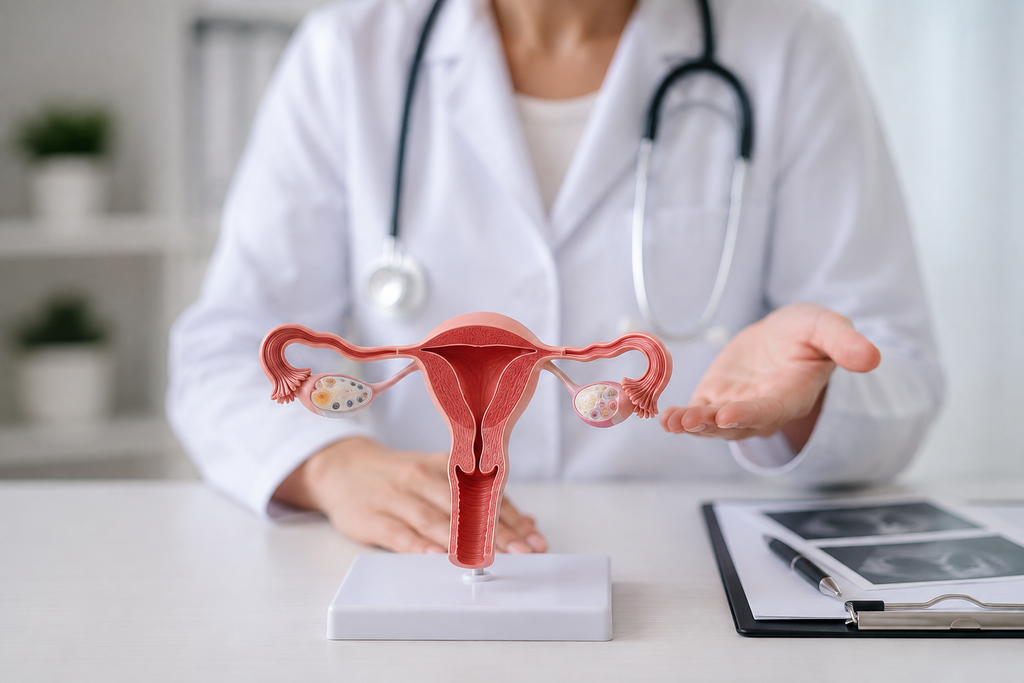
Treatment is chosen based on the specific goal, whether that is pain control, fertility, or both, and the extent of disease found on assessment. No single treatment fits all patients, and a responsible treatment plan usually involves a direct conversation about which goal is being prioritized right now.
- Pain management through anti inflammatory medication as an early, non hormonal option
- Hormonal treatment to reduce or suppress the menstrual cycle, which can ease pain for women not actively trying to conceive
- Laparoscopic surgery to remove or treat visible endometriosis tissue, considered based on symptoms, disease location, and fertility goals
- Fertility focused management, which follows a different set of considerations from pain focused management, and is not always the same treatment plan
Demand for endometriosis treatment Chandigarh wide, and across endometriosis treatment Punjab search patterns more broadly, increasingly routes toward Mohali for this kind of combined assessment. Women researching endometriosis treatment Tricity options tend to find that coordinating diagnosis, pain management, and fertility planning under one specialist review gives a clearer overall picture than separate, disconnected opinions from different clinics.
Endometriosis and Fertility: What the Evidence Actually Supports
Fear around fertility is one of the most common reactions to an endometriosis diagnosis, and much of that fear is based on incomplete information.
Endometriosis can contribute to infertility in some women, but it does not mean pregnancy is impossible. A large proportion of women with endometriosis conceive naturally or with fertility treatment, and the individual outlook depends on factors including age, ovarian reserve, tubal function, partner factors, and the extent of disease present. According to the 2022 ESHRE guideline on endometriosis, published in Human Reproduction Open, fertility planning should be individualized, and both surgery and medically assisted reproduction are recognized as possible options depending on the specific situation rather than one being automatically preferred.
One point deserves particular emphasis. Ovarian suppression treatment, a hormonal approach sometimes used for pain, should not be prescribed solely to improve fertility in women actively trying to conceive. Pain focused treatment planning and fertility focused treatment planning are not always the same thing, and confusing the two can delay appropriate fertility care.
Endometriosis Treatment in Mohali: When Surgery Is and Is Not the Answer
Surgery for an ovarian endometrioma before fertility treatment is a question that comes up frequently, and the answer is not automatically yes. Current guidance does not recommend routine surgery before assisted reproductive technology solely to improve live birth rates, partly because surgery itself can reduce ovarian reserve. Surgery may still be considered for specific reasons, such as significant pain or difficulty accessing follicles during fertility treatment, but it is a decision made based on the individual case rather than a routine step applied to everyone with a visible cyst.
This distinction matters because pregnancy after surgery for an endometrioma, sometimes called a chocolate cyst, depends on individual factors including age, ovarian reserve, and the extent of surgery performed, rather than being a guaranteed outcome that follows automatically from the procedure itself.
Endometriosis Treatment in Mohali: Questions Worth Asking Your Gynecologist
A productive first consultation for endometriosis treatment in Mohali generally covers a specific set of questions rather than a general conversation about pain, since the goal of any endometriosis treatment plan is a diagnosis specific enough to act on.
- What is causing my specific symptoms, and what evidence supports that conclusion
- Whether imaging, laparoscopy, or both are appropriate for my specific case
- Whether my current symptoms and goals point toward pain management, fertility management, or both
- What the realistic next steps look like if the first treatment approach does not fully resolve symptoms
Anyone whose gynecologist and fertility specialist have reached different conclusions on the same case benefits from bringing prior scans, operative notes, and fertility reports to a fresh review with a fertility specialist in Mohali, rather than repeating the same tests without new context. A detailed pelvic ultrasound alongside a symptom focused history is usually the starting point for this kind of combined review.
Adolescents and young women are not excluded from this conversation. Endometriosis in teenagers is specifically addressed in current international guidance, since irregular or prolonged bleeding alongside severe pain in a younger patient still warrants proper evaluation rather than being dismissed as a normal part of adjusting to periods.
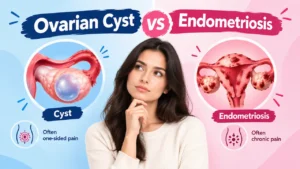
Symptoms that resemble endometriosis are sometimes caused by a related but distinct condition, and distinguishing between them changes the treatment approach. A detailed evaluation for an ovarian cyst is often part of the same diagnostic conversation, since cysts and endometriosis can present with overlapping symptoms but call for different management. Reaching the right diagnosis for endometriosis treatment in Mohali, Chandigarh, or anywhere across Punjab and the wider Tricity area comes down to this same principle: a specific, individualized assessment rather than a generic pain management plan applied without a clear underlying explanation. When that assessment points toward treatment, booking directly through the clinic’s appointment page is the most direct next step.
Frequently Asked Questions
1. My ultrasound is normal, but I have severe period pain. Can I still have endometriosis?
Yes, this is possible, and it is one of the most common situations gynecologists see. Ultrasound can identify some forms of the disease reliably, particularly ovarian endometriomas, but a normal scan does not automatically exclude endometriosis, since superficial disease on the pelvic lining or deep disease affecting the bowel can be difficult to detect on a standard scan. Specialist evaluation, including a detailed symptom history and sometimes MRI, may still be needed even after a technically clear ultrasound. Persistent severe period pain deserves continued investigation rather than being dismissed once one scan comes back normal.
2. How is endometriosis diagnosed if my gynecologist and fertility doctor disagree?
Start by asking each doctor what diagnosis they suspect and what specific evidence supports or argues against endometriosis in your case. It helps to request a review by a gynecologist experienced specifically in endometriosis, bringing along previous scans, operative notes, and fertility reports so the new review has the full picture rather than starting from scratch. A direct discussion about whether ultrasound, MRI, or another form of evaluation is appropriate for your specific presentation is a reasonable next step. Current guidelines place weight on clinical judgement and individualized assessment over a single fixed diagnostic pathway, which is part of why two specialists can reasonably reach different initial impressions from the same case.
3. Is laparoscopy always necessary to diagnose endometriosis?
No. Modern guidance has moved away from treating diagnostic laparoscopy as automatically required for a suspected case. Imaging, including ultrasound and MRI, combined with a detailed clinical assessment, can play a meaningful role in reaching a working diagnosis, and surgery may still be considered depending on the specific symptoms and circumstances rather than as a default first step for confirmation. This shift reflects a broader move toward individualized decision making, weighing the benefits of surgical confirmation against its risks and recovery time for each specific patient, rather than requiring each woman with suspected endometriosis to undergo a surgical procedure purely for diagnosis.
4. Can teenagers have endometriosis?
Yes, endometriosis is not limited to adult women, and current international guidance specifically addresses diagnosis and management in adolescents and young adults. Irregular or prolonged bleeding alongside severe period pain in a teenager warrants proper evaluation rather than being treated as a normal part of adjusting to menstruation. Diagnosis in younger patients follows the same general principle as in adults: symptoms alone cannot confirm the condition, and a combination of history, examination when appropriate, and imaging guides the assessment. Early recognition in adolescence can also help address symptoms that might otherwise be normalized for years before a proper evaluation takes place.
5. How much period pain is normal?
Period pain should not simply be dismissed because menstruation itself is common. Pain that is severe, worsening over time, repeatedly causes vomiting or fainting, prevents normal daily activities such as school or work, or requires frequent medication to manage deserves medical evaluation rather than being accepted as an unavoidable part of having periods. This does not mean any discomfort during a period signals a serious problem, since mild cramping is common and generally manageable. The distinction lies in severity and impact on daily function, which is a reasonable and useful marker for deciding when to seek a proper assessment rather than continuing to manage it alone.
6. Can endometriosis cause vomiting, diarrhea or constipation during periods?
Yes, these symptoms are reported frequently by women with endometriosis, particularly when tissue affects areas near the bowel. Vomiting, diarrhea, constipation, and general digestive discomfort around the time of a period are recognized symptoms, not something unrelated to a gynecological cause. These symptoms are sometimes referred exclusively to a gastroenterologist without the gynecological connection being considered, especially when they follow a clear cyclical pattern tied to menstruation. Mentioning the specific timing, that symptoms worsen around your period, to a gynecologist directly is useful information that can meaningfully shape the diagnostic path.
7. Can painful bowel movements during periods be related to endometriosis?
Yes, painful bowel movements around the time of a period are a recognized symptom of endometriosis, particularly when the underlying tissue affects areas close to the bowel. This symptom is common enough that it deserves specific attention rather than being treated only as a minor detail within a broader list of period symptoms. If bowel pain consistently follows your menstrual cycle rather than occurring randomly, that pattern is worth describing clearly to your gynecologist, since it can point toward endometriosis as a contributing cause and may influence which imaging or evaluation is recommended next.
8. Can I get pregnant if I have endometriosis?
Yes, a large proportion of women with endometriosis conceive naturally or with fertility treatment. Endometriosis can contribute to infertility in some women, but it does not mean pregnancy is impossible, and the individual outlook depends on factors such as age, ovarian reserve, tubal function, partner factors, and the extent of disease present. Current guidance recommends individualized fertility planning rather than a single approach applied uniformly, recognizing both surgery and medically assisted reproduction as possible options depending on the specific situation. A direct conversation with a fertility specialist about your specific findings gives a far more useful answer than a general statistic alone.
9. Does endometriosis always cause infertility?
No. Endometriosis can be associated with difficulty conceiving for some women, but it does not automatically cause infertility, and a substantial number of women with the condition become pregnant without needing fertility treatment at all. This distinction matters because fear around fertility is one of the most common reactions to a new diagnosis, and much of that fear is based on incomplete or overstated information. The presence of endometriosis on its own is not a fertility diagnosis. A fertility specific evaluation, looking at ovulation, ovarian reserve, and other individual factors, gives a clearer picture than assuming the diagnosis alone determines the outcome.
10. Should I have surgery before IVF if I have an endometrioma?
Not automatically. Current guidance does not recommend routine surgery before assisted reproductive technology solely to improve live birth rates, partly because surgery on an endometrioma can reduce ovarian reserve. Surgery may still be considered for specific reasons, such as significant pain or difficulty accessing follicles during the fertility procedure, but it is not a default step simply because a cyst is present on imaging. This represents a meaningful shift from older practice patterns, and it is worth discussing directly with both your gynecologist and fertility specialist which factors in your specific case, if any, actually support surgery before proceeding to IVF.