


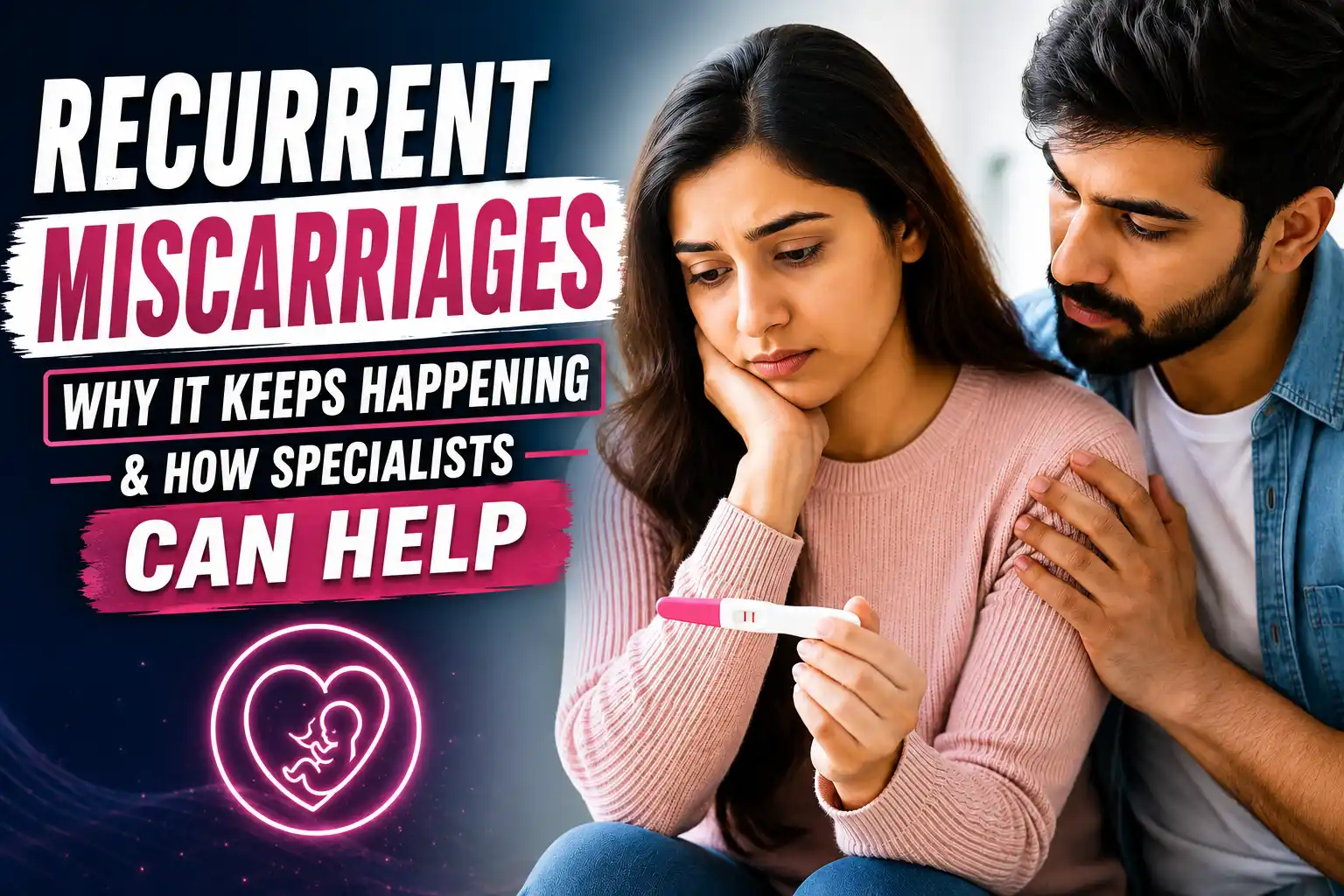
She had seen the two pink lines three times now. Each time, the joy came first, then the cautious excitement, the whispered conversations about names and nurseries. And each time, within weeks, the bleeding started and the ultrasound screen went silent. By the third loss, the question had shifted from “when will we have a baby?” to “why does this keep happening to us?”
If you are living through this cycle of hope and heartbreak, you are not alone. Recurrent miscarriages in Mohali and across the Tricity region are more common than most families realize, affecting roughly 1 in every 100 couples trying to conceive. The silence around pregnancy loss often makes it feel isolating, but the medical truth is reassuring: in most cases, a specific cause can be identified, treated, and a healthy pregnancy achieved. This guide explains what recurrent miscarriage actually means, why it happens, which tests your doctor should recommend, and what treatment looks like when you finally get the right answers.
Key Takeaways
- Recurrent miscarriage is defined as two or more consecutive pregnancy losses before 20 weeks of gestation
- Chromosomal abnormalities in the embryo account for 50% to 80% of first trimester losses, making them the single most common cause
- A treatable cause can be identified in roughly half of all couples evaluated for recurrent pregnancy loss
- Even when no cause is found, about 65 out of 100 women with unexplained recurrent miscarriage go on to have a successful next pregnancy
- Specialist evaluation after two consecutive losses can prevent further heartbreak and shorten the path to a healthy delivery
What Exactly Is Recurrent Miscarriage? The Medical Definition That Matters
A single miscarriage is unfortunately common. Roughly 10% to 20% of all confirmed pregnancies end in a first trimester loss, most often because of a random chromosomal error in the embryo. One loss, while painful, does not usually signal an underlying medical problem.
Recurrent miscarriage, also called recurrent pregnancy loss (RPL), is different. The American Society for Reproductive Medicine updated the clinical definition to two or more consecutive losses, recognizing that making a couple endure a third loss before investigating causes unnecessary suffering. According to the American College of Obstetricians and Gynecologists, fewer than 5 in 100 women experience two miscarriages in a row, and only about 1 in 100 have three or more.
The important distinction is between “random bad luck” and a repeating pattern. A single loss is almost always random. Two or more losses in sequence raise the probability that something identifiable, and often treatable, is causing the problem. That is why seeking specialist evaluation after the second loss, not the third, is the current recommendation from leading reproductive medicine bodies worldwide.
7 Medical Causes of Recurrent Miscarriages and How Each One Is Treated
When couples facing recurrent miscarriages in Mohali ask “why does this keep happening?”, the answer usually falls into one of seven categories. Some are straightforward to treat. Others require advanced reproductive technology. And in a significant number of cases, no cause is found at all, yet the prognosis remains surprisingly positive.
1. Chromosomal Abnormalities in the Embryo
This is the most frequent cause, responsible for 50% to 80% of all first trimester losses. When an embryo receives too many or too few chromosomes during fertilization, it cannot develop normally. Most chromosomal losses happen by chance, even when both parents have perfectly normal chromosomes. However, in about 3% to 5% of couples with recurrent loss, one partner carries a balanced chromosomal translocation, meaning a segment of one chromosome has swapped places with another. The parent is healthy, but some of their eggs or sperm carry unbalanced chromosomal material that leads to repeated losses.
How it is treated: Both partners undergo karyotype testing (a blood test analyzing chromosome structure). If a translocation is found, IVF combined with preimplantation genetic testing for aneuploidy (PGT-A) allows the laboratory to screen embryos before transfer, selecting only those with a correct chromosome count. This approach significantly reduces miscarriage risk in subsequent pregnancies. Couples needing advanced infertility treatment can discuss PGT-A options with their specialist.
2. Uterine Structural Problems
About 15% of recurrent miscarriages are caused by problems with the shape or interior of the uterus. The most common structural issue linked to repeated loss is a uterine septum, a wall of tissue dividing the uterine cavity. Other problems include fibroids pressing into the cavity, polyps, and intrauterine adhesions (scar tissue from prior procedures or infections). A septum reduces blood supply to the implanting embryo, making sustained pregnancy difficult.
How it is treated: Most structural problems are correctable through hysteroscopic surgery, a minimally invasive procedure performed through the cervix with no external incisions. Published data shows that in women with a uterine septum and recurrent loss, the live birth rate can improve from under 10% to above 70% after hysteroscopic septum removal. Fibroids and polyps within the cavity are also removed hysteroscopically.
3. Antiphospholipid Syndrome (APS)
APS is an autoimmune condition in which the body produces antibodies that attack phospholipid-binding proteins in the blood. These antibodies promote clot formation in the tiny blood vessels of the developing placenta, cutting off nutrient and oxygen supply to the embryo. APS is found in roughly 15% to 20% of women evaluated for recurrent pregnancy loss, making it one of the most important treatable causes.
How it is treated: The established first line treatment is a combination of low dose aspirin and heparin injections, started early in pregnancy and continued through delivery. Research shows that women with APS related recurrent miscarriage who receive aspirin plus heparin achieve a live birth rate of approximately 70%, compared to about 40% with aspirin alone. Diagnosis requires blood tests for antiphospholipid antibodies (lupus anticoagulant, anticardiolipin antibodies, and beta 2 glycoprotein antibodies), confirmed on two separate occasions at least 12 weeks apart.
4. Hormonal and Endocrine Disorders
Several hormonal conditions increase miscarriage risk when left untreated. Uncontrolled thyroid disease (both hypothyroidism and hyperthyroidism) can disrupt the hormonal environment necessary to sustain early pregnancy. PCOD affects ovulation quality and progesterone production. Poorly managed diabetes alters the uterine lining’s receptivity. High prolactin levels interfere with ovulation and implantation.
How it is treated: The approach depends on the specific condition. Thyroid medication normalizes TSH levels. Metformin and lifestyle changes manage PCOD related metabolic issues. Progesterone supplementation supports the uterine lining during early pregnancy. Diabetes management through diet, exercise, and medication stabilizes blood glucose before conception. The key is identifying and treating these conditions before the next pregnancy attempt.
5. Thrombophilia (Blood Clotting Disorders)
Beyond APS, other inherited clotting disorders such as Factor V Leiden mutation, prothrombin gene mutation, and protein S or protein C deficiency can increase clot formation in placental blood vessels. These conditions are less consistently linked to recurrent loss than APS, and the evidence for treatment is more debated among specialists.
How it is treated: When thrombophilia is identified in a woman with recurrent loss and a personal or family history of blood clots, low molecular weight heparin during pregnancy may be recommended. Testing is not routine for all recurrent miscarriage patients, but is indicated when there is a relevant personal or family history.
6. Maternal Age
Age is the single strongest risk factor for miscarriage that cannot be medically corrected. At age 35, the risk of any single pregnancy ending in miscarriage is roughly 20%. By age 40, that risk climbs to approximately 40%. At 45, the miscarriage rate exceeds 80%. This happens because egg quality declines with age, producing a higher proportion of chromosomally abnormal embryos.
What can be done: While age cannot be reversed, IVF with PGT-A can screen embryos for chromosomal normalcy before transfer, dramatically reducing the chance of a chromosomally driven loss. Donor egg IVF is another option for women whose own egg quality has declined significantly. Timely evaluation and action become increasingly important after age 35.
7. Unexplained Recurrent Miscarriage
After a complete evaluation, approximately 50% of couples receive no definitive diagnosis. This can be frustrating, but the prognosis is actually encouraging. According to ACOG, about 65 out of 100 women with unexplained recurrent pregnancy loss go on to have a successful pregnancy without any specific medical intervention. Supportive care, close monitoring through an early pregnancy clinic, emotional support, and lifestyle optimization (maintaining a healthy weight, quitting smoking, reducing alcohol and caffeine) all contribute to improved outcomes.
Diagnostic Tests Your Doctor Should Recommend After Two Losses
A thorough evaluation for recurrent miscarriages in Mohali should include a structured set of investigations. Not all tests are needed for every couple, but the core workup typically includes the following:
| Test Category | Specific Tests | What It Identifies |
|---|---|---|
| Parental Genetics | Karyotype for both partners | Balanced translocations that cause chromosomally abnormal embryos |
| Autoimmune / Clotting | Lupus anticoagulant, anticardiolipin antibodies, beta 2 glycoprotein antibodies | Antiphospholipid syndrome (APS) |
| Hormonal Panel | TSH, free T4, fasting glucose, HbA1c, prolactin, progesterone | Thyroid disorders, diabetes, hyperprolactinemia, luteal phase deficiency |
| Uterine Imaging | Pelvic ultrasound, saline infusion sonogram (SIS), or hysteroscopy | Septum, fibroids, polyps, adhesions, congenital uterine anomalies |
| Thrombophilia (selective) | Factor V Leiden, prothrombin gene mutation, protein S and C levels | Inherited clotting disorders (tested when personal or family history warrants) |
Cleveland Clinic emphasizes that miscarriage is almost never caused by something the mother did or did not do, and the purpose of testing is to find correctable medical factors rather than assign blame. A structured workup removes guesswork and gives the treating specialist a clear direction for the next pregnancy.
Dr. Balvin Kaur Ghai, Chief Gynecologist, Medisyn Clinic, Mohali says: “When a couple comes to me after two or more losses, the first thing I tell them is that we are going to find out why this is happening. A systematic evaluation, starting with parental karyotypes, APS screening, hormonal profiling, and uterine imaging, identifies a treatable cause in nearly half of all cases. And even when tests come back normal, the chances of carrying the next pregnancy to term are very much in their favour.”
Treatment Success Rates: The Numbers That Offer Hope
One of the most important things couples dealing with recurrent miscarriages in Mohali need to hear is that the odds are still in their favour. Even after three consecutive losses, the probability of a successful next pregnancy is approximately 60% to 75% without any medical intervention. When a specific cause is found and treated, live birth rates often exceed 70% to 80%.
| Cause Identified | Treatment Approach | Approximate Live Birth Rate |
|---|---|---|
| Antiphospholipid Syndrome | Aspirin plus heparin | 70% to 80% |
| Uterine Septum | Hysteroscopic septum removal | 70% to 75% |
| Parental Translocation | IVF with PGT-A | 60% to 70% per euploid transfer |
| Thyroid Disorder | Thyroid medication before and during pregnancy | Similar to general population when well controlled |
| Unexplained | Supportive care and early pregnancy monitoring | 65% to 75% |
These numbers are not abstract statistics. For couples who have experienced the grief of repeated loss, they represent a realistic path forward when the right evaluation and care are in place.
When Should You See a Recurrent Miscarriage Specialist in Mohali?
The current medical consensus is clear: seek specialist evaluation after two consecutive pregnancy losses. Waiting for a third loss before investigating is no longer considered acceptable practice by the American Society for Reproductive Medicine. Early investigation can identify treatable causes before another pregnancy is lost.
You should consult a specialist if:
- You have experienced two or more miscarriages in a row, regardless of whether you have had a previous live birth
- You have had a single late loss (after 12 weeks), which warrants investigation even as a first occurrence
- You are over 35 and have had even one miscarriage, given the compounding effect of age on egg quality
- You have a known medical condition such as PCOD, thyroid disease, or a personal or family history of blood clots
- You and your partner are planning IVF and want to rule out structural or immunological causes beforehand
Women in Mohali, Chandigarh, Panchkula, Kharar, and Zirakpur can access complete evaluation and pregnancy management at Medisyn Clinic (Sector 79, Airport Road and Kharar Landran Road) where Dr. Balvin Kaur Ghai provides structured diagnostic and treatment pathways for recurrent pregnancy loss.
The Emotional Weight of Recurrent Miscarriage: What Nobody Talks About Enough
Medical treatment addresses the physical causes, but the emotional toll of recurrent miscarriages in Mohali is just as real, and it deserves equal attention. Grief after pregnancy loss is not a single event that resolves with time. With each subsequent loss, the grief compounds. Anxiety during the next pregnancy can become overwhelming. Relationships may strain under the weight of shared grief processed in different ways.
It is normal to feel anger, guilt, fear of trying again, and isolation. Partners often grieve differently, which can create distance precisely when closeness is most needed. Reaching out to a counsellor who specializes in pregnancy loss, joining a support group, or simply telling your gynecologist in Mohali how you are feeling emotionally can make a meaningful difference.
Dr. Balvin Kaur Ghai adds: “I always tell my patients that a miscarriage is not something you caused. The guilt that many women carry after repeated losses is medically unfounded in the vast majority of cases. What matters now is that we investigate properly, treat what we find, and support you completely through the next pregnancy, both medically and emotionally.”
Lifestyle Factors That May Reduce Recurrent Miscarriage Risk
While most causes of recurrent miscarriage are medical conditions requiring specific treatment, couples dealing with recurrent miscarriages in Mohali should also know that certain lifestyle modifications can lower the overall risk and improve outcomes alongside medical care:
- Maintain a healthy BMI: Both obesity and being significantly underweight increase miscarriage risk. A BMI between 18.5 and 24.9 is associated with the lowest pregnancy loss rates
- Quit smoking: Smoking damages egg quality, impairs blood flow to the uterus, and is independently associated with higher miscarriage rates
- Limit caffeine: High caffeine intake (above 200 mg per day, roughly two cups of coffee) has been associated with increased miscarriage risk in multiple studies
- Manage stress actively: Chronic stress raises cortisol levels, which can disrupt the hormonal environment of early pregnancy. Regular physical activity, adequate sleep, and professional support when needed all help
- Ensure adequate folic acid: Starting folic acid supplementation at least three months before conception and continuing through the first trimester supports healthy embryo development and reduces the risk of neural tube defects
- Limit alcohol: No amount of alcohol has been proven safe during pregnancy, and heavy consumption increases miscarriage risk
Frequently Asked Questions About Recurrent Miscarriages in Mohali
1. How many miscarriages count as “recurrent”?
Two or more consecutive pregnancy losses before 20 weeks of gestation. The American Society for Reproductive Medicine updated the definition from three to two losses, recognizing that earlier investigation prevents unnecessary suffering and identifies treatable causes sooner.
2. Is recurrent miscarriage always caused by a problem with the mother?
No. The most common cause, chromosomal abnormality in the embryo, is a random event that can originate from either the egg or the sperm. In 3% to 5% of couples, one partner carries a balanced translocation. Male factor testing (karyotype) is part of the standard evaluation for recurrent pregnancy loss.
3. Should I get tested after just one miscarriage?
A single first trimester miscarriage is usually a random event and does not require a full recurrent loss workup. However, if the loss occurred after 12 weeks, or if you are over 35, or if you have a known medical condition like PCOD or thyroid disease, your doctor may recommend selective testing even after a single loss.
4. Can PCOD cause recurrent miscarriages?
Yes. PCOD is associated with irregular ovulation, high androgen levels, insulin resistance, and suboptimal progesterone production, all of which can increase miscarriage risk. Systematic review data shows that PCOD can increase miscarriage risk by up to 59% compared to women without the condition. Proper management of PCOD before and during pregnancy significantly improves outcomes.
5. What is antiphospholipid syndrome and how is it treated?
Antiphospholipid syndrome (APS) is an autoimmune condition where the body produces antibodies that promote blood clot formation. These clots can form in the placental blood vessels, cutting off blood supply to the developing baby. It is treated with daily low dose aspirin and heparin injections throughout pregnancy, which restores normal blood flow to the placenta and achieves live birth rates of 70% to 80%.
6. Does stress cause miscarriage?
Normal everyday stress has not been shown to cause miscarriage directly. However, severe chronic stress can affect hormonal balance and immune function in ways that may contribute to an unfavourable pregnancy environment. Managing stress through exercise, sleep, and professional support is part of overall pregnancy wellness, but couples should never blame themselves for miscarriages caused by medical conditions.
7. Can IVF help prevent recurrent miscarriages?
IVF itself does not prevent miscarriage. However, IVF combined with preimplantation genetic testing (PGT-A) allows embryos to be screened for chromosomal abnormalities before transfer. By selecting only chromosomally normal embryos, the risk of a chromosomally driven miscarriage is dramatically reduced. This approach is especially valuable for couples with parental translocations or advanced maternal age.
8. How long should I wait before trying again after a miscarriage?
For most women, it is medically safe to try again after one to two normal menstrual cycles. However, if you have had recurrent losses, it is better to complete the full diagnostic workup and begin any recommended treatment before the next conception attempt. Emotional readiness matters too, and there is no universal “right” timeline.
9. What is the success rate after treatment for recurrent miscarriage?
It depends on the cause. When APS is treated with aspirin and heparin, live birth rates reach 70% to 80%. Hysteroscopic correction of a uterine septum improves live birth rates from under 10% to above 70%. Even without an identified cause, about 65% of women go on to have a successful pregnancy with supportive care. The key is proper diagnosis and cause specific treatment.
10. Where can I get a complete evaluation for recurrent miscarriage in Mohali?
Medisyn Clinic, located at Sector 79, Airport Road, Mohali and Kharar Landran Road, offers comprehensive evaluation and treatment for recurrent pregnancy loss under the care of Dr. Balvin Kaur Ghai, Chief Gynecologist. The evaluation includes parental genetic testing, APS screening, hormonal profiling, and advanced uterine imaging to identify the specific cause and build a targeted treatment plan.
Moving Forward After Recurrent Miscarriage: A Path That Leads Somewhere
Recurrent miscarriages in Mohali and throughout the Tricity region are a medical problem with real, evidence based solutions. A structured evaluation identifies a treatable cause in roughly half of all couples. Treatment, whether it is blood thinning medication for APS, hysteroscopic surgery for a uterine septum, IVF with genetic screening for chromosomal issues, or hormonal management for thyroid and PCOD, dramatically improves the chances of carrying the next pregnancy to term.
And even when every test comes back normal, the natural odds still favour a successful outcome. What matters most is that you do not go through this alone, that you work with a specialist who understands the medical complexity and the emotional weight, and that you get the right answers before trying again. The couple at the beginning of this article, the one who saw those pink lines three times and lost three times, their story does not have to end there. With the right care, the next chapter can be different.
This article is for informational purposes only and does not replace personalized medical advice. If you have experienced recurrent pregnancy loss, please consult a qualified gynecologist or reproductive medicine specialist for evaluation and treatment.