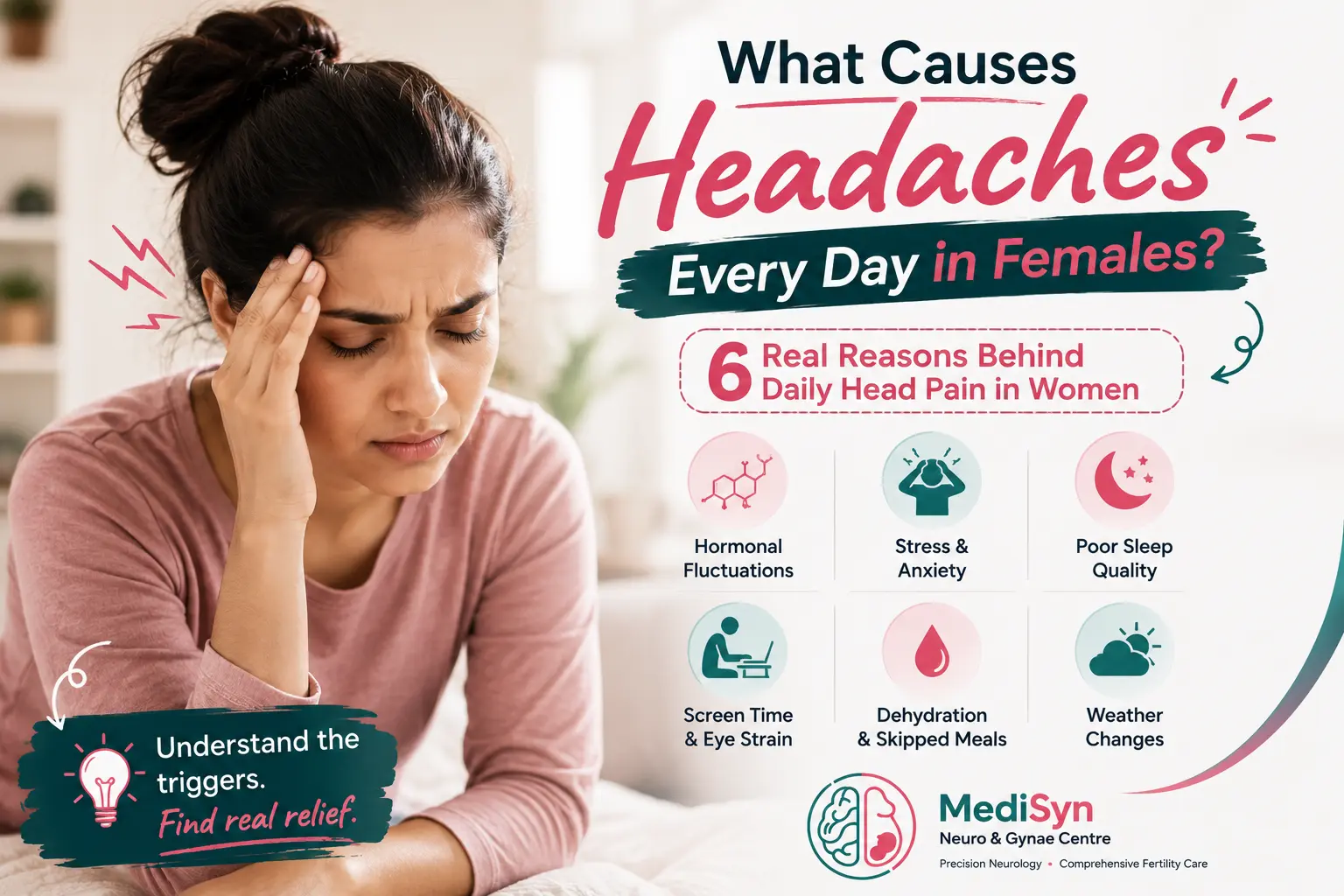
Migraine affects 17% of all women globally, compared to 6% of men, nearly a 3:1 ratio. In North India specifically, a 2024 study published in the Journal of Headache and Pain found that women are 3.3 times more likely to have migraine than men (35.7% vs 15.1%), and 5.1 times more likely to develop medication overuse headache.
Tension-type headache is 1.5 times more frequent in women than in men. If you are a woman asking what causes headaches everyday in females, the short answer is that female biology creates specific headache vulnerabilities that men simply do not have, and those vulnerabilities are driven overwhelmingly by one thing: estrogen.
That said, hormones are not the only cause. PCOD, iron deficiency anaemia, thyroid dysfunction, chronic stress, and medication overuse all produce daily headaches in women at higher rates than in men, and all of them are frequently missed because the investigation stops at “it must be hormonal” without going further.
Dr. Jaspreet Singh Randhawa, neurosurgeon at Medisyn Neuro Centre in Mohali, explains each cause specifically: what is happening neurologically, which women are most at risk, how to recognise the pattern, and what treatment works. This article addresses the full picture, including the questions behind every query in this topic: why am I getting headaches everyday, why do I always have a headache, and what the daily headache reasons in female patients most commonly come down to in clinical practice.
Why Women Get More Headaches Than Men: The Estrogen Explanation
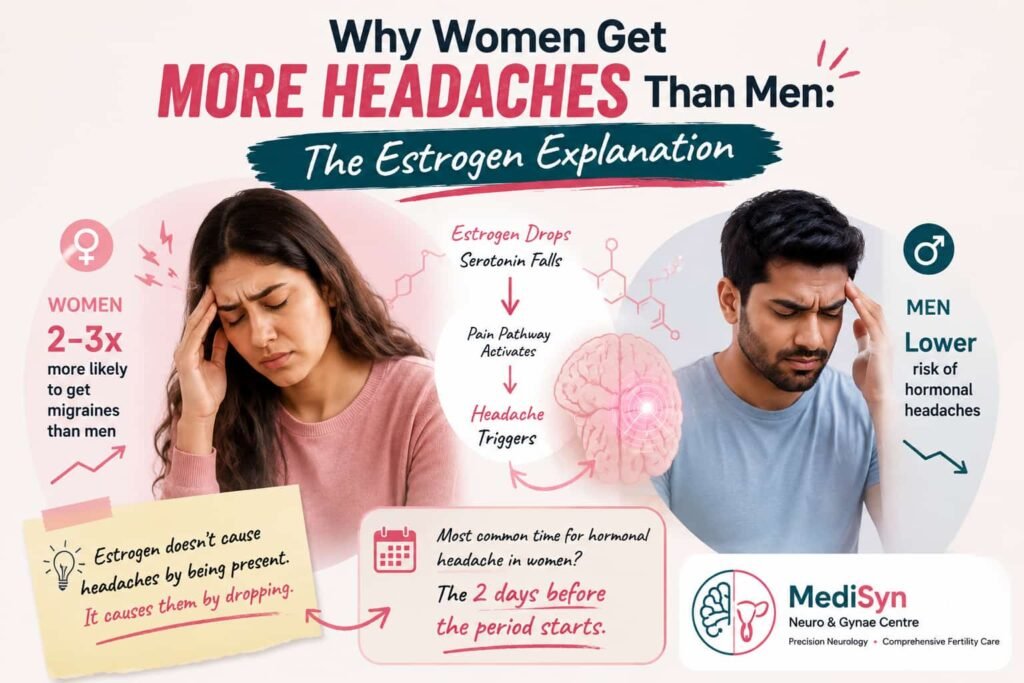
Before puberty, boys and girls get headaches at roughly the same rate. After puberty begins and estrogen enters the picture, that changes sharply. The female prevalence of migraine overtakes males during adolescence and stays higher until after menopause, when estrogen levels finally stabilise and headache frequency often reduces.
This is not coincidence. Estrogen directly regulates serotonin, a neurotransmitter that controls pain sensitivity in the brain. When estrogen levels are stable and adequate, the pain threshold is higher. When estrogen drops suddenly, whether because of the menstrual cycle, stopping a contraceptive pill, or entering perimenopause, serotonin levels fall with it. The trigeminovascular pain pathway in the brain activates. A headache begins.
Dr. Jaspreet Singh Randhawa explains: “Estrogen does not cause headaches by being present. It causes them by dropping. This is why the most common time for a hormonal headache in women is not mid-cycle when estrogen peaks, but in the two days before the period starts, when estrogen falls fastest. Once a patient understands this mechanism, they can begin to track and predict their headache pattern rather than feeling ambushed by it.”
Understanding this estrogen-serotonin link also explains why headaches during perimenopause can be so unpredictable and severe. It is not that estrogen is low. It is that it fluctuates erratically, rising and falling without the regularity of a monthly cycle, keeping the brain in a state of constant reactive sensitisation.
6 Causes of Headaches Every Day in Females
1. Menstrual Headache: The Most Predictable Daily Headache Reason in Female Patients
Between 18 and 25% of women with migraine have a direct menstrual association with their headaches, meaning the attack reliably occurs within 2 days before to 3 days after the start of menstruation. This is called menstrual migraine, and it is among the most disabling headache types because the attacks tend to be longer, more severe, and less responsive to standard acute treatment than non-menstrual migraine attacks.
The mechanism is the sharp fall in estrogen levels during the late luteal phase of the cycle, specifically when estrogen drops below approximately 45 to 50 pg/mL after a sustained high-estrogen priming period. This drop triggers a cascade in the trigeminal pain pathway that produces throbbing, one-sided head pain, often with nausea and light sensitivity, lasting anywhere from 4 to 72 hours.
How to identify it: Keep a headache diary for 2 to 3 cycles. Note the start date of each period and the start date of each headache. If a clear pattern emerges around days 1 to 3 of the cycle or the 2 days just before bleeding starts, menstrual migraine is the likely diagnosis.
Why am I getting headaches everyday around my period? If the headache persists beyond the typical 4 to 5 day window and continues throughout the cycle, menstrual migraine alone does not explain it. Another overlapping cause such as medication overuse or tension headache is almost certainly contributing. Both need to be addressed.
Women who experience severe headaches in relation to pregnancy, miscarriage, or hormonal changes after delivery will find a detailed explanation in the article on migraine during pregnancy and the role of hormonal changes at every stage.
2. PCOD and Hormonal Imbalance: An Underrecognised Cause of Daily Headaches in Women
Polycystic ovarian disease (PCOD) affects an estimated 1 in 5 women of reproductive age in India. It is characterised by elevated androgens, irregular ovulation, and disrupted estrogen-progesterone cycling. This hormonal irregularity creates an unpredictable and erratic estrogen environment in the brain, significantly increasing the frequency of headaches in women who have it.
Research shows that women with PCOD have a significantly higher prevalence of migraine compared to age-matched controls, with the association strongest in those with the most irregular menstrual cycles. The headache pattern in PCOD tends to be less predictably cyclical than pure menstrual migraine and more frequently daily or near-daily, precisely because the hormonal fluctuation is continuous rather than patterned.
Why am I having headaches everyday and I have PCOD? PCOD disrupts the hormonal rhythm that the brain has adapted to. Instead of a predictable monthly estrogen drop triggering a predictable attack, the estrogen level rises and falls irregularly, keeping pain pathways in a state of chronic activation. This is why treating PCOD and stabilising the hormonal environment, through lifestyle modification, weight management, and where appropriate medication, often reduces daily headache frequency significantly.
Women dealing with PCOD who have additional questions about hormonal management can find detailed information on PCOD treatment at Medisyn under Dr. Balvin Kaur Ghai, who works alongside Dr. Jaspreet Singh Randhawa in cases where both neurological and gynaecological management are needed.
3. The Contraceptive Pill and Daily Headaches: What Nobody Explains Clearly
Combined oral contraceptive pills (containing both estrogen and progesterone) affect headache frequency in women in ways that are entirely dependent on the individual’s baseline headache type and how the pill interacts with her natural hormonal pattern.
For some women, the pill stabilises estrogen levels and reduces headache frequency. For others, it worsens headaches significantly. The pattern most commonly associated with pill-induced daily headaches is the pill-free interval headache: the 4 to 7 day break from the active pill, during which synthetic estrogen drops sharply, mimicking the estrogen withdrawal of the natural menstrual cycle but often more intensely.
| Pill Type | Effect on Headaches | Clinical Note |
|---|---|---|
| Combined pill (estrogen + progesterone) | Can improve or worsen; pill-free interval causes withdrawal headache | Women with migraine with aura should avoid due to stroke risk |
| Progesterone-only pill (mini pill) | Generally better tolerated; fewer headache exacerbations | Preferred option for women with migraine |
| Continuous combined pill (no breaks) | Eliminates pill-free interval; may reduce withdrawal headaches | Requires neurological and gynaecological review |
Important: Women who experience migraine with aura (visual disturbances, numbness, or speech changes before the headache) should not take combined estrogen-containing contraceptives. This combination significantly increases stroke risk and requires immediate discussion with both a neurologist and gynaecologist before any contraceptive decision is made.
4. Perimenopause: When Daily Headaches Start Without Warning in Women Over 40
Perimenopause is the 4 to 10 year transition before menopause during which estrogen production becomes erratic. For many women, this is when daily headaches appear for the first time in their lives, or when pre-existing occasional headaches suddenly become daily. The reason is the same estrogen-withdrawal mechanism described earlier, now occurring unpredictably and repeatedly rather than once a month.
The headache pattern during perimenopause is often mixed: some days throbbing and one-sided like migraine, other days pressure and bilateral like tension headache, and many days a dull persistent ache that does not fit neatly into either category. This variability leads to misdiagnosis and mistreatment if the clinician does not take a full hormonal and headache history.
The good news: after menopause, when estrogen levels stabilise at their new lower baseline, the majority of women with estrogen-driven headaches experience a significant and lasting reduction in frequency. The difficult years are the perimenopausal transition, and this period is the one that most benefits from neurological management.
Why am I suddenly getting headaches everyday at 45? If you are in your early to mid-40s with no prior daily headache history and headaches have appeared or worsened significantly in the last 12 to 24 months, perimenopause is the first cause to evaluate. A combination of hormonal blood tests and a detailed headache history with Dr. Jaspreet Singh Randhawa will clarify whether the pattern is perimenopause-driven and what management approach will work best.
5. Iron Deficiency Anaemia: The Most Frequently Missed Daily Headache Reason in Female Patients
Iron deficiency is among the most common nutritional deficiencies in Indian women, particularly in women of reproductive age with heavy menstrual bleeding. Low haemoglobin reduces the oxygen-carrying capacity of blood. The brain, which consumes approximately 20% of the body’s oxygen despite being only 2% of body weight, is acutely sensitive to even mild reductions in oxygen delivery. The result is a persistent, dull, diffuse daily headache that is often worst during and immediately after menstruation when blood loss is greatest.
The headache of anaemia does not have the distinctive features of migraine or tension headache. It is present most of the day, non-throbbing, associated with fatigue, pallor, breathlessness on exertion, and cold hands and feet. It does not respond to standard headache medications because the cause is not a pain-pathway problem. It responds to iron supplementation.
Why do I have a headache every day during and after my period? Heavy menstrual bleeding combined with inadequate dietary iron intake is enough to produce chronic mild anaemia in many Indian women. A complete blood count with haemoglobin and serum ferritin is the first test to request. Serum ferritin below 30 ng/mL, even with haemoglobin in the low-normal range, can be sufficient to cause daily headaches and fatigue.
6. Thyroid Dysfunction: The Hormonal Cause Hidden Beyond the Obvious
Hypothyroidism, an underactive thyroid, is 5 to 8 times more common in women than in men and affects an estimated 10 to 11% of Indian women. It is one of the most frequently missed causes of chronic daily headache in female patients, partly because its other symptoms, weight gain, fatigue, cold intolerance, hair thinning, and low mood, are often attributed to stress or poor diet rather than a treatable medical condition.
The mechanism linking hypothyroidism to daily headache is not fully understood but involves several factors: changes in serotonin metabolism, reduced cerebral blood flow, and alterations in the autonomic nervous system regulation of cranial blood vessels. What is clear clinically is that treating the hypothyroidism with appropriate thyroid hormone replacement consistently reduces or eliminates the daily headache in most affected patients.
A simple TSH blood test is sufficient to screen for this. If you have been having daily headaches for months alongside persistent fatigue, cold intolerance, or unexplained weight gain, and no other cause has been identified, thyroid function testing should be part of your initial workup. This is a standard component of the evaluation Dr. Jaspreet Singh Randhawa performs for patients presenting with unexplained chronic daily headache at Medisyn.
According to Mayo Clinic’s updated guidance on hormones and headaches, drops in estrogen and associated hormonal changes are among the most significant and modifiable drivers of headache in women, and identifying the specific hormonal pattern is essential to choosing the right treatment approach.
Daily Headache Patterns in Women: Which Cause Fits Your Situation
| Your Pattern | Most Likely Cause | Key Test or Assessment |
|---|---|---|
| Headache days 1 to 3 of cycle, throbbing, one-sided | Menstrual migraine | Headache diary over 3 cycles |
| Daily headache, irregular periods, PCOD diagnosis | PCOD-driven hormonal headache | Hormonal panel, ultrasound |
| Headache worsened after starting the pill | Contraceptive-related headache | Neurological review, consider pill change |
| New daily headaches, age 40 to 52, no prior history | Perimenopause | FSH, estradiol blood tests |
| Daily dull headache, worse during and after period, fatigue | Iron deficiency anaemia | Haemoglobin, serum ferritin |
| Daily headache, weight gain, fatigue, cold intolerance | Hypothyroidism | TSH, free T4 |
Why am I getting headaches everyday even when I am not stressed? Stress is a contributory factor but rarely the sole cause of truly daily headaches. Every one of the six causes above produces daily headaches without requiring emotional stress as a trigger. If stress reduction alone has not improved your headaches, one of the above causes needs formal investigation.
What Makes Female Daily Headaches Worse: 4 Amplifiers Most Women Don’t Realise
Beyond the six primary causes, certain behaviours and patterns amplify headache frequency specifically in women:
- Skipping meals. Blood sugar drops trigger headaches rapidly in women, particularly those with PCOD where blood sugar regulation is already impaired. Going more than 4 to 5 hours without eating during the day reliably worsens headache frequency.
- Medication overuse. The 2024 Delhi NCR study found women are 5.1 times more likely than men to develop medication overuse headache. Women with existing hormonal headaches are particularly vulnerable because the cyclical nature of the pain makes frequent painkiller use feel justified. The result is a secondary daily headache layered on top of the primary hormonal one.
- Poor sleep and irregular sleep timing. Estrogen influences sleep architecture, and women with hormonal headaches frequently report worsening sleep quality in the perimenstrual and perimenopausal periods. This creates a bidirectional loop: poor sleep worsens headache, headache disrupts sleep.
- Caffeine dependence. The combination of daily tea or coffee consumption with hormonal headache vulnerability is extremely common. The caffeine withdrawal component, occurring overnight or between doses, adds a daily headache layer that is distinct from the hormonal trigger but compounds it.
For the full breakdown of these amplifiers and how they interact with the primary headache types, the article on what causes headaches everyday and how Dr. Jaspreet Singh Randhawa evaluates them at Medisyn provides the complete clinical picture.
Women whose headaches may have a migraine component are also encouraged to read the article on how migraine differs from other daily headaches and why the distinction changes treatment.
According to research published in Frontiers in Endocrinology, the estrogen withdrawal hypothesis explains the majority of hormonally-driven headaches in women, with the key trigger being a drop in estrogen below 45 to 50 pg/mL after a sustained high-estrogen priming period, which occurs naturally at menstruation, after stopping the pill, and throughout perimenopause.
10 Questions Women Ask About Daily Headaches
1. Why do I get a headache every month before my period?
This is menstrual migraine caused by the sharp fall in estrogen in the 2 days before bleeding begins. It is the most reliably predictable headache pattern in women and one of the most treatable once properly diagnosed. A headache diary over 2 to 3 cycles is usually enough to confirm the pattern.
2. Can PCOD cause daily headaches?
Yes. PCOD causes continuous hormonal irregularity rather than a single monthly estrogen drop, which keeps the brain’s pain pathways in a state of chronic low-level activation. Women with PCOD have significantly higher rates of migraine and daily headache than those without it. Treating the PCOD often reduces the headache frequency substantially.
3. Why did my headaches get worse after starting the contraceptive pill?
The combined pill introduces a synthetic estrogen cycle. If the pill-free interval causes a sharper estrogen withdrawal than your natural cycle did, headaches in that window will worsen. Some women also experience headache sensitisation from the progestogen component. A change of pill type or switching to continuous dosing (no break) can resolve this with proper neurological and gynaecological guidance.
4. Why am I getting headaches every day all of a sudden at age 45?
New daily headaches appearing in the early to mid-40s without prior history are perimenopause until proven otherwise. Erratic estrogen fluctuation during this transition is one of the most potent headache triggers in a woman’s lifetime. Blood tests for FSH and estradiol combined with a detailed headache history will confirm the pattern and guide treatment.
5. Why do I always have a headache during and after my period?
Headache during menstruation is hormonal. Headache persisting after the period ends, beyond day 5 or 6, often indicates a second cause layered on top: iron deficiency anaemia from blood loss, medication overuse if painkillers were taken frequently during the period, or chronic tension headache that the menstrual trigger has amplified. Each of these needs separate identification and treatment.
6. Can iron deficiency really cause a headache every day?
Yes, particularly in women with heavy periods. Haemoglobin below 10 to 11 g/dL, or serum ferritin below 30 ng/mL even with normal haemoglobin, is sufficient to cause daily dull head pain due to reduced oxygen delivery to the brain. The headache of anaemia does not respond to standard headache medications. It responds to iron supplementation over 6 to 8 weeks.
7. Does stress cause more headaches in women than men?
Stress triggers headaches in both sexes, but in women, stress activates the same trigeminovascular pain pathways that estrogen fluctuation activates. Women also show higher rates of anxiety and depression, both of which lower pain thresholds. The practical result is that stress-triggered headaches are more frequent and more severe in women, but stress is almost never the only cause when headaches are happening every single day.
8. Why do I have a headache every day even though my periods are regular?
Regular periods rule out erratic hormonal cycling but do not rule out menstrual migraine, anaemia, thyroid dysfunction, medication overuse, tension headache, caffeine dependence, or sleep disruption. Regular cycles mean the hormonal trigger is predictable, not that it is absent. A full clinical evaluation is still needed to identify which combination of causes applies.
9. Will my daily headaches improve after menopause?
For the majority of women with estrogen-driven daily headaches, yes. Once estrogen stabilises at its post-menopausal baseline, the erratic fluctuation that drives pain pathway activation stops. Most women experience a meaningful reduction in headache frequency in the 2 to 3 years after menopause. The perimenopausal transition itself is the most difficult period, and active neurological management during those years produces the best outcomes.
10. When should a woman see a neurologist for daily headaches?
See Dr. Jaspreet Singh Randhawa at Medisyn Neuro Centre in Mohali if your headaches occur on most days of the week, if they have been present for more than 4 weeks, if painkillers are being used more than 10 days per month, or if the headache comes with vision changes, numbness, confusion, or any neurological symptoms at any point. Daily headaches in women are consistently undertreated. Most improve significantly with the right diagnosis and a structured treatment plan.