



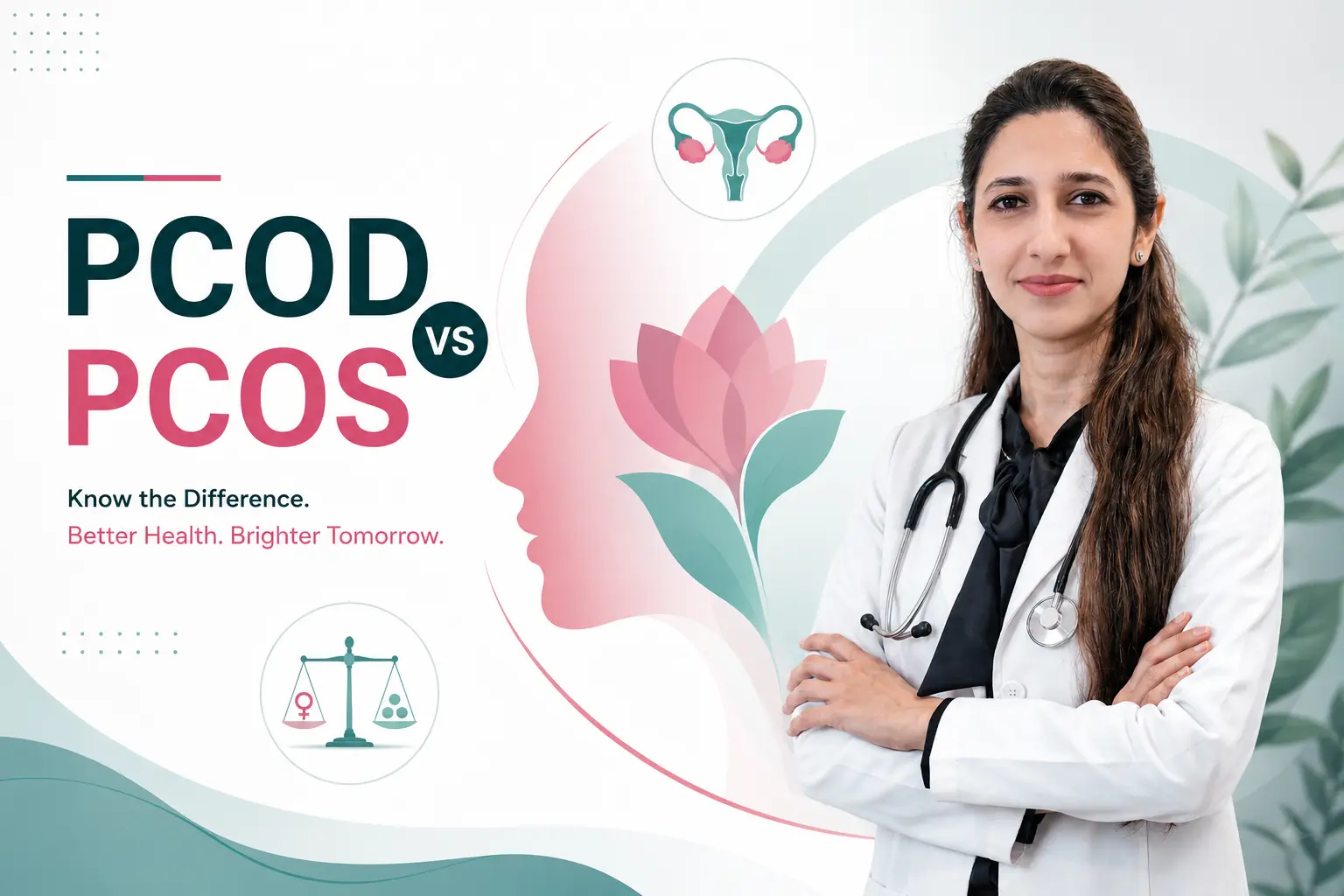
Walk into almost any diagnostic lab or pharmacy in Kharar, Sector 70, or Phase 10 in Mohali and ask about PCOD and PCOS. Chances are, the person behind the counter will use both names for the same thing. Ask some doctors, and you will get the same response. The terms have been used interchangeably for so long that most women in Punjab now believe they describe the same condition under two different names.
They do not.
PCOD and PCOS are two distinct medical conditions that share some surface-level similarities but differ significantly in their causes, how serious they are, how they affect fertility, and what treatment actually involves. Getting this wrong leads to delayed diagnosis, wrong expectations, and in the case of PCOS, missed monitoring for health complications that extend well beyond the reproductive system.
This article explains both conditions in plain language so you can have a more informed conversation with your gynecologist, understand what your ultrasound report actually means, and know what steps to take based on your own situation.
What PCOD Actually Is and Why It Is More Common Than You Think
PCOD stands for Polycystic Ovarian Disease. The name describes what happens structurally in the ovaries: they begin releasing large numbers of immature or partially mature eggs instead of one healthy, fully developed egg per cycle. These immature eggs accumulate inside the ovaries and form small fluid-filled sacs called cysts. Over time, the cysts cause the ovaries to enlarge and produce excess male hormones, called androgens, which then disrupt the menstrual cycle and create the symptoms women typically associate with the condition.
PCOD is primarily a condition of the ovaries. It is a functional problem that is, to a meaningful degree, driven by lifestyle factors including diet, physical activity levels, stress, and sleep patterns. This is why many women with PCOD see significant improvement when they make consistent changes to what they eat and how they move. It is not a simple fix, but PCOD is genuinely responsive to lifestyle management in a way that PCOS is not.
Estimates from studies conducted across India suggest that around 22% of women of reproductive age have PCOD. That is approximately one in every four or five women you know. Many of them are undiagnosed because their symptoms are mild or they attribute the changes in their cycle to stress, diet, or a busy lifestyle without investigating further.
What PCOS Is and Why It Is a Fundamentally Different Problem
PCOS stands for Polycystic Ovary Syndrome. The word syndrome is important here. Unlike a disease, which refers to a specific pathological process in one part of the body, a syndrome describes a cluster of symptoms and abnormalities that arise from a broader underlying dysfunction. PCOS is a disorder of the endocrine system, the network of glands and hormones that regulate almost every function in the body.
In PCOS, the core problem is not the ovaries releasing immature eggs. The core problem is hormonal dysregulation, particularly involving insulin and androgens. The ovaries produce excess male hormones, which interferes with ovulation. But the disruption does not stop at the ovaries. Insulin resistance, a condition where the body’s cells stop responding normally to insulin, is present in a significant proportion of women with PCOS. This drives further androgen production, creates metabolic changes that affect weight, blood sugar, cholesterol, and cardiovascular health, and establishes a cycle that is far harder to break with lifestyle changes alone.
The World Health Organization estimates that PCOS affects 8 to 13% of women of reproductive age globally, with prevalence among Indian women considerably higher. A large cross-sectional study of nearly 10,000 Indian women found a national PCOS prevalence of around 19.6% using the Rotterdam diagnostic criteria, with 91.9% of those women showing signs of dyslipidemia and 43.2% classified as having obesity as a comorbidity. These are not just reproductive health numbers. They are metabolic health numbers.
PCOS is a syndrome. PCOD is a disease of the ovaries. The distinction matters because PCOS requires longer-term monitoring, more structured medical management, and awareness of complications that extend decades beyond a woman’s reproductive years.
PCOD vs PCOS: The Key Differences Side by Side
| Feature | PCOD | PCOS |
|---|---|---|
| Nature of condition | Ovarian disorder (structural) | Endocrine disorder (systemic) |
| Primary cause | Immature egg release from ovaries | Hormonal and metabolic dysregulation |
| Severity | Generally milder | More serious, longer-term implications |
| Menstrual cycle | Irregular but usually present | Infrequent or absent (oligomenorrhea or amenorrhea) |
| Fertility impact | Conception is possible with monitoring | Higher infertility risk, ovulation induction often needed |
| Insulin resistance | Less common | Present in majority of cases |
| Lifestyle reversibility | Good response to diet and exercise | Helpful but rarely sufficient alone |
| Long-term risks | Limited if well managed | Type 2 diabetes, heart disease, endometrial cancer risk |
| Medication dependency | Often not required | Usually required for symptom management |
| Prevalence in India | Around 22% of reproductive-age women | Around 9 to 20% depending on criteria used |
The Causes: Why Do Women Develop PCOD or PCOS?
Both conditions share some overlapping risk factors, but the underlying mechanisms that drive them differ in important ways.
For PCOD, the main contributing factors include hormonal imbalance triggered by lifestyle habits, poor dietary patterns high in refined carbohydrates and sugar, insufficient physical activity, chronic stress, and disrupted sleep. Genetic predisposition plays a role too: if your mother or sister has PCOD, your risk is elevated. Obesity does not cause PCOD, but carrying excess weight worsens insulin sensitivity and amplifies hormonal disruption, making symptoms harder to manage.
PCOS has a stronger genetic and metabolic foundation. Current research suggests that a combination of genetic susceptibility and environmental triggers disrupts the hypothalamus-pituitary-ovarian axis, the brain-hormone-ovary signalling system. This disruption increases luteinising hormone (LH) production, which pushes the ovaries to produce excess testosterone. At the same time, insulin resistance creates a second pathway that further stimulates androgen production. Understanding the deeper hormonal and metabolic factors behind the condition is important, especially when evaluating long-term PCOS causes and lifestyle factors that may worsen symptoms over time.
Low-grade chronic inflammation is increasingly understood as another factor in both conditions. Studies consistently show elevated inflammatory markers in women with PCOD and PCOS, which appears to stimulate further androgen production and worsen insulin resistance. For women in Punjab and surrounding regions, where diets high in ghee, refined grains, and sugar are common alongside sedentary desk-based work, these inflammatory pathways are particularly active.
Symptoms That Overlap and Symptoms That Differ
Many of the surface-level symptoms are shared between PCOD and PCOS, which is why women and even some clinicians use the terms interchangeably. These shared symptoms include irregular menstrual cycles, acne, oily skin, unwanted hair growth on the face, chin, or chest (called hirsutism), hair thinning on the scalp, and weight gain that concentrates around the abdomen.
Where the conditions begin to diverge is in the severity and breadth of symptoms. Women with PCOS often experience more pronounced menstrual disruption: cycles that go missing for months at a time rather than simply arriving late. The skin darkening in the folds of the neck, armpits, and inner thighs, called acanthosis nigricans, is more commonly seen in PCOS and signals insulin resistance. Sleep disruption and fatigue that feels disproportionate to how much sleep you get can also signal the metabolic involvement characteristic of PCOS.
One important symptom many women in Mohali overlook is mood disruption. Research involving large numbers of ethnic Indian women with PCOS found that anxiety and depression were among the most commonly reported comorbidities, present in nearly two-thirds of participants. This is not a coincidence. Hormonal imbalance, insulin dysregulation, and chronic inflammation all affect brain chemistry. A woman dealing with PCOS is often managing a mental health burden alongside the physical one, without connecting the two.
“The mistake I see most often in my clinic is women who have had a PCOD diagnosis for years, assumed it was mild, made no further changes, and then arrive with PCOS-level complications because the condition progressed untreated. PCOD and PCOS are on a spectrum. PCOD that is left unmanaged and worsened by poor lifestyle choices can evolve into a more serious hormonal picture. Early intervention, even when symptoms feel manageable, protects long-term health.”
How PCOD and PCOS Are Diagnosed
Both conditions are typically diagnosed using a combination of clinical history, physical examination, blood tests, and pelvic ultrasound. No single test alone confirms either diagnosis.
For PCOS, the internationally accepted Rotterdam criteria require that at least two of three features be present: irregular or absent ovulation, clinical or biochemical signs of excess androgens, and polycystic ovarian morphology on ultrasound (typically 12 or more small follicles in one or both ovaries, or enlarged ovarian volume). A woman can have PCOS without cysts on her ultrasound, and she can have cysts on her ultrasound without having PCOS.
This is one of the most common points of confusion. Many women in Mohali come to a gynecologist with an ultrasound report showing “multiple follicles” and leave believing they have PCOS. Multiple follicles on an ultrasound, in the absence of hormonal abnormalities and cycle disruption, may simply be PCOD or even a normal finding. The diagnosis requires clinical correlation, not just an imaging report.
Blood tests typically ordered include testosterone levels, LH to FSH ratio, fasting insulin and glucose, thyroid function, prolactin, and often lipid profile and AMH (anti-Mullerian hormone). These help distinguish PCOD from PCOS, assess metabolic risk, and guide treatment planning.
If you have been told you have cysts on your ovaries, or if your periods have been irregular for more than three consecutive cycles, the right step is a proper evaluation by a gynecologist who will interpret your complete clinical picture rather than a single test result. The PCOD and PCOS treatment team at Medisyn in Kharar, Mohali conducts this kind of comprehensive evaluation before arriving at a diagnosis and treatment plan.
The Long-Term Risks of PCOS That Most Women Are Not Told About
This is where the gap between PCOD and PCOS becomes most significant, and where the cost of treating them as the same condition is highest.
PCOS is associated with a substantially elevated lifetime risk of type 2 diabetes. Women with PCOS are estimated to have three to seven times the risk of developing type 2 diabetes compared to women without the condition. The insulin resistance that drives PCOS does not resolve on its own with age. Without active management, it worsens.
Cardiovascular disease risk is elevated in women with PCOS, driven by dyslipidemia, hypertension, inflammation, and insulin resistance. The large Indian study referenced earlier found that 91.9% of women with PCOS had dyslipidemia, meaning abnormal cholesterol or triglyceride levels. For reference, this is a cardiovascular risk factor that most of these women would not know they had without targeted testing.
Research published in a major endocrinology journal found that women with PCOS have approximately a 2.7-fold increased risk of developing endometrial cancer, primarily because chronic anovulation leads to prolonged unopposed oestrogen stimulation of the uterine lining. Without regular shedding of the endometrium through menstruation or medical management, the lining builds up in ways that increase cancer risk over time.
None of these risks are inevitable. They are preventable with appropriate monitoring and management. But they require knowing that PCOS, not just PCOD, is the diagnosis, and that it demands a different level of medical engagement than lifestyle changes alone.
Treatment for PCOD: What Actually Works
For PCOD, the most effective first-line treatment is consistent lifestyle modification. This is not a vague recommendation: specific changes make a measurable difference.
Dietary changes that target insulin sensitivity are the most impactful. This means reducing refined carbohydrates (white rice, white bread, maida-based foods), increasing fibre intake through vegetables, legumes, and whole grains, and reducing sugar in all forms. The traditional Punjabi diet, which tends to be high in ghee, dairy, and wheat-based foods, is not inherently harmful, but portions and preparation matter significantly in a PCOD context.
Regular moderate physical activity, at least 30 minutes on most days, helps reduce androgen levels, improves insulin sensitivity, and supports weight management. The combination of dietary change and consistent exercise has been shown to restore regular menstrual cycles in women with PCOD even without medication.
When lifestyle changes are insufficient, a gynecologist may prescribe oral contraceptive pills to regulate the menstrual cycle, anti-androgen medications to manage acne and hair growth, or medications like metformin to improve insulin sensitivity. Women who want to conceive may be given medications to stimulate ovulation.
The important point is that PCOD is genuinely manageable. Many women who commit to lifestyle changes for three to six months see their cycles regulate, their skin clear, and their weight stabilise. This is realistic and achievable, not a distant goal.
Treatment for PCOS: Why Lifestyle Alone Is Rarely Enough
For PCOS, lifestyle changes are still important and beneficial, but they are usually not sufficient as a standalone treatment. The hormonal dysregulation in PCOS is more deeply entrenched, driven by genetic and metabolic factors that respond slowly to lifestyle interventions alone.
Medical management of PCOS typically involves one or more of the following:
- Combined oral contraceptive pills to regulate the menstrual cycle, reduce androgen levels, and protect the endometrial lining from the risks associated with prolonged anovulation
- Metformin, an insulin-sensitising medication originally used for type 2 diabetes, which also lowers androgen production and improves ovulation rates in many women with PCOS
- Anti-androgen medications such as spironolactone or cyproterone acetate to manage hirsutism, acne, and scalp hair thinning
- Ovulation induction medications such as letrozole or clomiphene citrate for women who want to conceive
- Laparoscopic ovarian drilling as a surgical option in selected cases of PCOS that do not respond to medical management
Women with PCOS also require longer-term monitoring. This includes periodic checks of blood sugar and insulin levels, lipid profiles, blood pressure, and in some cases endometrial thickness via ultrasound, particularly in women who have had prolonged absent periods. These are not one-time tests. They form part of the ongoing care that PCOS requires across a woman’s reproductive and post-reproductive life.
Women with PCOS who are planning a pregnancy benefit from pre-conception counselling with a gynecologist who understands the specific challenges involved, including optimising ovulation, managing insulin resistance, and monitoring for gestational diabetes during pregnancy. The infertility and reproductive care team at Medisyn offers this support within the same facility.
Can PCOD Turn Into PCOS?
This is one of the most frequently asked questions about these conditions, and the answer requires nuance. In a strict medical sense, PCOD does not “turn into” PCOS because they are distinct conditions with different underlying mechanisms. However, in practice, PCOD that is severely neglected and complicated by significant insulin resistance, obesity, and chronic hormonal disruption can present a clinical picture that overlaps substantially with PCOS.
Think of it as a spectrum. PCOD sits toward the milder end, PCOS toward the more complex end. A woman who starts with PCOD and does nothing about it for years, gaining weight, becoming increasingly insulin resistant, and developing worsening hormonal imbalance, may eventually meet the diagnostic criteria for PCOS. This is not inevitable, but it is a trajectory that early intervention prevents.
The practical message is this: whether your diagnosis is PCOD or PCOS, early management protects your future health in ways that are not achievable once complications have developed.
When to See a Gynecologist in Mohali
Many women in Mohali, Kharar, and Chandigarh delay seeking evaluation because their symptoms feel manageable or because they assume irregular periods are a normal variation. They are common. They are not normal, and they are not something to wait out.
You should see a gynecologist if any of the following apply to you:
- Your period has been absent for more than three months without pregnancy
- Your cycles are consistently longer than 35 days or shorter than 21 days
- You have noticeable hair growing on your chin, chest, or upper lip
- You have persistent acne that does not respond to standard skincare treatments
- You are experiencing hair thinning or hair fall from the scalp
- You have noticed darkened skin in the folds of your neck or underarms
- You have been trying to conceive for more than six months without success
- You have a family history of PCOD, PCOS, or type 2 diabetes
A single ultrasound report showing cysts is not a diagnosis. A proper evaluation includes your clinical history, a physical examination, and targeted blood tests interpreted alongside your symptoms. The gynecology team at Medisyn Neuro and Gynae Centre in Kharar approaches PCOD and PCOS this way, distinguishing between the two conditions based on complete clinical evidence rather than a single imaging finding.
For women who want to explore their options before booking an appointment, the gynaecology health quiz on the Medisyn website can help identify symptoms worth discussing with a specialist.
For those managing menstrual disorders alongside PCOD or PCOS, it is worth knowing that both conditions are managed at the same clinic, so a comprehensive assessment can cover both concerns in one visit rather than requiring separate referrals.
Frequently Asked Questions
1. I had an ultrasound done at a lab in Mohali and the report says I have polycystic ovaries. Does that mean I have PCOS?
Not necessarily. Polycystic ovarian morphology on an ultrasound, meaning multiple small follicles visible in the ovaries, is one component of the PCOS diagnosis under Rotterdam criteria, but it is not sufficient on its own. A woman needs to have at least two of three features: irregular ovulation, signs of excess androgens (from blood tests or physical symptoms), and polycystic ovarian appearance on scan. Many women with follicles visible on ultrasound have neither PCOD nor PCOS. Only a gynecologist can correlate your scan with your clinical picture and blood results to reach an accurate diagnosis. Do not treat an ultrasound report as a diagnosis.
2. My doctor used the terms PCOD and PCOS interchangeably. Should I be worried?
It is a common practice, and in many clinical conversations it does not cause harm because the initial lifestyle advice and basic hormonal evaluation overlap. However, if you are concerned about fertility, long-term complications, or if symptoms are severe, you deserve clarity on which condition you actually have. Ask your doctor specifically whether you meet the Rotterdam criteria for PCOS, what your androgen levels are, and whether insulin resistance has been tested. If your doctor cannot answer these questions, a second opinion from a gynecologist who specialises in hormonal disorders is reasonable.
3. Can I get pregnant if I have PCOD or PCOS?
Yes, in both cases. PCOD does not significantly impair fertility for most women. With regulated cycles, whether through lifestyle changes or medication, pregnancy is achievable. PCOS presents a higher challenge because ovulation is more severely disrupted, but it is far from impossible. Many women with PCOS conceive successfully with ovulation induction medications, and some conceive naturally after metabolic and hormonal improvements. The key is not to wait too long before seeking evaluation if you are trying to conceive, as earlier intervention gives more options. The infertility and PCOD treatment team at Medisyn in Mohali manages pre-conception planning for both conditions.
4. Is PCOD permanent? Can it be cured with diet and exercise?
PCOD cannot be permanently cured in the sense that the underlying hormonal predisposition remains. However, it can be brought into a state of complete functional remission where periods regularise, symptoms resolve, and hormonal blood tests return to normal ranges. Many women with PCOD achieve this through consistent dietary changes, regular exercise, weight management, and stress reduction. This remission is real and sustainable as long as the lifestyle habits are maintained. PCOS is less responsive to lifestyle alone, but healthy habits significantly reduce metabolic risk and improve quality of life even when the underlying syndrome cannot be eliminated.
5. I was diagnosed with PCOD five years ago and never followed up. What should I do now?
Book an appointment with a gynecologist for a fresh evaluation. A lot can change in five years: your weight, your metabolic status, your cycle patterns, and your hormonal picture. A repeat blood panel including fasting insulin and glucose, lipid profile, androgen levels, and AMH, along with an updated ultrasound, will give your doctor a current picture of where things stand. If your condition has progressed toward a PCOS-like profile, the sooner that is established, the sooner appropriate monitoring and management can begin. Five years without follow-up is not a reason for alarm, but it is a reason to act now rather than wait another five.