
A brain tumor does not announce itself. It does not arrive with a dramatic event or a moment you can point to and say – that is when it started. Instead, the early signs are quiet. A headache you blame on screen time. A brief episode of confusion you write off as exhaustion. A moment of blurred vision you link to dehydration. And then, weeks or months later, the same symptoms return – only sharper, more frequent, impossible to explain away.
This pattern – subtle onset, slow progression, easy dismissal – is exactly why brain tumor symptoms in Mohali and across India are so frequently missed in the early stages. By the time many patients reach a neurosurgeon, the tumor has had months to grow. And in a condition where early detection genuinely changes outcomes, those lost months matter enormously.
This guide explains the real warning signs, what they mean anatomically, and when you should stop waiting and get checked by an experienced neurosurgeon in Mohali like Dr. Jaspreet Singh Randhawa at Medisyn Neuro Centre.
What Actually Happens Inside the Skull When a Tumor Grows
To understand why brain tumors cause such a wide range of symptoms, you need to understand one fundamental fact: the skull is a fixed, closed space. Unlike a swelling in the arm or leg, which can expand outward, a growing mass inside the skull has nowhere to go. As the tumor enlarges, it compresses surrounding brain tissue, disrupts blood flow, and pushes against nerves. This pressure – called raised intracranial pressure – is responsible for many of the most common brain tumor symptoms.
At the same time, different parts of the brain control very different functions. A tumor in the motor cortex causes weakness. A tumor near the visual cortex causes vision problems. A tumor in the frontal lobe – which governs personality and decision-making – may first show up as behavioral changes. This is why brain tumor symptoms vary so dramatically from one person to the next, and why they are so often confused with other conditions.
Primary vs. Secondary Brain Tumors – Why the Distinction Matters
A primary brain tumor originates from brain cells themselves – glial cells, astrocytes, meninges, and so on. A secondary or metastatic brain tumor originates elsewhere in the body – lung, breast, kidney, colon – and spreads to the brain through the bloodstream. Secondary tumors are actually more common. This is why a complete diagnostic evaluation looks at the whole body, not just the brain.
Early Brain Tumor Symptoms That Patients in Mohali Commonly Miss
1. Headaches That Behave Differently From Your Usual Ones
Almost everyone gets headaches. And this is exactly what makes brain tumor headaches so easy to dismiss. But there are specific patterns that separate a brain tumor headache from tension or migraine:
- Worst in the morning, soon after waking
- Gets worse when you bend forward, cough, or strain
- Does not respond to standard painkillers like paracetamol or ibuprofen
- Accompanied by nausea or vomiting, especially in the morning
- Progressively worsening over days and weeks
The reason morning headaches are suspicious is physiology. During sleep, carbon dioxide builds up in the blood and causes mild dilation of blood vessels in the brain. If there is already raised pressure inside the skull due to a tumor, this temporary increase in pressure first thing in the morning makes the headache peak. This is a recognized clinical pattern that neurosurgeons look for.
When a Headache Needs an MRI
If your headache is new in character, progressively worsening, or accompanied by any neurological symptom – see a neurosurgeon and do not wait.
2. Seizures in Adults With No Prior History
A first-time seizure in an adult who has never had one before is a neurosurgical emergency until proven otherwise. A seizure happens when a tumor irritates surrounding brain cells, triggering abnormal electrical discharge. Many people imagine seizures as full-body convulsions – but brain tumor seizures are often subtler:
- Sudden jerking in one arm or one side of the face
- A brief blank stare with no memory of it afterward
- Tingling or numbness in a localized area that comes and goes
- Sudden smell or taste hallucinations with no external cause
Certain tumor types – including low-grade gliomas – are known specifically for causing seizures before almost any other symptom. Do not assume a first seizure is benign. Book an urgent consultation at Medisyn Neuro Centre in Mohali if this happens.
3. Vision Changes and Eye Movement Problems
The visual pathways run through a large portion of the brain, making vision changes a common early sign of brain tumors. Watch for:
- Blurred or double vision that appears intermittently
- Loss of peripheral vision in one or both eyes
- Sudden difficulty following moving objects
- Drooping of one eyelid (ptosis)
Tumors pressing on the optic nerves or the occipital lobe at the back of the brain cause these changes. In some cases, a specialist examining the back of the eye (the retina) can actually see signs of raised intracranial pressure – which is why any unexplained eye symptom deserves a proper neurological check.
4. Weakness or Numbness on One Side of the Body
When a tumor grows in or near the motor cortex – the strip of brain tissue that controls voluntary movement – it disrupts signals traveling down to the limbs on the opposite side. Patients often describe:
- Clumsiness in one hand when writing or typing
- One leg dragging slightly when walking
- Dropping objects from one hand without intending to
- Numbness or pins-and-needles on one side that doesn’t go away
This one-sided pattern – called hemiparesis or hemisensory loss – is an important clue that something structural is happening in the brain, not a muscle or peripheral nerve problem.
5. Cognitive and Memory Changes
Frontal and temporal lobe tumors in particular cause changes that look like stress, burnout, or even early dementia. Family members often notice these before the patient does:
- Increasing forgetfulness, especially for recent events
- Difficulty concentrating or making decisions
- Uncharacteristic personality or mood changes
- Sudden aggression, apathy, or disinhibited behavior
- Word-finding difficulty or slurred speech
Do Not Assume It Is Just Stress
When cognitive or personality changes appear without a clear reason – especially in someone over 40 – a brain scan is warranted. These symptoms are among the most common reasons brain tumors are misattributed to psychological causes for months.
6. Nausea, Vomiting, and Balance Problems
Tumors in the cerebellum – the area at the back of the brain governing balance and coordination – typically cause:
- Unsteady walking that looks like intoxication
- Frequent falls with no obvious cause
- Nausea and vomiting not linked to food or stomach illness
- Tremor or shaking in the hands
These symptoms are regularly misdiagnosed as inner ear problems or vertigo, causing significant delays in getting the correct imaging.
How Brain Tumor Symptoms Are Diagnosed in Mohali
When you see Dr. Randhawa at Medisyn Neuro Centre, the evaluation begins with a detailed neurological examination – testing reflexes, coordination, vision, strength, and cognitive function. Based on findings, an MRI brain with contrast is the standard imaging investigation. MRI provides far more detail than CT for soft tissue structures inside the skull and can show the tumor’s location, size, approximate type, and relationship to critical structures.
Why MRI Is Better Than CT for Brain Tumors
A CT scan can detect large or calcified tumors but often misses small or early lesions. An MRI with gadolinium contrast shows areas where the blood-brain barrier is disrupted – a hallmark of actively growing tumors. For most cases of suspected brain tumor, MRI is the first-choice investigation.
According to the Mayo Clinic, imaging is almost always followed by a biopsy to determine the exact tumor type and grade, which directly guides treatment decisions.
Treatment Options Available in Mohali and Chandigarh
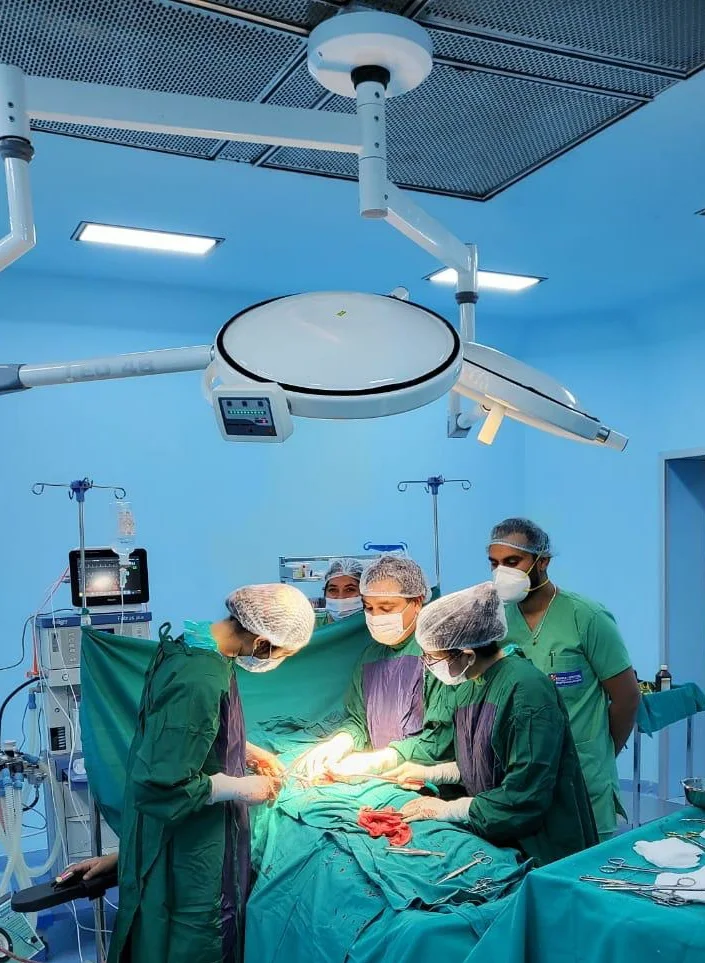
Treatment depends on the tumor type, grade, size, and location. Dr. Randhawa operates at Medisyn Neuro Centre, Mohali and Healing Hospital, Chandigarh – both equipped with advanced neurosurgical infrastructure. Options typically include:
- Surgery (Craniotomy): Removal of the tumor under operating microscope guidance. The goal is maximum safe resection – removing as much tumor as possible without damaging critical brain areas.
- Radiation Therapy: Used after surgery or as primary treatment when surgery is not possible. Targets remaining tumor cells.
- Chemotherapy: Used for malignant tumors, often combined with radiation. Drug selection depends on tumor genetics.
- Observation: For small, slow-growing benign tumors in elderly patients – regular MRI monitoring may be the appropriate approach.
The NHS UK confirms that treatment outcomes are significantly improved when diagnosis is made early – before the tumor has caused substantial neurological damage or spread further.
When You Should See a Neurosurgeon in Mohali Right Away
Do not wait if you or someone in your family is experiencing any combination of the following:
- A new severe headache unlike any before, especially with vomiting
- A first-time seizure at any age
- Sudden weakness or numbness on one side of the body
- Rapid personality or cognitive changes without explanation
- Vision problems that are new and progressive
These symptoms together are serious. Dr. Jaspreet Singh Randhawa, M.Ch. Neurosurgery (Gold Medalist), has over 14 years of specialized experience handling complex brain and spine conditions at Medisyn Neuro Centre and Healing Hospital, Chandigarh. Early assessment – even if the scan comes back clear – gives you information. Delay takes it away.
Frequently Asked Questions About Brain Tumor Symptoms
1. Can a headache alone be a sign of brain tumor?
Headache alone is rarely the only brain tumor symptom. A brain tumor headache has specific features – it is worst in the morning, worsens with coughing or straining, does not respond to painkillers, and progresses over weeks. If your headache fits this pattern or accompanies any neurological symptom, get an MRI evaluation promptly.
2. What does a brain tumor headache feel like compared to a migraine?
Migraines typically come with light and sound sensitivity, nausea, and often a visual aura before onset. Brain tumor headaches tend to be dull, persistent, worse in the morning, and aggravated by any activity that increases intracranial pressure – like bending, coughing, or lying flat. The key difference is progressive worsening over time without migraine’s typical triggers.
3. Can a brain tumor cause anxiety or depression?
Yes. Tumors in the frontal or temporal lobes can disrupt emotional regulation, sometimes causing anxiety, depression, irritability, or sudden personality changes before any physical symptom appears. These are often the first clues that something neurological is happening.
4. Is dizziness always a brain tumor symptom?
Dizziness is most commonly caused by inner ear issues, low blood pressure, or anemia – not brain tumors. However, when dizziness is accompanied by balance problems, unsteady walking, headache, or double vision, a neurological cause becomes far more likely and warrants investigation.
5. How fast do brain tumor symptoms progress?
It depends on the tumor grade. Low-grade tumors like Grade 1-2 gliomas can grow very slowly, with symptoms progressing over months or years. High-grade malignant tumors like glioblastoma can cause rapid deterioration over weeks. Any symptom that is worsening should be taken seriously regardless of how slowly it started.
6. Can a brain tumor be missed on a CT scan?
Yes. Small or early-stage tumors – especially in the brainstem or posterior fossa – can be missed on CT. An MRI with contrast is much more sensitive and is the recommended first-line investigation for suspected brain tumors.
7. At what age can brain tumors occur?
Brain tumors can occur at any age. Some types like medulloblastoma are more common in children. Glioblastoma and meningioma are more common in adults over 50. A first seizure or new neurological symptom at any age deserves evaluation.
8. Does stress cause brain tumors?
Current evidence does not support stress as a direct cause of brain tumors. However, stress-related symptoms can mask early brain tumor signs – leading people to attribute serious warning signs to burnout or mental health issues and delay getting scanned.
9. How much does a brain MRI cost in Mohali?
Brain MRI costs in Mohali typically range from Rs. 4,000 to Rs. 10,000 depending on whether contrast is used and the facility. At Medisyn Neuro Centre, consultations with Dr. Randhawa start at Rs. 600. He can advise whether an MRI is necessary and arrange referral to appropriate imaging centres in Mohali or Chandigarh.
10. Can a benign brain tumor be dangerous?
Yes. Even a non-cancerous brain tumor is dangerous because of the limited space inside the skull. As a benign tumor grows, it compresses brain tissue, raises intracranial pressure, and can cause serious neurological damage or even death if untreated. The word “benign” describes cancer behaviour, not risk level in the brain.